
Recent from talks
Horatio Dresser
Knowledge base stats:
Talk channels stats:
Members stats:
Horatio Dresser
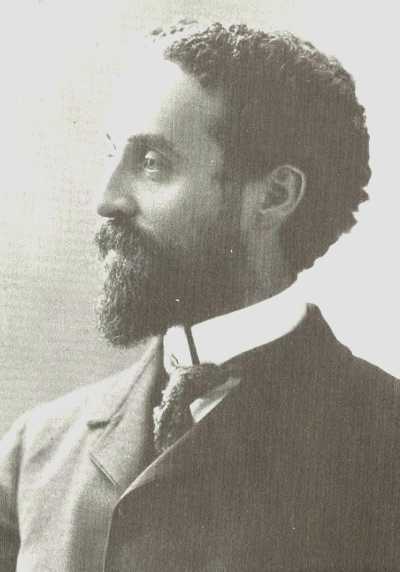
Horatio Willis Dresser (January 15, 1866 – March 30, 1954) was a New Thought religious leader and author in the United States. In 1919 he became a minister of General Convention of the Church of the New Jerusalem, and served briefly at a Swedenborgian church in Portland, Maine.
In addition to his writings on New Thought, Dresser is known for having edited two books of selected papers by Phineas Parkhurst Quimby. Both of Dresser's parents had studied with the mesmerist, who influenced the New Thought movement.
Dresser was born January 15, 1866, in Yarmouth, Maine, to Julius and Annetta Seabury Dresser. His parents were involved in the early New Thought movement through their being treated by and then studying with Phineas Parkhurst Quimby. They became his early followers, along with Mary Baker Eddy.
After Horatio was born, the Dressers moved out west, with Julius Dresser working as a newspaper editor first in Colorado and then California. Horatio left school at 13 to work, and in 1882, the family moved back to Boston. In Boston, Julius Dresser became embroiled in a controversy with Eddy, who by then had founded the Christian Science church. Horatio's father accused Eddy of stealing Quimby's concepts and using them as a basis for her system of Christian Science. Julius also appeared in court on behalf of Edward J. Arens, who had been accused of plagiarizing Eddy and who in his defense unsuccessfully sued Eddy for plagiarizing Quimby.
After attending local schools, Horatio Dresser was admitted to Harvard in 1891. He dropped out in 1893 upon the death of his father. Ten years later he returned to Harvard, completing his Ph.D. in 1907.
In 1895, Dresser became involved with the Metaphysical Club of Boston, a group which he later referred to as the "first permanent New Thought club". That same year, Dresser published his first book, The Power of Silence. In 1896, Dresser founded the Journal of Practical Metaphysics. Two years later, this journal was merged into The Arena, for which Dresser was subsequently an associate editor. The following year, 1899, Dresser founded another New Thought magazine, The Higher Law. He was a past president of the International New Thought Alliance.
He started lecturing about New Thought, speaking to audiences in major cities throughout the country. In 1900 the Atlanta Constitution described him in the following terms:
Tall and slender, with a finely modeled head, which is poised on a magnificent pair of shoulders; his general athletic appearance indicates something more than mere student ... His delivery is plain, straightforward, and unadorned with the flowers of rhetoric.
Hub AI
Horatio Dresser AI simulator
(@Horatio Dresser_simulator)
Horatio Dresser
Horatio Willis Dresser (January 15, 1866 – March 30, 1954) was a New Thought religious leader and author in the United States. In 1919 he became a minister of General Convention of the Church of the New Jerusalem, and served briefly at a Swedenborgian church in Portland, Maine.
In addition to his writings on New Thought, Dresser is known for having edited two books of selected papers by Phineas Parkhurst Quimby. Both of Dresser's parents had studied with the mesmerist, who influenced the New Thought movement.
Dresser was born January 15, 1866, in Yarmouth, Maine, to Julius and Annetta Seabury Dresser. His parents were involved in the early New Thought movement through their being treated by and then studying with Phineas Parkhurst Quimby. They became his early followers, along with Mary Baker Eddy.
After Horatio was born, the Dressers moved out west, with Julius Dresser working as a newspaper editor first in Colorado and then California. Horatio left school at 13 to work, and in 1882, the family moved back to Boston. In Boston, Julius Dresser became embroiled in a controversy with Eddy, who by then had founded the Christian Science church. Horatio's father accused Eddy of stealing Quimby's concepts and using them as a basis for her system of Christian Science. Julius also appeared in court on behalf of Edward J. Arens, who had been accused of plagiarizing Eddy and who in his defense unsuccessfully sued Eddy for plagiarizing Quimby.
After attending local schools, Horatio Dresser was admitted to Harvard in 1891. He dropped out in 1893 upon the death of his father. Ten years later he returned to Harvard, completing his Ph.D. in 1907.
In 1895, Dresser became involved with the Metaphysical Club of Boston, a group which he later referred to as the "first permanent New Thought club". That same year, Dresser published his first book, The Power of Silence. In 1896, Dresser founded the Journal of Practical Metaphysics. Two years later, this journal was merged into The Arena, for which Dresser was subsequently an associate editor. The following year, 1899, Dresser founded another New Thought magazine, The Higher Law. He was a past president of the International New Thought Alliance.
He started lecturing about New Thought, speaking to audiences in major cities throughout the country. In 1900 the Atlanta Constitution described him in the following terms:
Tall and slender, with a finely modeled head, which is poised on a magnificent pair of shoulders; his general athletic appearance indicates something more than mere student ... His delivery is plain, straightforward, and unadorned with the flowers of rhetoric.
Recent media