



Community hub
Recent from talks
Knowledge base stats:
Talk channels stats:
Members stats:
Hsuan Hua
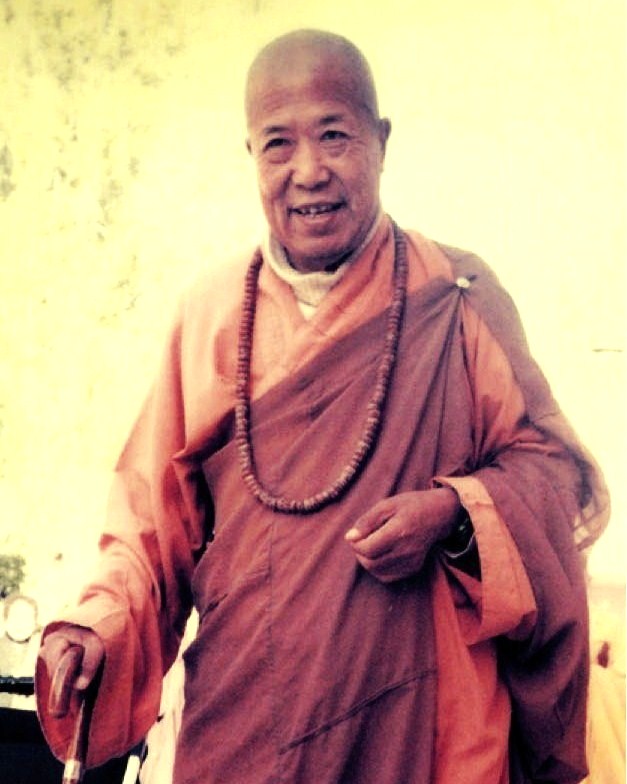
Hsuan Hua (Chinese: 宣化; pinyin: Xuānhuà; lit. 'proclaim and transform'; April 26, 1918 – June 7, 1995), also known as An Tzu, Tu Lun and Master Hua by his Western disciples, was a Chinese monk of Chan Buddhism and a contributing figure in bringing Chinese Buddhism to the United States in the late 20th century.
Hsuan Hua founded several institutions in the US. The Dharma Realm Buddhist Association (DRBA) is a Buddhist organization with chapters in North America, Australia and Asia. The City of Ten Thousand Buddhas (CTTB) in Ukiah, California, is one of the first Chan Buddhist monasteries in America. Hsuan Hua founded Dharma Realm Buddhist University at CTTB. The Buddhist Text Translation Society works on the phonetics and translation of Buddhist scriptures from Chinese into English, Vietnamese, Spanish, and many other languages.
Hsuan Hua, born on the sixteenth day of the third lunar month in the year of Wuwu (Horse), April 26, 1918. Named Bai Yushu or Bai Yuxi simplified Chinese: 白玉书 (白玉禧); traditional Chinese: 白玉書 (白玉璽); pinyin: Báiyù shū (Báiyù xǐ); lit. 'White Jade Book (White Jade Jubilee)' in Shuangcheng County of Jilin (now Wuchang, Harbin, Heilongjiang). After his birth, he cried for three days out of pity for beings in the saha world. Following a similar story of Gautama Siddhartha's Four Sights (the sight of a oldman, sick man, a corpse and an ascetic) which lead him to his realization. At age eleven Hsuan Hua saw a dead infant in the wild and he too contemplated about the nature of the Impermanence and Saṃsāra of the baby. That's when he resolved to leave home and cultivate the way, but didn't at the request of his mother. His mother was a vegetarian and held to the practice of reciting the name of Amitabha Buddha throughout her life. As a child, he followed his mother’s example.
At the age of twelve, he began bowing every day to repent his faults to his parents as an act of filial piety. Later he felt it was not enough to bow to them, so he gradually increased his bows to his teachers, the Emperor, the heavens, the earth until he was bowing to all living beings, hoping to bring peace to the world. He bowed every morning and evening, each time making more than 830 bows, which took five hours a day. His cultivation is in reference to the Great Learning (simplified Chinese: 大学; traditional Chinese: 大學; pinyin: Dàxué), one of the Four Books of Confucianism, where one and align his affairs and relationships into order and harmony by first cultivativating oneself, then extending it to others. He request, to his parents, to leave so that he could find a teacher to help him on his spiritual path. After some time, with his parents’ permission he set forth and traveled in search of a true spiritual teacher. At fifteen Hsuan Hu took refuge with the Three Jewels under Venerable High Master Changzhi of Sanyuan Monastery in Harbin. He drew near the Abbot, Venerable High Master Changren.
After finding a spiritual teacher, Hsuan Hua enrolled into a private village school from the twelfth day of the third lunar month to the thirteenth day of the eighth lunar month in the year of Ren Shen (Monkey), April 16 to September 13, 1932, where he had his first experience of formal education. Studied with single-minded concentration, he was able to memorize after reading it once using his photographic memory. At the age of sixteen he had already started to lecture on the Buddhist sutras to the fellow villagers who were mainly illiterate. Being well versed in the Sixth Patriarch's Dharma Jewel Platform Sutra, the Vajra Sutra, the Amitabha Sutra, and other Buddhist texts. As a student and a practitioner, he was a part of many charity organizations such as the Buddhist Association, the Moral Society of Manchuria, the Charity Society, organizations that help encourage people to quit smoking and drinking, and others unskillful means. The main goal was to help teach people to refrain from all evil and practicing all good. After two more years of study he had already mastered the core texts of Confucianism, Four Books, the Five Classics, other various Chinese schools of thought, studied traditional Chinese medicine, astrology, divination, physiognomy, and the scriptures of the great religions. At age eighteen Hsuan Hua with first-hand experience, understood the hardships that came with not having a complete education. He decided to established a free school teaching thirty impoverished children and adults, being the only teacher and faculty member. By that point he had already quit school in order to take care of his ill mother.
At 19 years of age, Hua became a monastic, under the Dharma name An Tzu (安慈).[citation needed]
In 1959, Hsuan Hua sought to bring Chinese Buddhism to the West. He instructed his disciples in America to establish a Buddhist association, initially known as The Buddhist Lecture Hall, which was renamed the Sino-American Buddhist Association before taking its present name: the Dharma Realm Buddhist Association.[citation needed]
Hsuan Hua traveled to Australia in 1961 and taught there for one year, returning to Hong Kong in 1962. That same year, at the invitation of American Buddhists, he traveled to the United States; his intent was to "come to America to create Patriarchs, to create Buddhas, to create Bodhisattvas".
Hub AI
Hsuan Hua AI simulator
(@Hsuan Hua_simulator)
Hsuan Hua
Hsuan Hua (Chinese: 宣化; pinyin: Xuānhuà; lit. 'proclaim and transform'; April 26, 1918 – June 7, 1995), also known as An Tzu, Tu Lun and Master Hua by his Western disciples, was a Chinese monk of Chan Buddhism and a contributing figure in bringing Chinese Buddhism to the United States in the late 20th century.
Hsuan Hua founded several institutions in the US. The Dharma Realm Buddhist Association (DRBA) is a Buddhist organization with chapters in North America, Australia and Asia. The City of Ten Thousand Buddhas (CTTB) in Ukiah, California, is one of the first Chan Buddhist monasteries in America. Hsuan Hua founded Dharma Realm Buddhist University at CTTB. The Buddhist Text Translation Society works on the phonetics and translation of Buddhist scriptures from Chinese into English, Vietnamese, Spanish, and many other languages.
Hsuan Hua, born on the sixteenth day of the third lunar month in the year of Wuwu (Horse), April 26, 1918. Named Bai Yushu or Bai Yuxi simplified Chinese: 白玉书 (白玉禧); traditional Chinese: 白玉書 (白玉璽); pinyin: Báiyù shū (Báiyù xǐ); lit. 'White Jade Book (White Jade Jubilee)' in Shuangcheng County of Jilin (now Wuchang, Harbin, Heilongjiang). After his birth, he cried for three days out of pity for beings in the saha world. Following a similar story of Gautama Siddhartha's Four Sights (the sight of a oldman, sick man, a corpse and an ascetic) which lead him to his realization. At age eleven Hsuan Hua saw a dead infant in the wild and he too contemplated about the nature of the Impermanence and Saṃsāra of the baby. That's when he resolved to leave home and cultivate the way, but didn't at the request of his mother. His mother was a vegetarian and held to the practice of reciting the name of Amitabha Buddha throughout her life. As a child, he followed his mother’s example.
At the age of twelve, he began bowing every day to repent his faults to his parents as an act of filial piety. Later he felt it was not enough to bow to them, so he gradually increased his bows to his teachers, the Emperor, the heavens, the earth until he was bowing to all living beings, hoping to bring peace to the world. He bowed every morning and evening, each time making more than 830 bows, which took five hours a day. His cultivation is in reference to the Great Learning (simplified Chinese: 大学; traditional Chinese: 大學; pinyin: Dàxué), one of the Four Books of Confucianism, where one and align his affairs and relationships into order and harmony by first cultivativating oneself, then extending it to others. He request, to his parents, to leave so that he could find a teacher to help him on his spiritual path. After some time, with his parents’ permission he set forth and traveled in search of a true spiritual teacher. At fifteen Hsuan Hu took refuge with the Three Jewels under Venerable High Master Changzhi of Sanyuan Monastery in Harbin. He drew near the Abbot, Venerable High Master Changren.
After finding a spiritual teacher, Hsuan Hua enrolled into a private village school from the twelfth day of the third lunar month to the thirteenth day of the eighth lunar month in the year of Ren Shen (Monkey), April 16 to September 13, 1932, where he had his first experience of formal education. Studied with single-minded concentration, he was able to memorize after reading it once using his photographic memory. At the age of sixteen he had already started to lecture on the Buddhist sutras to the fellow villagers who were mainly illiterate. Being well versed in the Sixth Patriarch's Dharma Jewel Platform Sutra, the Vajra Sutra, the Amitabha Sutra, and other Buddhist texts. As a student and a practitioner, he was a part of many charity organizations such as the Buddhist Association, the Moral Society of Manchuria, the Charity Society, organizations that help encourage people to quit smoking and drinking, and others unskillful means. The main goal was to help teach people to refrain from all evil and practicing all good. After two more years of study he had already mastered the core texts of Confucianism, Four Books, the Five Classics, other various Chinese schools of thought, studied traditional Chinese medicine, astrology, divination, physiognomy, and the scriptures of the great religions. At age eighteen Hsuan Hua with first-hand experience, understood the hardships that came with not having a complete education. He decided to established a free school teaching thirty impoverished children and adults, being the only teacher and faculty member. By that point he had already quit school in order to take care of his ill mother.
At 19 years of age, Hua became a monastic, under the Dharma name An Tzu (安慈).[citation needed]
In 1959, Hsuan Hua sought to bring Chinese Buddhism to the West. He instructed his disciples in America to establish a Buddhist association, initially known as The Buddhist Lecture Hall, which was renamed the Sino-American Buddhist Association before taking its present name: the Dharma Realm Buddhist Association.[citation needed]
Hsuan Hua traveled to Australia in 1961 and taught there for one year, returning to Hong Kong in 1962. That same year, at the invitation of American Buddhists, he traveled to the United States; his intent was to "come to America to create Patriarchs, to create Buddhas, to create Bodhisattvas".