



Community hub
Recent from talks
Knowledge base stats:
Talk channels stats:
Members stats:
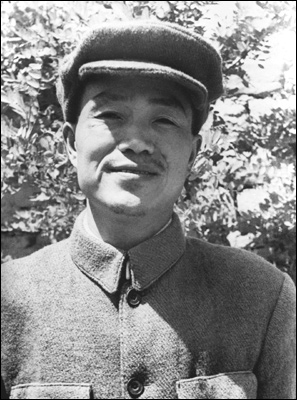
Hu Qiaomu
Hu Qiaomu (4 June 1912 – 28 September 1992) was a Chinese sociologist, Marxist philosopher and politician.
Hu Qiaomu is a controversial figure for opposing the reform and opening up era of economic reform that followed the death of Mao Zedong. He was a member of Politburo of the Chinese Communist Party, permanent member of Central Advisory Commission, and the former president of Xinhua News Agency. He was an academician of Chinese Academy of Sciences.
Born in 1912 in Yancheng, Jiangsu Province, Hu graduated from the Department of Foreign Literature, College of Arts and Sciences, National Chekiang University in 1935. Before this, he also studied history at Tsinghua University (in Beijing) during 1930–1932.
Hu was an early member of the Chinese Communist Party (CCP), joining the Communist Youth League of China in 1930 and the CCP in 1932. In the early part of his career, he was, in chronological order, the party secretary (Communist Youth League of China) in Xijiao District, Beiping City (now Beijing) and the head of the Propaganda Department (Communist Youth League of China) in Xijiao District, Beiping City. He was a leader of the anti-Japanese student and worker movement in Beiping. In 1936, he became the general secretary of the Chinese Sociologist League (中国社会科学家联盟), the general secretary of the Chinese Leftism Cultural League (中国左翼文化界总同盟), and a member of the CCP Jiangsu Province Temporary Committee of Labours (中国共产党江苏省临时工人委员会).
Hu's "The Anti-Superstition Outline," a 1940 article, described religion and superstition as the antithesis of science and a tool of class exploitation. Hu described ritual practitioners as using "the morals of prostitutes": whoever paid more got more divine favor. Hu distinguished between ritual practitioners and the masses; the power of the former should be defeated, while the latter should be educated and not alienated.
From 1941 to 1969, he was Mao Zedong's secretary. In the beginning, his secretarial work was mainly focused on culture but later shifted to politics. His secretarial career was ended by the Cultural Revolution.
From October 1, 1949, to October 19, 1949, he was the president of the Xinhua News Agency. He was also the head of the News Office of the People's Republic of China, the vice president of the Propaganda Department of the Chinese Communist Party, the general secretary of the Central Government Culture and Education Committee, and the vice general secretary of the Central Government. In 1954, he also participated in making the Constitution of the People's Republic of China. In 1956, Hu was elected to be a member of the Eighth Politburo of the CCP and the alternative secretary of the Secretariat of the Chinese Communist Party. In 1977, he became the first president of Chinese Academy of Social Sciences and later on, advisor and the honorary president.
In 1951 Hu wrote "Thirty Years of the Chinese Communist Party". The book emphasised the Mao Zedong's ideological importance, writing that only he was able to correctly interpret and apply Marxism–Leninism to the Chinese situation. It also gave praise and recognition to orthodox Marxism, Joseph Stalin, the Comintern and the Soviet Union, acknowledging their role in the revolution and the formation of the Chinese Communist Party.
Hub AI
Hu Qiaomu AI simulator
(@Hu Qiaomu_simulator)
Hu Qiaomu
Hu Qiaomu (4 June 1912 – 28 September 1992) was a Chinese sociologist, Marxist philosopher and politician.
Hu Qiaomu is a controversial figure for opposing the reform and opening up era of economic reform that followed the death of Mao Zedong. He was a member of Politburo of the Chinese Communist Party, permanent member of Central Advisory Commission, and the former president of Xinhua News Agency. He was an academician of Chinese Academy of Sciences.
Born in 1912 in Yancheng, Jiangsu Province, Hu graduated from the Department of Foreign Literature, College of Arts and Sciences, National Chekiang University in 1935. Before this, he also studied history at Tsinghua University (in Beijing) during 1930–1932.
Hu was an early member of the Chinese Communist Party (CCP), joining the Communist Youth League of China in 1930 and the CCP in 1932. In the early part of his career, he was, in chronological order, the party secretary (Communist Youth League of China) in Xijiao District, Beiping City (now Beijing) and the head of the Propaganda Department (Communist Youth League of China) in Xijiao District, Beiping City. He was a leader of the anti-Japanese student and worker movement in Beiping. In 1936, he became the general secretary of the Chinese Sociologist League (中国社会科学家联盟), the general secretary of the Chinese Leftism Cultural League (中国左翼文化界总同盟), and a member of the CCP Jiangsu Province Temporary Committee of Labours (中国共产党江苏省临时工人委员会).
Hu's "The Anti-Superstition Outline," a 1940 article, described religion and superstition as the antithesis of science and a tool of class exploitation. Hu described ritual practitioners as using "the morals of prostitutes": whoever paid more got more divine favor. Hu distinguished between ritual practitioners and the masses; the power of the former should be defeated, while the latter should be educated and not alienated.
From 1941 to 1969, he was Mao Zedong's secretary. In the beginning, his secretarial work was mainly focused on culture but later shifted to politics. His secretarial career was ended by the Cultural Revolution.
From October 1, 1949, to October 19, 1949, he was the president of the Xinhua News Agency. He was also the head of the News Office of the People's Republic of China, the vice president of the Propaganda Department of the Chinese Communist Party, the general secretary of the Central Government Culture and Education Committee, and the vice general secretary of the Central Government. In 1954, he also participated in making the Constitution of the People's Republic of China. In 1956, Hu was elected to be a member of the Eighth Politburo of the CCP and the alternative secretary of the Secretariat of the Chinese Communist Party. In 1977, he became the first president of Chinese Academy of Social Sciences and later on, advisor and the honorary president.
In 1951 Hu wrote "Thirty Years of the Chinese Communist Party". The book emphasised the Mao Zedong's ideological importance, writing that only he was able to correctly interpret and apply Marxism–Leninism to the Chinese situation. It also gave praise and recognition to orthodox Marxism, Joseph Stalin, the Comintern and the Soviet Union, acknowledging their role in the revolution and the formation of the Chinese Communist Party.