
Recent from talks
Hueyatlaco
Knowledge base stats:
Talk channels stats:
Members stats:
Hueyatlaco
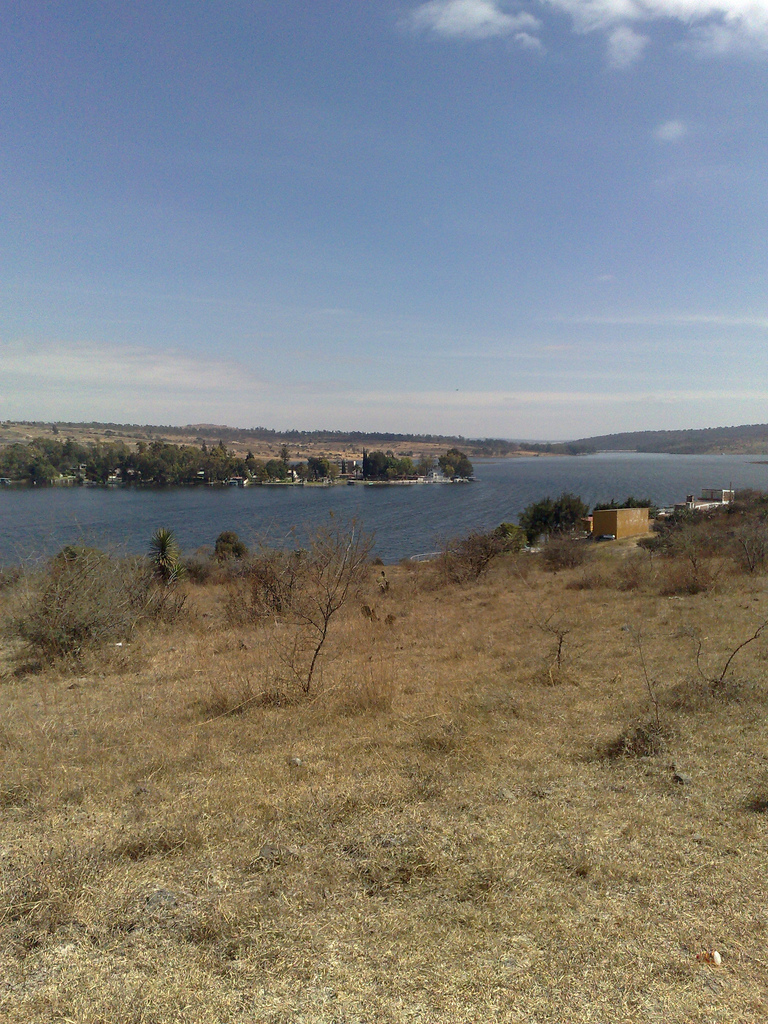
Hueyatlaco is an archeological site in the Valsequillo Basin near the city of Puebla, Mexico. After excavations in the 1960s, the site became notorious due to geochronologists' analyses, which have found wildly contradictory estimates for human habitation at Hueyatlaco dating from ca. 370,000 to 25,000 years before present (ybp).
If correct, these controversial findings would substantially exceed the previous oldest-known evidence for habitation of the New World (the White Sands footprints dating to roughly 22,000 ybp). The findings at Hueyatlaco are the subject of continued debate by the scientific community, and have seen only occasional discussion in the literature.
Cynthia Irwin-Williams led the team that first excavated the site in 1962. The site was co-discovered by Irwin-Williams and Juan Armenta Camacho. The dig is often associated with Virginia Steen-McIntyre because of her continued efforts to publicize her findings and opinions. She joined the team in 1966 as a graduate student, at the request of project geologist Harold E. (Hal) Malde. It is also associated with the U.S. Geological Survey.
The region, located about 75 miles southeast of Mexico City, was known for its abundance of animal fossils, and Irwin-Williams described Hueyatlaco as a "kill site" where animals were hunted and butchered.
Excavations were conducted via standard protocols, including securing the sites to prevent trespass or accidental disturbances. During excavation, investigators discovered numerous stone tools. The tools ranged from relatively primitive implements at a smaller associated site, to more sophisticated items such as scrapers and double-edged blades uncovered at the main excavation site. The diversity of tools made from non-local materials suggested that the region had been used by multiple groups over a considerable period.
In 1967, Jose L. Lorenzo of the Instituto Nacional de Antropología e Historia claimed that implements had been planted at the site by local laborers in such a way as to make it difficult or impossible to determine which artifacts were discovered in situ and which were planted. Irwin-Williams counter-argued that Lorenzo's claims were malicious and without merit. Furthermore, in 1969 Irwin-Williams cited statements of support from three prominent archeologists and anthropologists (Richard MacNeish, Hannah Marie Wormington and Frederick A. Peterson) who had each visited the site independently and attested to the integrity of the excavations and the professionalism of the group's methodology.
In mid-1969, B.J. Szabo, Malde and Irwin-Williams published their first paper about dating the excavation site. The stone tools were discovered in situ in a stratum that also contained animal remains. Radiocarbon dating of the animal remains produced an age of over 35,000 ybp. Uranium dating produced an age of 260,000 ybp, give or take 60,000 years.
The authors stated no definitive explanation for the anomalous results. Malde suggested the tool-bearing strata had possibly been eroded by an ancient streambed, thus combining older and newer strata and complicating dating.
Hub AI
Hueyatlaco AI simulator
(@Hueyatlaco_simulator)
Hueyatlaco
Hueyatlaco is an archeological site in the Valsequillo Basin near the city of Puebla, Mexico. After excavations in the 1960s, the site became notorious due to geochronologists' analyses, which have found wildly contradictory estimates for human habitation at Hueyatlaco dating from ca. 370,000 to 25,000 years before present (ybp).
If correct, these controversial findings would substantially exceed the previous oldest-known evidence for habitation of the New World (the White Sands footprints dating to roughly 22,000 ybp). The findings at Hueyatlaco are the subject of continued debate by the scientific community, and have seen only occasional discussion in the literature.
Cynthia Irwin-Williams led the team that first excavated the site in 1962. The site was co-discovered by Irwin-Williams and Juan Armenta Camacho. The dig is often associated with Virginia Steen-McIntyre because of her continued efforts to publicize her findings and opinions. She joined the team in 1966 as a graduate student, at the request of project geologist Harold E. (Hal) Malde. It is also associated with the U.S. Geological Survey.
The region, located about 75 miles southeast of Mexico City, was known for its abundance of animal fossils, and Irwin-Williams described Hueyatlaco as a "kill site" where animals were hunted and butchered.
Excavations were conducted via standard protocols, including securing the sites to prevent trespass or accidental disturbances. During excavation, investigators discovered numerous stone tools. The tools ranged from relatively primitive implements at a smaller associated site, to more sophisticated items such as scrapers and double-edged blades uncovered at the main excavation site. The diversity of tools made from non-local materials suggested that the region had been used by multiple groups over a considerable period.
In 1967, Jose L. Lorenzo of the Instituto Nacional de Antropología e Historia claimed that implements had been planted at the site by local laborers in such a way as to make it difficult or impossible to determine which artifacts were discovered in situ and which were planted. Irwin-Williams counter-argued that Lorenzo's claims were malicious and without merit. Furthermore, in 1969 Irwin-Williams cited statements of support from three prominent archeologists and anthropologists (Richard MacNeish, Hannah Marie Wormington and Frederick A. Peterson) who had each visited the site independently and attested to the integrity of the excavations and the professionalism of the group's methodology.
In mid-1969, B.J. Szabo, Malde and Irwin-Williams published their first paper about dating the excavation site. The stone tools were discovered in situ in a stratum that also contained animal remains. Radiocarbon dating of the animal remains produced an age of over 35,000 ybp. Uranium dating produced an age of 260,000 ybp, give or take 60,000 years.
The authors stated no definitive explanation for the anomalous results. Malde suggested the tool-bearing strata had possibly been eroded by an ancient streambed, thus combining older and newer strata and complicating dating.
Recent media