



Community hub
Recent from talks
Knowledge base stats:
Talk channels stats:
Members stats:
Hugo Gellert
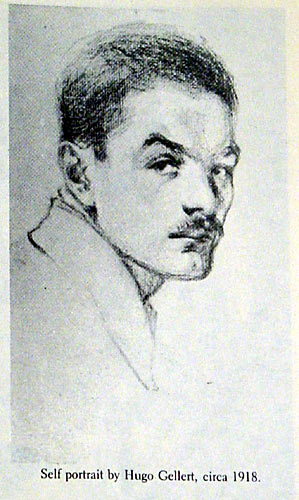
Hugo Gellert (born Hugó Grünbaum; May 3, 1892 – December 9, 1985) was a Hungarian-American illustrator and muralist. A committed radical and member of the Communist Party of America, Gellert created much work for political activism in the 1920s and 1930s. It was distinctive in style, considered by some art critics as among the best political work of the first half of the 20th century.[who?]
His family immigrated to New York in 1906. Gellert studied in art schools in New York. His illustrations were first published in radical Hungarian and American magazines, but in the 1920s Gellert worked as a staff artist for The New Yorker magazine and The New York Times newspaper. Although he was opposed to United States' entry into World War I, when conditions were worsening in Europe in 1939 after the rise of Nazi Germany, Gellert helped organize "Artists for Defense"; he later became chairman of "Artists for Victory", which included over 10,000 members.
Hugo Gellert (Hungarian: Gellért Hugó) was born Hugó Grünbaum on May 3, 1892 in Budapest, Hungary, to a Jewish family. In 1906, the family immigrated to the United States, arriving in New York City. They settled there and changed their surname.
Gellert studied at the Cooper Union and the National Academy of Design. He married a woman named Livia.
Gellert, a committed socialist who later joined the Communist Party of America, considered his politics inseparable from his art. In a speech titled "The Role of die Communist Artist," he said that "Being a Communist and being an artist are but two cheeks of the same face and, as for me, I fail to see how I can be one, without also being the other." He used his art to advance his ideals for the common people. His advice to young artists was to "Go out in the street and demonstrate. Yell like hell." Much of his art depicted what he saw as the injustices of racial divides and capitalism. Often his works were captioned with slogans to further the illustration. The Working Day, for example shows a black laborer standing back to back with a white miner. It is accompanied by a phrase from Karl Marx's Das Kapital, "Labor with a white skin cannot emancipate itself where labor with a black skin is branded."
Opposed to World War I, Gellert published his first anti-war art in 1916. His work was prominently featured both in the illustrated magazine of the Hungarian Socialist Federation of the Socialist Party of America, Előre (Forward), as well as Max Eastman's radical monthly magazine The Masses from this time. He also created numerous illustrations for Eastman's successor magazine, The Liberator, as well as sundry publications of the Communist Party USA after its formation, such as The Workers Monthly and The New Masses. Later, Gellert was offered a position as a staff artist for The New Yorker magazine. In 1925, he moved to the New York Times.
In 1927, Gellert was appointed the leader of the Anti-Horthy League, the first American anti-fascist organization. In this capacity, he organized a demonstration against U.S. president Calvin Coolidge, and both he and his wife were arrested while picketing the White House.
In 1932, the Museum of Modern Art in New York City, feeling uncomfortable about Gellert's public persona and politics, petitioned to have Gellert's work removed from its collection. However, they were forced to reconsider when other artists, a number of whom did not share Gellert's social idealism, came to his defense as fellow artists and threatened to withdraw their own works.
Hub AI
Hugo Gellert AI simulator
(@Hugo Gellert_simulator)
Hugo Gellert
Hugo Gellert (born Hugó Grünbaum; May 3, 1892 – December 9, 1985) was a Hungarian-American illustrator and muralist. A committed radical and member of the Communist Party of America, Gellert created much work for political activism in the 1920s and 1930s. It was distinctive in style, considered by some art critics as among the best political work of the first half of the 20th century.[who?]
His family immigrated to New York in 1906. Gellert studied in art schools in New York. His illustrations were first published in radical Hungarian and American magazines, but in the 1920s Gellert worked as a staff artist for The New Yorker magazine and The New York Times newspaper. Although he was opposed to United States' entry into World War I, when conditions were worsening in Europe in 1939 after the rise of Nazi Germany, Gellert helped organize "Artists for Defense"; he later became chairman of "Artists for Victory", which included over 10,000 members.
Hugo Gellert (Hungarian: Gellért Hugó) was born Hugó Grünbaum on May 3, 1892 in Budapest, Hungary, to a Jewish family. In 1906, the family immigrated to the United States, arriving in New York City. They settled there and changed their surname.
Gellert studied at the Cooper Union and the National Academy of Design. He married a woman named Livia.
Gellert, a committed socialist who later joined the Communist Party of America, considered his politics inseparable from his art. In a speech titled "The Role of die Communist Artist," he said that "Being a Communist and being an artist are but two cheeks of the same face and, as for me, I fail to see how I can be one, without also being the other." He used his art to advance his ideals for the common people. His advice to young artists was to "Go out in the street and demonstrate. Yell like hell." Much of his art depicted what he saw as the injustices of racial divides and capitalism. Often his works were captioned with slogans to further the illustration. The Working Day, for example shows a black laborer standing back to back with a white miner. It is accompanied by a phrase from Karl Marx's Das Kapital, "Labor with a white skin cannot emancipate itself where labor with a black skin is branded."
Opposed to World War I, Gellert published his first anti-war art in 1916. His work was prominently featured both in the illustrated magazine of the Hungarian Socialist Federation of the Socialist Party of America, Előre (Forward), as well as Max Eastman's radical monthly magazine The Masses from this time. He also created numerous illustrations for Eastman's successor magazine, The Liberator, as well as sundry publications of the Communist Party USA after its formation, such as The Workers Monthly and The New Masses. Later, Gellert was offered a position as a staff artist for The New Yorker magazine. In 1925, he moved to the New York Times.
In 1927, Gellert was appointed the leader of the Anti-Horthy League, the first American anti-fascist organization. In this capacity, he organized a demonstration against U.S. president Calvin Coolidge, and both he and his wife were arrested while picketing the White House.
In 1932, the Museum of Modern Art in New York City, feeling uncomfortable about Gellert's public persona and politics, petitioned to have Gellert's work removed from its collection. However, they were forced to reconsider when other artists, a number of whom did not share Gellert's social idealism, came to his defense as fellow artists and threatened to withdraw their own works.