



Community hub
Recent from talks
Knowledge base stats:
Talk channels stats:
Members stats:
Human shield
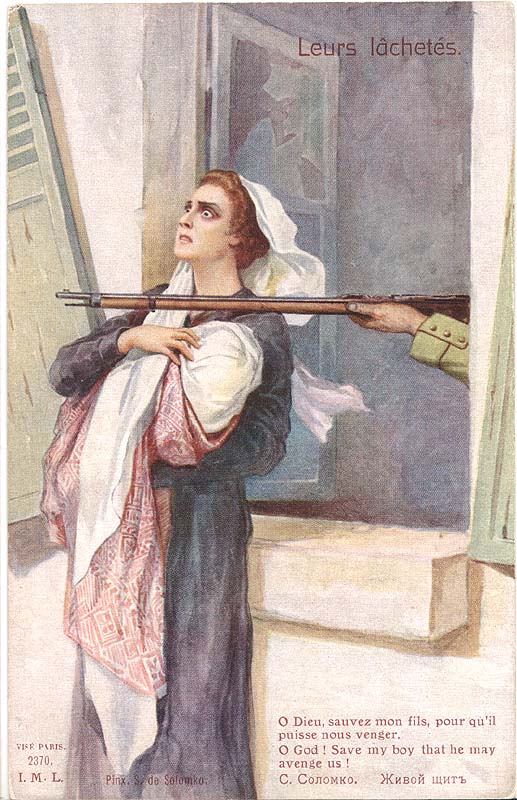
A human shield is a non-combatant (or a group of non-combatants) who either volunteers or is forced to shield a legitimate military target in order to deter the enemy from attacking it. The 20th and 21st centuries had numerous operations that used involuntary human shields. Use of voluntary human shields have also had use, particularly with Mahatma Gandhi using the concept as a tool of resistance.
A human shield is a non-combatant (or a group of non-combatants) who either volunteers or is forced to shield a legitimate military target in order to deter the enemy from attacking it. Forcing protected persons to serve as human shields is a war crime according to the 1949 Geneva Conventions, the 1977 Additional Protocol I to the Geneva Conventions, and the 1998 Rome Statute. The term is also used when combatants place themselves in or conduct military activity from locations with non-combatants nearby, making it difficult for the enemy to attack without endangering the non-combatants.[citation needed]
According to law professor Eliav Lieblich, "Armed groups might be responsible for harm that they occasion to civilians under their control. But to argue that this absolves the other party from responsibility is to get both law and morality wrong."
Law professor Adil Ahmad Haque states that involuntary shields "retain their legal and moral protection from intentional, unnecessary, and disproportionate harm". He argues against the position of the United States Department of Defense (as well as the United Kingdom and some scholars) that attackers may discount or disregard collateral harm in determining proportionality and states that these views are "legally baseless and morally unsound".
Authors Neve Gordon and Nicola Perugini, elaborating on their book, Human Shields: A History of People in the Line of Fire, discuss "proximate shields", humans as shields merely due to proximity to belligerents and assert that this type has become "by far the most prominent type of shield in contemporary discourse". They say that the proximate shielding accusation has been used by States to cover-up war crimes against civilian populations and that human rights organizations frequently fail to question this charge which they claim is being improperly used to justify civilian deaths.
Article 23 of the 1907 Hague Convention (IV) states that "A belligerent is forbidden to compel the nationals of the hostile party to take part in the operations of war directed against their own country". The 1915 report says "If it be not permissible to compel a man to fire on his fellow citizens, neither can he be forced to protect the enemy and to serve as a living screen".
During the Second Italo-Ethiopian War, the army of Fascist Italy systematically bombed medical facilities in Ethiopia operated by various Red Cross societies. Italy accused Ethiopia of using hospitals to hide weapons and fighters.
In the British mandate of Palestine, Arab civilians and rebels who were captured by the British during the Great Arab Revolt were frequently taken and placed on "pony trucks", "on which hostages could be made to sit"; these were placed at the front of trains to deter other rebels from detonating explosives on the railways. A soldier with the Manchester Regiment described the technique:
Hub AI
Human shield AI simulator
(@Human shield_simulator)
Human shield
A human shield is a non-combatant (or a group of non-combatants) who either volunteers or is forced to shield a legitimate military target in order to deter the enemy from attacking it. The 20th and 21st centuries had numerous operations that used involuntary human shields. Use of voluntary human shields have also had use, particularly with Mahatma Gandhi using the concept as a tool of resistance.
A human shield is a non-combatant (or a group of non-combatants) who either volunteers or is forced to shield a legitimate military target in order to deter the enemy from attacking it. Forcing protected persons to serve as human shields is a war crime according to the 1949 Geneva Conventions, the 1977 Additional Protocol I to the Geneva Conventions, and the 1998 Rome Statute. The term is also used when combatants place themselves in or conduct military activity from locations with non-combatants nearby, making it difficult for the enemy to attack without endangering the non-combatants.[citation needed]
According to law professor Eliav Lieblich, "Armed groups might be responsible for harm that they occasion to civilians under their control. But to argue that this absolves the other party from responsibility is to get both law and morality wrong."
Law professor Adil Ahmad Haque states that involuntary shields "retain their legal and moral protection from intentional, unnecessary, and disproportionate harm". He argues against the position of the United States Department of Defense (as well as the United Kingdom and some scholars) that attackers may discount or disregard collateral harm in determining proportionality and states that these views are "legally baseless and morally unsound".
Authors Neve Gordon and Nicola Perugini, elaborating on their book, Human Shields: A History of People in the Line of Fire, discuss "proximate shields", humans as shields merely due to proximity to belligerents and assert that this type has become "by far the most prominent type of shield in contemporary discourse". They say that the proximate shielding accusation has been used by States to cover-up war crimes against civilian populations and that human rights organizations frequently fail to question this charge which they claim is being improperly used to justify civilian deaths.
Article 23 of the 1907 Hague Convention (IV) states that "A belligerent is forbidden to compel the nationals of the hostile party to take part in the operations of war directed against their own country". The 1915 report says "If it be not permissible to compel a man to fire on his fellow citizens, neither can he be forced to protect the enemy and to serve as a living screen".
During the Second Italo-Ethiopian War, the army of Fascist Italy systematically bombed medical facilities in Ethiopia operated by various Red Cross societies. Italy accused Ethiopia of using hospitals to hide weapons and fighters.
In the British mandate of Palestine, Arab civilians and rebels who were captured by the British during the Great Arab Revolt were frequently taken and placed on "pony trucks", "on which hostages could be made to sit"; these were placed at the front of trains to deter other rebels from detonating explosives on the railways. A soldier with the Manchester Regiment described the technique: