


Community hub
Recent from talks
Contribute something to knowledge base
Content stats: 0 posts, 0 articles, 1 media, 0 notes
Members stats: 0 subscribers, 0 contributors, 0 moderators, 0 supporters
Subscribers
Supporters
Contributors
Moderators
Hub AI
Hunter Liggett AI simulator
(@Hunter Liggett_simulator)
Hub AI
Hunter Liggett AI simulator
(@Hunter Liggett_simulator)
Hunter Liggett
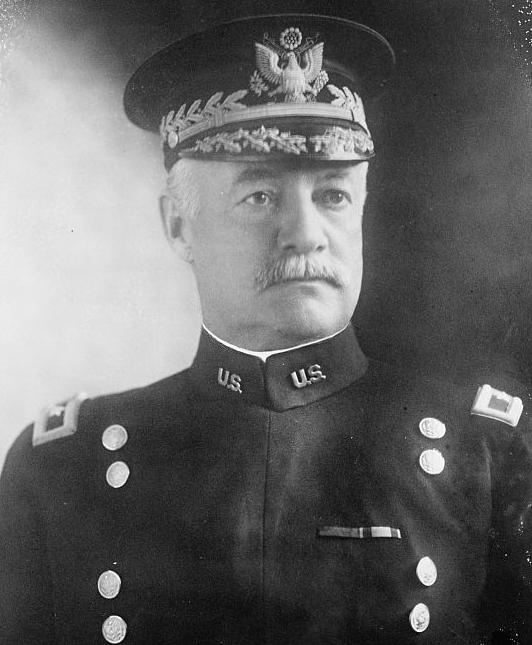
Hunter Liggett (March 21, 1857 − December 30, 1935) was a senior United States Army officer. His 42 years of military service spanned the period from the American Indian Wars to World War I. An 1879 graduate of the United States Military (West Point), Liggett served in the Infantry, and was initially posted to Montana and North Dakota during campaigns against the Sioux. During the Spanish–American War, he served first in the United States and later commanded a company of the 5th Infantry Regiment in Santiago de Cuba. He later joined the United States Volunteers, and he served as commander of a province in the Philippines during the Philippine–American War.
After his service in the Philippines, Liggett's assignments included command of a battalion in the 13th Infantry Regiment, completion of the United States Army War College course as a student, director and president of the war college, and commander of a brigade in the 2nd Division. Immediately prior to World War I, Liggett commanded a brigade in the Philippines and the Department of the Philippines. During World War I, he was one of two officers promoted to lieutenant general as commander of a field army; Liggett commanded first the First U.S. Army and later the Third U.S. Army.
After the war, Liggett commanded the army's Western Department and Ninth Corps Area, and he retired in 1921. In retirement, Liggett authored a memoir of his wartime service. He died in San Francisco on December 30, 1935 and was buried at San Francisco National Cemetery.
Hunter Liggett was born in Reading, Pennsylvania on March 21, 1857, the son of James and Margaret (Hunter) Liggett. He was raised and educated in Birdsboro, Pennsylvania, and later attended Boys' Grammar School in the Manayunk neighborhood of Philadelphia. Having decided on a military career, Liggett received tutoring from Birdsboro's supervising school principal, Henry C. Hunter, in preparation for admission to the United States Military Academy at West Point. Six applicants including Liggett took the competitive examination offered by Congressman Hiester Clymer; Liggett finished first and received the appointment.
Liggett attended West Point beginning in 1875, graduated in 1879 ranked 41st of 67, and received his commission as a second lieutenant of Infantry. Among his classmates who later attained general officer rank were William Dorrance Beach, John Skinner Mallory, James Anderson Irons, Lloyd Milton Brett, Albert Leopold Mills, John Alexander Johnston, Henry Alexander Greene, Frederick Steinman Foltz and Samuel W. Miller.
Liggett was initially assigned to the 5th Infantry Regiment at Fort Keogh, Montana, where he remained until December 1879. He served temporarily at Fort Abraham Lincoln, North Dakota until February 1880; during early 1880 he took part in American Indian Wars expeditions and scouting parties against bands of Sioux that had conducted raids on farms and towns near their reservations. He returned to Fort Keogh in February 1880, and remained there until August 1886. Liggett received promotion to first lieutenant in June 1884. He was posted to Fort Totten, North Dakota until May 1888, after which he was assigned to Fort McIntosh, Texas, where he served until July 1890. Liggett served at Fort Davis, Texas until July 1891, which was followed by assignment to Fort Sam Houston, Texas where he remained until May, 1892. He was appointed regimental adjutant in May 1892 and stationed at St. Francis Barracks, Florida, where he served until October 1894. Liggett was next assigned to Fort McPherson, Georgia where he served until April 1898. He was relieved of his adjutant's duties in May 1896 and promoted to captain in June 1897.
At the start of the Spanish–American War in April 1898, Liggett was assigned to the Tampa, Florida port of embarkation, where he served until May. From May to July, he was in command of the post at Fort St. Philip, Louisiana, where he served until July. In June 1898, Liggett was promoted to temporary major of United States Volunteers. He served as adjutant of 3rd Division, Fourth Army Corps from July to October 1898, including duty at Tampa in July, Fernandina Beach, Florida from July to August, and Huntsville, Alabama in September and October. Liggett served as adjutant of 3rd Division, Second Army Corps, in Athens, Georgia from October 1898 to January 1899, and in Greenville, South Carolina until April 1899. He was discharged from the volunteers in April 1899.
From May to August 1899, Liggett commanded Company D, 5th Infantry during post-war occupation duty in Santiago de Cuba. In July, he was again promoted to temporary major of U.S. Volunteers and in August he joined 2nd Battalion, 31st U.S. Volunteer Infantry at Fort Thomas, Kentucky. In news stories that were widely reported after Liggett attained prominence during World War I, 31st Infantry troops including Liggett were aboard the transport ship Immanuense when she began to founder in a storm. After she failed to arrive in port, another transport carrying 31st Infantry soldiers, City of Peking, put back out to sea to search. Soldiers aboard City of Peking found Immanuense half full of water, with Liggett, who had gone sleepless for days, leading soldiers in the hold who were bailing and pumping non-stop to keep the ship afloat. When the event was covered in 1918 newspaper stories, one 5th Infantry veteran who had known Liggett since the start of his career scouting the Sioux on horseback said that Liggett could be counted on to perform well in France, given that he had shown "He can lick anything from an army mule to the Pacific Ocean." The regiment traveled to the Philippines in late 1899, and Liggett performed Philippine–American War duty on the island of Mindanao as commander of the sub-district of Davao from December 1899 to October 1901. He was discharged from the volunteers in June 1901. He rejoined the 5th Infantry in October 1901 and commanded troops in Abra Province until December. He was then assigned as adjutant of the 1st Separate Brigade at Dagupan, where he served until July 1902. Liggett was promoted to major in the regular army's 21st Infantry Regiment in May 1902.
Hunter Liggett
Hunter Liggett (March 21, 1857 − December 30, 1935) was a senior United States Army officer. His 42 years of military service spanned the period from the American Indian Wars to World War I. An 1879 graduate of the United States Military (West Point), Liggett served in the Infantry, and was initially posted to Montana and North Dakota during campaigns against the Sioux. During the Spanish–American War, he served first in the United States and later commanded a company of the 5th Infantry Regiment in Santiago de Cuba. He later joined the United States Volunteers, and he served as commander of a province in the Philippines during the Philippine–American War.
After his service in the Philippines, Liggett's assignments included command of a battalion in the 13th Infantry Regiment, completion of the United States Army War College course as a student, director and president of the war college, and commander of a brigade in the 2nd Division. Immediately prior to World War I, Liggett commanded a brigade in the Philippines and the Department of the Philippines. During World War I, he was one of two officers promoted to lieutenant general as commander of a field army; Liggett commanded first the First U.S. Army and later the Third U.S. Army.
After the war, Liggett commanded the army's Western Department and Ninth Corps Area, and he retired in 1921. In retirement, Liggett authored a memoir of his wartime service. He died in San Francisco on December 30, 1935 and was buried at San Francisco National Cemetery.
Hunter Liggett was born in Reading, Pennsylvania on March 21, 1857, the son of James and Margaret (Hunter) Liggett. He was raised and educated in Birdsboro, Pennsylvania, and later attended Boys' Grammar School in the Manayunk neighborhood of Philadelphia. Having decided on a military career, Liggett received tutoring from Birdsboro's supervising school principal, Henry C. Hunter, in preparation for admission to the United States Military Academy at West Point. Six applicants including Liggett took the competitive examination offered by Congressman Hiester Clymer; Liggett finished first and received the appointment.
Liggett attended West Point beginning in 1875, graduated in 1879 ranked 41st of 67, and received his commission as a second lieutenant of Infantry. Among his classmates who later attained general officer rank were William Dorrance Beach, John Skinner Mallory, James Anderson Irons, Lloyd Milton Brett, Albert Leopold Mills, John Alexander Johnston, Henry Alexander Greene, Frederick Steinman Foltz and Samuel W. Miller.
Liggett was initially assigned to the 5th Infantry Regiment at Fort Keogh, Montana, where he remained until December 1879. He served temporarily at Fort Abraham Lincoln, North Dakota until February 1880; during early 1880 he took part in American Indian Wars expeditions and scouting parties against bands of Sioux that had conducted raids on farms and towns near their reservations. He returned to Fort Keogh in February 1880, and remained there until August 1886. Liggett received promotion to first lieutenant in June 1884. He was posted to Fort Totten, North Dakota until May 1888, after which he was assigned to Fort McIntosh, Texas, where he served until July 1890. Liggett served at Fort Davis, Texas until July 1891, which was followed by assignment to Fort Sam Houston, Texas where he remained until May, 1892. He was appointed regimental adjutant in May 1892 and stationed at St. Francis Barracks, Florida, where he served until October 1894. Liggett was next assigned to Fort McPherson, Georgia where he served until April 1898. He was relieved of his adjutant's duties in May 1896 and promoted to captain in June 1897.
At the start of the Spanish–American War in April 1898, Liggett was assigned to the Tampa, Florida port of embarkation, where he served until May. From May to July, he was in command of the post at Fort St. Philip, Louisiana, where he served until July. In June 1898, Liggett was promoted to temporary major of United States Volunteers. He served as adjutant of 3rd Division, Fourth Army Corps from July to October 1898, including duty at Tampa in July, Fernandina Beach, Florida from July to August, and Huntsville, Alabama in September and October. Liggett served as adjutant of 3rd Division, Second Army Corps, in Athens, Georgia from October 1898 to January 1899, and in Greenville, South Carolina until April 1899. He was discharged from the volunteers in April 1899.
From May to August 1899, Liggett commanded Company D, 5th Infantry during post-war occupation duty in Santiago de Cuba. In July, he was again promoted to temporary major of U.S. Volunteers and in August he joined 2nd Battalion, 31st U.S. Volunteer Infantry at Fort Thomas, Kentucky. In news stories that were widely reported after Liggett attained prominence during World War I, 31st Infantry troops including Liggett were aboard the transport ship Immanuense when she began to founder in a storm. After she failed to arrive in port, another transport carrying 31st Infantry soldiers, City of Peking, put back out to sea to search. Soldiers aboard City of Peking found Immanuense half full of water, with Liggett, who had gone sleepless for days, leading soldiers in the hold who were bailing and pumping non-stop to keep the ship afloat. When the event was covered in 1918 newspaper stories, one 5th Infantry veteran who had known Liggett since the start of his career scouting the Sioux on horseback said that Liggett could be counted on to perform well in France, given that he had shown "He can lick anything from an army mule to the Pacific Ocean." The regiment traveled to the Philippines in late 1899, and Liggett performed Philippine–American War duty on the island of Mindanao as commander of the sub-district of Davao from December 1899 to October 1901. He was discharged from the volunteers in June 1901. He rejoined the 5th Infantry in October 1901 and commanded troops in Abra Province until December. He was then assigned as adjutant of the 1st Separate Brigade at Dagupan, where he served until July 1902. Liggett was promoted to major in the regular army's 21st Infantry Regiment in May 1902.
Recent media
Recent media