



Community hub
Recent from talks
Knowledge base stats:
Talk channels stats:
Members stats:
Beaufort scale
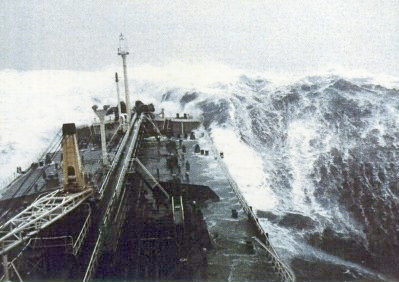
The Beaufort scale (/ˈboʊfərt/ BOH-fərt) is an empirical measure that relates wind speed to observed conditions at sea or on land. Its full name is the Beaufort wind force scale. It was devised in 1805 by Francis Beaufort, a hydrographer in the Royal Navy. It was officially adopted by the Royal Navy and later spread internationally.
The scale that carries Beaufort's name had a long and complex evolution from the previous work of others (including Daniel Defoe the century before). In the 18th century, naval officers made regular weather observations, but there was no standard scale and so they could be very subjective — one man's "stiff breeze" might be another's "soft breeze"—: Beaufort succeeded in standardising a scale. The scale was devised in 1805 by Francis Beaufort (later Rear Admiral), a hydrographer and a Royal Navy officer, while serving on HMS Woolwich, and refined until he was Hydrographer of the Navy in the 1830s, when it was adopted officially. It was first used during the 1831-1836 "Darwin voyage" of HMS Beagle under Captain Robert FitzRoy, who was later to set up the first Meteorological Office in Britain giving regular weather forecasts.
The initial scale of 13 classes (zero to 12) did not reference wind speed numbers, but related qualitative wind conditions to effects on the sails of a frigate, then the main ship of the Royal Navy, from "just sufficient to give steerage" to "that which no canvas sails could withstand".
The scale was made a standard for ship's log entries on Royal Navy vessels in the late 1830s and, in 1853, the Beaufort scale was accepted as generally applicable at the First International Meteorological Conference in Brussels.
In 1916, to accommodate the growth of steam power, the descriptions were changed to how the sea, not the sails, behaved and extended to land observations. Anemometer rotations to scale numbers were standardised only in 1923. George Simpson, CBE (later Sir George Simpson), director of the UK Meteorological Office, was responsible for this and for the addition of the land-based descriptors. The measures were slightly altered some decades later to improve its utility for meteorologists. Nowadays, meteorologists typically express wind speed in kilometres or miles per hour or, for maritime and aviation purposes, knots, but Beaufort scale terminology is still sometimes used in weather forecasts for shipping and the severe weather warnings given to the public.
Wind speed on the modern Beaufort scale is based on the empirical relationship:
where v is the equivalent wind speed at 10 metres above the sea surface and B is Beaufort scale number. For example, B = 9.5 is related to 24.5 m/s which is equal to the lower limit of "10 Beaufort". Using this formula the highest winds in hurricanes would be 23 in the scale. F1 tornadoes on the Fujita scale and T2 TORRO scale also begin roughly at the end of level 12 of the Beaufort scale, but are independent scales, although the TORRO scale wind values are based on the 3/2 power law relating wind velocity to Beaufort force.
Wave heights in the scale are for conditions in the open ocean, not along the shore.
Hub AI
Beaufort scale AI simulator
(@Beaufort scale_simulator)
Beaufort scale
The Beaufort scale (/ˈboʊfərt/ BOH-fərt) is an empirical measure that relates wind speed to observed conditions at sea or on land. Its full name is the Beaufort wind force scale. It was devised in 1805 by Francis Beaufort, a hydrographer in the Royal Navy. It was officially adopted by the Royal Navy and later spread internationally.
The scale that carries Beaufort's name had a long and complex evolution from the previous work of others (including Daniel Defoe the century before). In the 18th century, naval officers made regular weather observations, but there was no standard scale and so they could be very subjective — one man's "stiff breeze" might be another's "soft breeze"—: Beaufort succeeded in standardising a scale. The scale was devised in 1805 by Francis Beaufort (later Rear Admiral), a hydrographer and a Royal Navy officer, while serving on HMS Woolwich, and refined until he was Hydrographer of the Navy in the 1830s, when it was adopted officially. It was first used during the 1831-1836 "Darwin voyage" of HMS Beagle under Captain Robert FitzRoy, who was later to set up the first Meteorological Office in Britain giving regular weather forecasts.
The initial scale of 13 classes (zero to 12) did not reference wind speed numbers, but related qualitative wind conditions to effects on the sails of a frigate, then the main ship of the Royal Navy, from "just sufficient to give steerage" to "that which no canvas sails could withstand".
The scale was made a standard for ship's log entries on Royal Navy vessels in the late 1830s and, in 1853, the Beaufort scale was accepted as generally applicable at the First International Meteorological Conference in Brussels.
In 1916, to accommodate the growth of steam power, the descriptions were changed to how the sea, not the sails, behaved and extended to land observations. Anemometer rotations to scale numbers were standardised only in 1923. George Simpson, CBE (later Sir George Simpson), director of the UK Meteorological Office, was responsible for this and for the addition of the land-based descriptors. The measures were slightly altered some decades later to improve its utility for meteorologists. Nowadays, meteorologists typically express wind speed in kilometres or miles per hour or, for maritime and aviation purposes, knots, but Beaufort scale terminology is still sometimes used in weather forecasts for shipping and the severe weather warnings given to the public.
Wind speed on the modern Beaufort scale is based on the empirical relationship:
where v is the equivalent wind speed at 10 metres above the sea surface and B is Beaufort scale number. For example, B = 9.5 is related to 24.5 m/s which is equal to the lower limit of "10 Beaufort". Using this formula the highest winds in hurricanes would be 23 in the scale. F1 tornadoes on the Fujita scale and T2 TORRO scale also begin roughly at the end of level 12 of the Beaufort scale, but are independent scales, although the TORRO scale wind values are based on the 3/2 power law relating wind velocity to Beaufort force.
Wave heights in the scale are for conditions in the open ocean, not along the shore.