
Recent from talks
Hydraulic cylinder
Knowledge base stats:
Talk channels stats:
Members stats:
Hydraulic cylinder
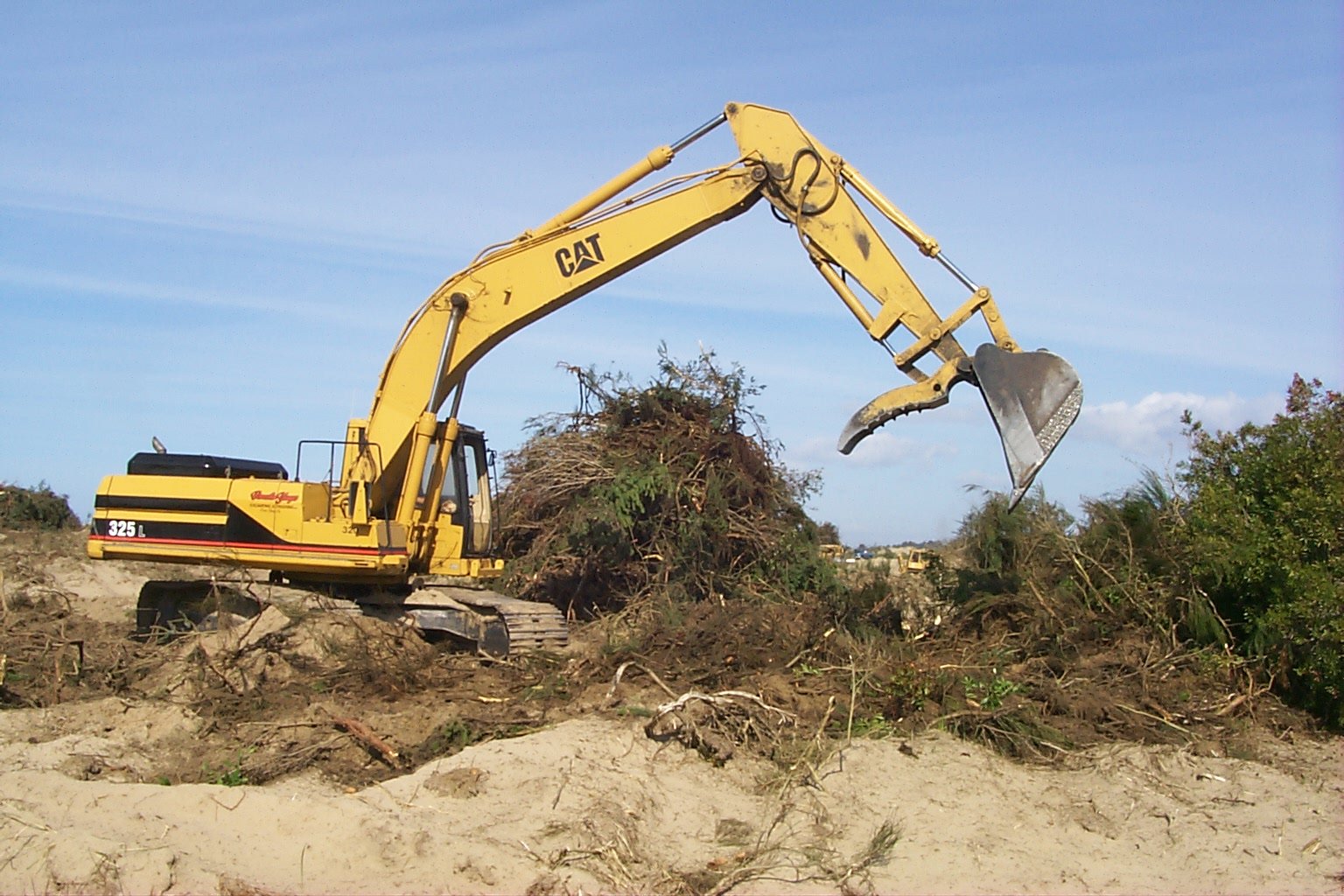
A hydraulic cylinder (also called a linear hydraulic motor, hydraulic actuator, or hydraulic ram) is a mechanical actuator that is used to convert fluid pressure into linear force and motion. It has many applications, notably in construction equipment (engineering vehicles), manufacturing machinery, elevators, and civil engineering. A hydraulic cylinder is a hydraulic actuator that provides linear motion when hydraulic energy is converted into mechanical movement. It can be likened to a muscle in that, when the hydraulic system of a machine is activated, the cylinder is responsible for providing the motion.
Hydraulic cylinders are powered from pressurized hydraulic fluid, which is incompressible. Typically oil is used as hydraulic fluid. The hydraulic cylinder consists of a cylinder barrel, in which a piston connected to a piston rod moves back and forth. The barrel is closed on one end by the cylinder bottom (also called the cap) and the other end by the cylinder head (also called the gland) where the piston rod comes out of the cylinder. The piston has sliding rings and seals. The piston divides the inside of the cylinder into two chambers, the bottom chamber (cap end) and the piston rod side chamber (rod end/head-end).
Flanges, trunnions, clevises, and lugs are common cylinder mounting end options. The piston rod also has mounting attachments to connect the cylinder to the object or machine component that it is pushing or pulling.
A hydraulic cylinder is the actuator or "motor" side of this system. The "generator" side of the hydraulic system is the hydraulic pump which pressurizes and delivers a fixed or regulated flow of oil to the hydraulic cylinder, to move the piston. Typically, hydraulic pumps generate power by various energy sources: hand, air, and electric motor, or engine. The piston pushes the oil in the other chamber back to the reservoir. If we assume oil enters the cap end during an extension stroke, zero friction, and the oil pressure in the rod end/head end is approximately zero, force F on the piston rod equals the pressure P in the cylinder times the piston area A:
Actual force measured during piston rod movement may exceed the calculated force by 20% or more due to friction created by seals and mounting end bushings.
Hydraulic cylinder pistons rods are typically sized according to the force, including friction losses, needed to move a load, while avoiding piston rod buckling load, as can be assessed by ANSI T3.6.37 or ISO/TS 13725.[1] To prevent the creation of force in excess of the piston rod buckling load by the hydraulic fluid, a hydraulic fluid relief valve in the hydraulic circuit of the cylinder can be set to relieve at a pressure below the buckling load pressure, assuming the relief valve can expel the hydraulic fluid accordingly.
Shearing forces at the connection between the piston rod and mounting end or at the hydraulic cylinder base is another factor to consider when determining hydraulic cylinder reliability.
For double-acting single-rod cylinders, when the input and output pressures are reversed, there is a force difference between the two sides of the piston due to one side of the piston being covered by the rod attached to it. The cylinder rod reduces the surface area of the piston and reduces the force that can be applied for the retraction stroke.
Hub AI
Hydraulic cylinder AI simulator
(@Hydraulic cylinder_simulator)
Hydraulic cylinder
A hydraulic cylinder (also called a linear hydraulic motor, hydraulic actuator, or hydraulic ram) is a mechanical actuator that is used to convert fluid pressure into linear force and motion. It has many applications, notably in construction equipment (engineering vehicles), manufacturing machinery, elevators, and civil engineering. A hydraulic cylinder is a hydraulic actuator that provides linear motion when hydraulic energy is converted into mechanical movement. It can be likened to a muscle in that, when the hydraulic system of a machine is activated, the cylinder is responsible for providing the motion.
Hydraulic cylinders are powered from pressurized hydraulic fluid, which is incompressible. Typically oil is used as hydraulic fluid. The hydraulic cylinder consists of a cylinder barrel, in which a piston connected to a piston rod moves back and forth. The barrel is closed on one end by the cylinder bottom (also called the cap) and the other end by the cylinder head (also called the gland) where the piston rod comes out of the cylinder. The piston has sliding rings and seals. The piston divides the inside of the cylinder into two chambers, the bottom chamber (cap end) and the piston rod side chamber (rod end/head-end).
Flanges, trunnions, clevises, and lugs are common cylinder mounting end options. The piston rod also has mounting attachments to connect the cylinder to the object or machine component that it is pushing or pulling.
A hydraulic cylinder is the actuator or "motor" side of this system. The "generator" side of the hydraulic system is the hydraulic pump which pressurizes and delivers a fixed or regulated flow of oil to the hydraulic cylinder, to move the piston. Typically, hydraulic pumps generate power by various energy sources: hand, air, and electric motor, or engine. The piston pushes the oil in the other chamber back to the reservoir. If we assume oil enters the cap end during an extension stroke, zero friction, and the oil pressure in the rod end/head end is approximately zero, force F on the piston rod equals the pressure P in the cylinder times the piston area A:
Actual force measured during piston rod movement may exceed the calculated force by 20% or more due to friction created by seals and mounting end bushings.
Hydraulic cylinder pistons rods are typically sized according to the force, including friction losses, needed to move a load, while avoiding piston rod buckling load, as can be assessed by ANSI T3.6.37 or ISO/TS 13725.[1] To prevent the creation of force in excess of the piston rod buckling load by the hydraulic fluid, a hydraulic fluid relief valve in the hydraulic circuit of the cylinder can be set to relieve at a pressure below the buckling load pressure, assuming the relief valve can expel the hydraulic fluid accordingly.
Shearing forces at the connection between the piston rod and mounting end or at the hydraulic cylinder base is another factor to consider when determining hydraulic cylinder reliability.
For double-acting single-rod cylinders, when the input and output pressures are reversed, there is a force difference between the two sides of the piston due to one side of the piston being covered by the rod attached to it. The cylinder rod reduces the surface area of the piston and reduces the force that can be applied for the retraction stroke.
Recent media