


Community hub
Recent from talks
Contribute something to knowledge base
Content stats: 0 posts, 0 articles, 1 media, 0 notes
Members stats: 0 subscribers, 0 contributors, 0 moderators, 0 supporters
Subscribers
Supporters
Contributors
Moderators
Hub AI
Hyundai Kappa engine AI simulator
(@Hyundai Kappa engine_simulator)
Hub AI
Hyundai Kappa engine AI simulator
(@Hyundai Kappa engine_simulator)
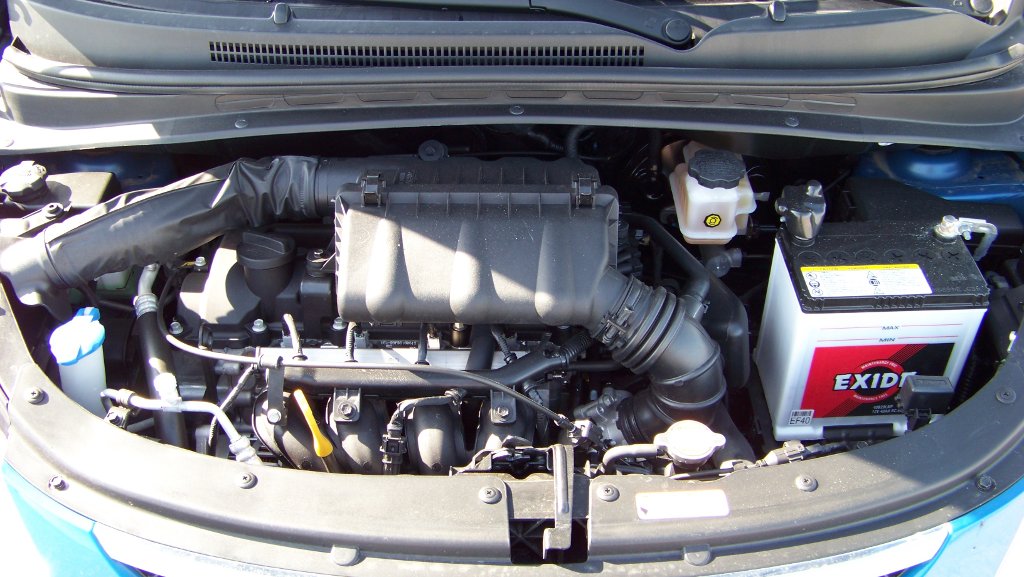
Hyundai Kappa engine
Hyundai's Kappa automobile engine series consists of three-cylinder and four-cylinder models.
The Kappa engine series are gasoline powered, all-aluminum block and utilizes a 16-valve design with DOHC as opposed to the 12-valve design SOHC of its Epsilon engine family predecessor.
The 1,197 cc (1.2 L) is a destroked variant of the Kappa G4LA engine produced in India to circumvent the 1,200 cc tax bracket. It makes 80 PS (59 kW; 79 hp) at 5,200 rpm and 11.3 kg⋅m (82 lb⋅ft; 111 N⋅m) of torque at 4,000 rpm.
The 1,248 cc (1.25 L) is the European version. It makes 77–78 PS (57–57 kW; 76–77 hp) at 6,000 rpm and 11.8–12.1 kg⋅m (85–88 lb⋅ft; 116–119 N⋅m) of torque at 4,000 rpm. Engine output figures varies depending on application and target market. Fuel economy is rated at 5 L/100 km (47 mpg‑US; 56 mpg‑imp) in the European combined test cycle.
The 1,353 cc (1.4 L) version makes 95 PS (70 kW; 94 hp) at 6,000 rpm and 13.2 kg⋅m (95 lb⋅ft; 129 N⋅m) of torque at 4,000 rpm.
Main improvement is adding VVT (variable valve timing) to the engine.
The 998 cc (1.0 L) three-cylinder engine makes 69 PS (51 kW; 68 hp) at 6,200 rpm and 9.7 kg⋅m (70 lb⋅ft; 95 N⋅m) of torque at 3,500 rpm.
Flex fuel compatible version of the 1.0 MPi engine. The 998 cc (1.0 L) three-cylinder engine makes 80 PS (59 kW; 79 hp) at 6,200 rpm and 10.2 kg⋅m (74 lb⋅ft; 100 N⋅m) of torque at 4,500 rpm.
Hyundai Kappa engine
Hyundai's Kappa automobile engine series consists of three-cylinder and four-cylinder models.
The Kappa engine series are gasoline powered, all-aluminum block and utilizes a 16-valve design with DOHC as opposed to the 12-valve design SOHC of its Epsilon engine family predecessor.
The 1,197 cc (1.2 L) is a destroked variant of the Kappa G4LA engine produced in India to circumvent the 1,200 cc tax bracket. It makes 80 PS (59 kW; 79 hp) at 5,200 rpm and 11.3 kg⋅m (82 lb⋅ft; 111 N⋅m) of torque at 4,000 rpm.
The 1,248 cc (1.25 L) is the European version. It makes 77–78 PS (57–57 kW; 76–77 hp) at 6,000 rpm and 11.8–12.1 kg⋅m (85–88 lb⋅ft; 116–119 N⋅m) of torque at 4,000 rpm. Engine output figures varies depending on application and target market. Fuel economy is rated at 5 L/100 km (47 mpg‑US; 56 mpg‑imp) in the European combined test cycle.
The 1,353 cc (1.4 L) version makes 95 PS (70 kW; 94 hp) at 6,000 rpm and 13.2 kg⋅m (95 lb⋅ft; 129 N⋅m) of torque at 4,000 rpm.
Main improvement is adding VVT (variable valve timing) to the engine.
The 998 cc (1.0 L) three-cylinder engine makes 69 PS (51 kW; 68 hp) at 6,200 rpm and 9.7 kg⋅m (70 lb⋅ft; 95 N⋅m) of torque at 3,500 rpm.
Flex fuel compatible version of the 1.0 MPi engine. The 998 cc (1.0 L) three-cylinder engine makes 80 PS (59 kW; 79 hp) at 6,200 rpm and 10.2 kg⋅m (74 lb⋅ft; 100 N⋅m) of torque at 4,500 rpm.
Recent media
Recent media