
Recent from talks
Imperator totius Hispaniae
Knowledge base stats:
Talk channels stats:
Members stats:
Imperator totius Hispaniae
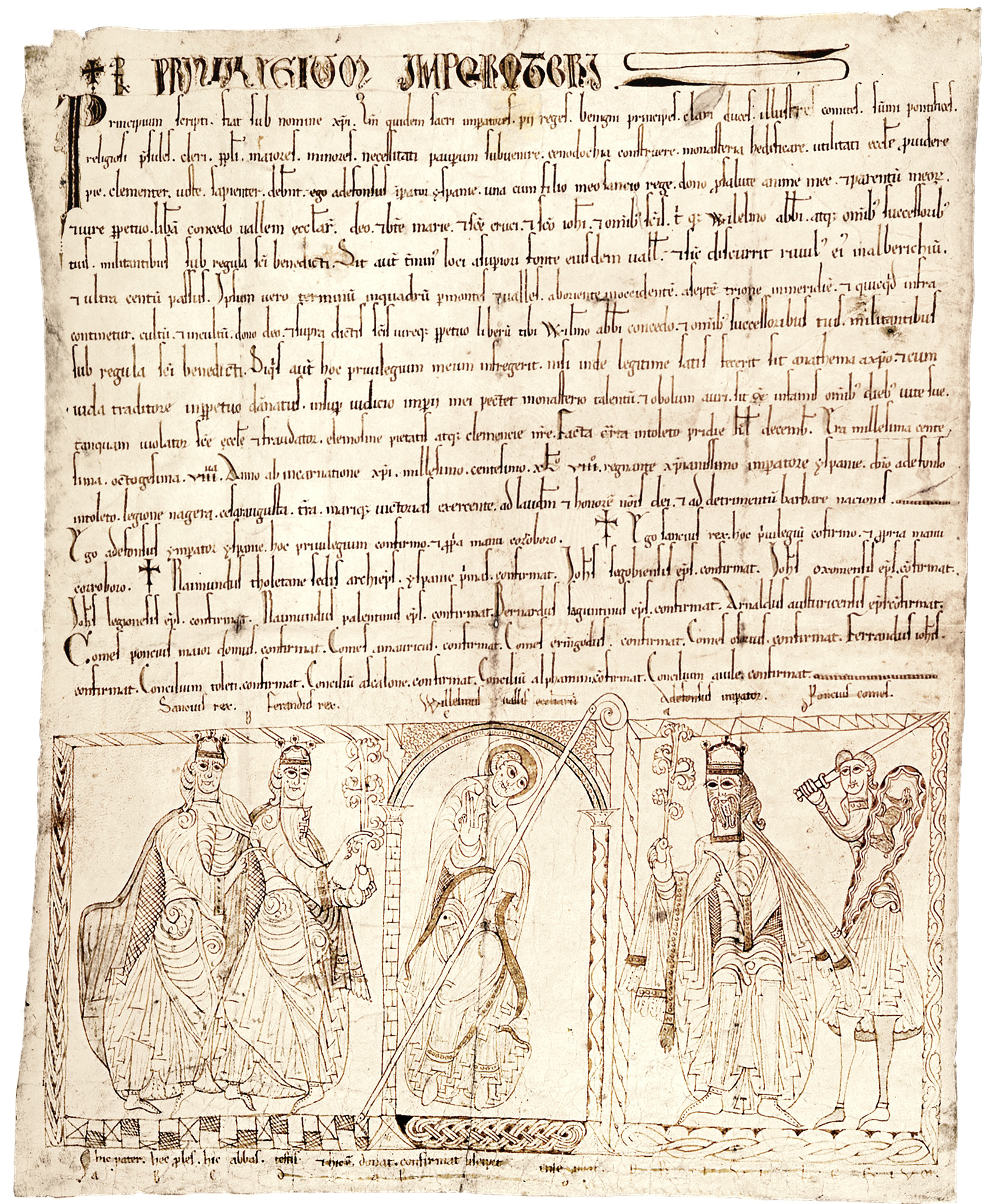
Imperator totius Hispaniae is a Latin title meaning "Emperor of All Spain". In Spain in the Middle Ages, the title "emperor" (from Latin imperator) was used under a variety of circumstances from the ninth century onwards, but its usage peaked, as a formal and practical title, between 1086 and 1157. It was primarily used by the kings of León and Castile, but it also found currency in the Kingdom of Navarre and was employed by the counts of Castile and at least one duke of Galicia. It signalled at various points the king's equality with the rulers of the Byzantine Empire and Holy Roman Empire, his rule by conquest or military superiority, his rule over several ethnic or religious groups, and his claim to suzerainty over the other kings of the peninsula, both Christian and Muslim. The use of the imperial title received scant recognition outside of Spain and it had become largely forgotten by the thirteenth century.
The analogous feminine title, "empress" (Latin imperatrix), was less frequently used for the consorts of the emperors. Only one reigning queen, Urraca, had occasion to use it, but did so sparingly.
One of the earliest references to the Kingdom of Asturias, predecessor of the Kingdom of León, as an empire (imperium) is in the Chronicle of Alfonso III (881), which says that King Silo (774–83) "subjugated the people of Galicia to his imperial rule" (imperium). The reference is clearly to the rule of the Asturian king over several peoples, namely Asturians, Galicians and Basques.
A surviving charter of 863 refers to Ordoño I as "our lord, residing in the Asturias" (domno nostro Ordonio residente in Asturias), qualifying him as a "commanding prince" (imperante principe). This residential form of title was preferred because the Asturian kingdom at this stage was not ethnically unified or well-defined.
There exist two diplomas dated to the reign of Alfonso III of Asturias and referring to him as emperor, but both are early twelfth-century fabrications emanating from the scriptorium of the Diocese of Mondoñedo and Bishop Gonzalo, designed to bolster that church's claims in a dispute of 1102. The first document, dated to 866 or 867, confirmed by Alfonso, who signs as "I, Alfonso, of all Spain emperor, who is unworthily permitted to be called the Catholic". The other refers to him simply as "Alfonso, Emperor of Spain" (Adefonsus Hispaniae imperator). The forger may have borrowed these exalted titles from the chancery of Alfonso VI, who was using the title imperator totius Hispaniae at the time. The subscription lists of both these charters (that is, the list of those who witnessed or confirmed them) are compatible with the dates, and it has been suggested that the clauses referring to Alfonso as emperor are derived from authentic (albeit now lost) charters.
There exists a letter purportedly written by Alfonso III to the clergy of the Cathedral of Tours in 906, wherein the king is arranging to purchase an "imperial crown made of gold and precious stones, fitting to his dignity" (corona imperialis) kept at Tours. Alfonso almost invariably calls himself simply "King Alfonso" (Adefonsus rex) in his surviving charters, but in the letter he uses the elaborate and high-ranking style "Alfonso by the power and assent of Christ king of Spain" (Adefonsus pro Christi nutu at que potentia Hispaniae rex). A similarly grandiose title is given to Alfonso in the contemporary Chronica Prophetica (883): "glorious Alfonso in all the Spains to reign" (gloriosus Adefonsus in omni Spanie regnaturus). The authenticity of the letter is still debated.
Besides the apocryphal charters, there are genuine, posthumous documents referring to Alfonso as emperor. In one that dates from 917, in the reign of his son Ordoño II of León, the king confirms as "Ordoño, son of the Emperor Alfonso the Great" (Ordonius, filius Adephonsi Magni imperatoris). A document from 950 can also be cited that refers to Alfonso with the imperial title. The pertinent passage reads: "They put in place a border with Gonzalo, son of our lord emperor Prince Alfonso".
A royal diploma of 922, where Ordoño II refers to himself as emperor, is the first recorded instance of a Leonese king doing so. The charter reads, "I, the most serene emperor Ordoño" (Ego serenissimus imperator Ordonius). Ordoño II's successor, Ramiro II (931–51), is not titled "emperor" in any contemporary document, but a charter dated 940 and preserved as a copy in the cartulary of the monastery of Eslonza is dated by "our reigning lord and emperor" (regnante domino et imperatore nostro), the reigning king being Ramiro II. Although he apparently avoided the imperial style himself, his subjects and his successor did not. Private documents of his reign commonly refer to him as the "great king" (rex magnus), as in a document of 930 ("reigning Ramiro, prince and great king in León"). In a private charter from the first year of Ramiro's son Ordoño III (952), the king is called "our reigning lord prince Ordoño, heir of the lord emperor Ramiro" (regnante principe nostro domno Hordonio, prolis domini Ranimiri imperatoris) and the charter was given "at Simancas in the presence of the emperor" (perrexerunt ad Septemanka in presentia imperatoris). In a charter of 954, Ordoño is described as "most lordly emperor, son of Ramiro" (dominisimo imperatori Ranimiro filius).
Hub AI
Imperator totius Hispaniae AI simulator
(@Imperator totius Hispaniae_simulator)
Imperator totius Hispaniae
Imperator totius Hispaniae is a Latin title meaning "Emperor of All Spain". In Spain in the Middle Ages, the title "emperor" (from Latin imperator) was used under a variety of circumstances from the ninth century onwards, but its usage peaked, as a formal and practical title, between 1086 and 1157. It was primarily used by the kings of León and Castile, but it also found currency in the Kingdom of Navarre and was employed by the counts of Castile and at least one duke of Galicia. It signalled at various points the king's equality with the rulers of the Byzantine Empire and Holy Roman Empire, his rule by conquest or military superiority, his rule over several ethnic or religious groups, and his claim to suzerainty over the other kings of the peninsula, both Christian and Muslim. The use of the imperial title received scant recognition outside of Spain and it had become largely forgotten by the thirteenth century.
The analogous feminine title, "empress" (Latin imperatrix), was less frequently used for the consorts of the emperors. Only one reigning queen, Urraca, had occasion to use it, but did so sparingly.
One of the earliest references to the Kingdom of Asturias, predecessor of the Kingdom of León, as an empire (imperium) is in the Chronicle of Alfonso III (881), which says that King Silo (774–83) "subjugated the people of Galicia to his imperial rule" (imperium). The reference is clearly to the rule of the Asturian king over several peoples, namely Asturians, Galicians and Basques.
A surviving charter of 863 refers to Ordoño I as "our lord, residing in the Asturias" (domno nostro Ordonio residente in Asturias), qualifying him as a "commanding prince" (imperante principe). This residential form of title was preferred because the Asturian kingdom at this stage was not ethnically unified or well-defined.
There exist two diplomas dated to the reign of Alfonso III of Asturias and referring to him as emperor, but both are early twelfth-century fabrications emanating from the scriptorium of the Diocese of Mondoñedo and Bishop Gonzalo, designed to bolster that church's claims in a dispute of 1102. The first document, dated to 866 or 867, confirmed by Alfonso, who signs as "I, Alfonso, of all Spain emperor, who is unworthily permitted to be called the Catholic". The other refers to him simply as "Alfonso, Emperor of Spain" (Adefonsus Hispaniae imperator). The forger may have borrowed these exalted titles from the chancery of Alfonso VI, who was using the title imperator totius Hispaniae at the time. The subscription lists of both these charters (that is, the list of those who witnessed or confirmed them) are compatible with the dates, and it has been suggested that the clauses referring to Alfonso as emperor are derived from authentic (albeit now lost) charters.
There exists a letter purportedly written by Alfonso III to the clergy of the Cathedral of Tours in 906, wherein the king is arranging to purchase an "imperial crown made of gold and precious stones, fitting to his dignity" (corona imperialis) kept at Tours. Alfonso almost invariably calls himself simply "King Alfonso" (Adefonsus rex) in his surviving charters, but in the letter he uses the elaborate and high-ranking style "Alfonso by the power and assent of Christ king of Spain" (Adefonsus pro Christi nutu at que potentia Hispaniae rex). A similarly grandiose title is given to Alfonso in the contemporary Chronica Prophetica (883): "glorious Alfonso in all the Spains to reign" (gloriosus Adefonsus in omni Spanie regnaturus). The authenticity of the letter is still debated.
Besides the apocryphal charters, there are genuine, posthumous documents referring to Alfonso as emperor. In one that dates from 917, in the reign of his son Ordoño II of León, the king confirms as "Ordoño, son of the Emperor Alfonso the Great" (Ordonius, filius Adephonsi Magni imperatoris). A document from 950 can also be cited that refers to Alfonso with the imperial title. The pertinent passage reads: "They put in place a border with Gonzalo, son of our lord emperor Prince Alfonso".
A royal diploma of 922, where Ordoño II refers to himself as emperor, is the first recorded instance of a Leonese king doing so. The charter reads, "I, the most serene emperor Ordoño" (Ego serenissimus imperator Ordonius). Ordoño II's successor, Ramiro II (931–51), is not titled "emperor" in any contemporary document, but a charter dated 940 and preserved as a copy in the cartulary of the monastery of Eslonza is dated by "our reigning lord and emperor" (regnante domino et imperatore nostro), the reigning king being Ramiro II. Although he apparently avoided the imperial style himself, his subjects and his successor did not. Private documents of his reign commonly refer to him as the "great king" (rex magnus), as in a document of 930 ("reigning Ramiro, prince and great king in León"). In a private charter from the first year of Ramiro's son Ordoño III (952), the king is called "our reigning lord prince Ordoño, heir of the lord emperor Ramiro" (regnante principe nostro domno Hordonio, prolis domini Ranimiri imperatoris) and the charter was given "at Simancas in the presence of the emperor" (perrexerunt ad Septemanka in presentia imperatoris). In a charter of 954, Ordoño is described as "most lordly emperor, son of Ramiro" (dominisimo imperatori Ranimiro filius).
Recent media