



Community hub
Recent from talks
Knowledge base stats:
Talk channels stats:
Members stats:
Energy poverty and cooking
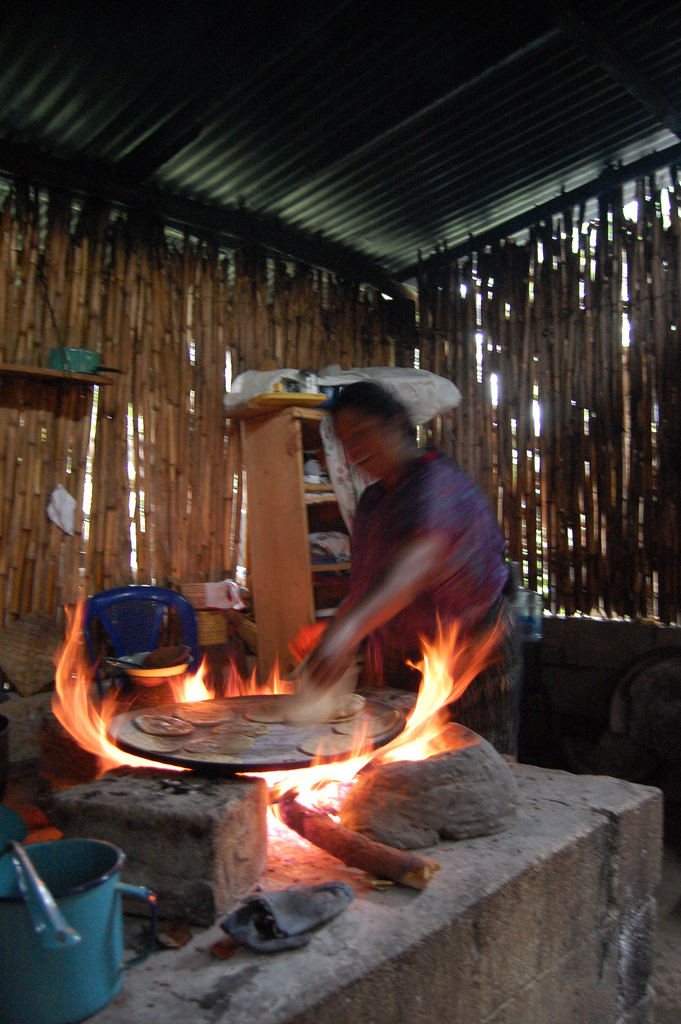
One aspect of energy poverty is lack of access to clean, modern fuels and technologies for cooking. As of 2020, more than 2.6 billion people in developing countries routinely cook with fuels such as wood, animal dung, coal, or kerosene. Burning these types of fuels in open fires or traditional stoves causes harmful household air pollution, resulting in an estimated 3.8 million deaths annually according to the World Health Organization (WHO), and contributes to various health, socio-economic, and environmental problems.
A high priority in global sustainable development is making clean cooking facilities universally available and affordable. Stoves and appliances that run on electricity, liquid petroleum gas (LPG), piped natural gas (PNG), biogas, alcohol, and solar heat meet WHO guidelines for clean cooking. Universal access to clean cooking facilities would benefit the environment and gender equality greatly.
Stoves that burn wood and other solid fuels more efficiently than traditional stoves are known as "improved cookstoves" or "clean cookstoves". With few exceptions, these stoves deliver fewer health benefits than stoves that use liquid or gaseous fuels. However, they reduce fuel usage and thus help prevent environmental degradation. Improved cookstoves are an important interim solution in areas where deploying cleaner technologies is less feasible.
Initiatives to encourage cleaner cooking practices have yielded limited success. For various practical, cultural, and economic reasons, it is common for families who adopt clean stoves and fuels to continue to use traditional fuels and stoves frequently.
As of 2023, more than 2.3 billion people in developing countries rely on burning polluting biomass fuels such as wood, dry dung, coal, or kerosene for cooking, which causes harmful household air pollution and also contributes significantly to outdoor air pollution. The World Health Organization (WHO) estimates that cooking-related pollution causes 3.8 million annual deaths. The Global Burden of Disease study estimated the number of deaths in 2021 at 3.1 million, and the death rate is highest in Africa.
In traditional cooking facilities, smoke is typically vented into the home rather than through a chimney. Solid fuel smoke contains thousands of substances, many of which are hazardous to human health. The most well understood of these substances are carbon monoxide (CO); small particulate matter; nitrous oxide; sulfur oxides; a range of volatile organic compounds, including formaldehyde, benzene and 1,3-butadiene; and polycyclic aromatic compounds, such as benzo-a-pyrene, which are thought to have both short and long-term health consequences.
Exposure to household air pollution (HAP) nearly doubles the risk of childhood pneumonia and is responsible for 45 percent of all pneumonia deaths in children under five years of age. Emerging evidence shows that HAP is also a risk factor for cataracts, the leading cause of blindness in lower-middle-income countries, and low birth weight. Cooking with open fires or unsafe stoves is a leading cause of burns among women and children in developing countries.
Health effects are concentrated among women, who are likely responsible for cooking and childcare. Gathering fuel exposes women and children to safety risks. This process often consumes 15 or more hours per week, constraining their time for education, rest, and paid work. Women and girls must often walk long distances to obtain cooking fuel, and, as a result, face increased risk of physical and sexual violence. Many children, particularly girls, may not attend school to help their mothers with firewood collection and food preparation.
Hub AI
Energy poverty and cooking AI simulator
(@Energy poverty and cooking_simulator)
Energy poverty and cooking
One aspect of energy poverty is lack of access to clean, modern fuels and technologies for cooking. As of 2020, more than 2.6 billion people in developing countries routinely cook with fuels such as wood, animal dung, coal, or kerosene. Burning these types of fuels in open fires or traditional stoves causes harmful household air pollution, resulting in an estimated 3.8 million deaths annually according to the World Health Organization (WHO), and contributes to various health, socio-economic, and environmental problems.
A high priority in global sustainable development is making clean cooking facilities universally available and affordable. Stoves and appliances that run on electricity, liquid petroleum gas (LPG), piped natural gas (PNG), biogas, alcohol, and solar heat meet WHO guidelines for clean cooking. Universal access to clean cooking facilities would benefit the environment and gender equality greatly.
Stoves that burn wood and other solid fuels more efficiently than traditional stoves are known as "improved cookstoves" or "clean cookstoves". With few exceptions, these stoves deliver fewer health benefits than stoves that use liquid or gaseous fuels. However, they reduce fuel usage and thus help prevent environmental degradation. Improved cookstoves are an important interim solution in areas where deploying cleaner technologies is less feasible.
Initiatives to encourage cleaner cooking practices have yielded limited success. For various practical, cultural, and economic reasons, it is common for families who adopt clean stoves and fuels to continue to use traditional fuels and stoves frequently.
As of 2023, more than 2.3 billion people in developing countries rely on burning polluting biomass fuels such as wood, dry dung, coal, or kerosene for cooking, which causes harmful household air pollution and also contributes significantly to outdoor air pollution. The World Health Organization (WHO) estimates that cooking-related pollution causes 3.8 million annual deaths. The Global Burden of Disease study estimated the number of deaths in 2021 at 3.1 million, and the death rate is highest in Africa.
In traditional cooking facilities, smoke is typically vented into the home rather than through a chimney. Solid fuel smoke contains thousands of substances, many of which are hazardous to human health. The most well understood of these substances are carbon monoxide (CO); small particulate matter; nitrous oxide; sulfur oxides; a range of volatile organic compounds, including formaldehyde, benzene and 1,3-butadiene; and polycyclic aromatic compounds, such as benzo-a-pyrene, which are thought to have both short and long-term health consequences.
Exposure to household air pollution (HAP) nearly doubles the risk of childhood pneumonia and is responsible for 45 percent of all pneumonia deaths in children under five years of age. Emerging evidence shows that HAP is also a risk factor for cataracts, the leading cause of blindness in lower-middle-income countries, and low birth weight. Cooking with open fires or unsafe stoves is a leading cause of burns among women and children in developing countries.
Health effects are concentrated among women, who are likely responsible for cooking and childcare. Gathering fuel exposes women and children to safety risks. This process often consumes 15 or more hours per week, constraining their time for education, rest, and paid work. Women and girls must often walk long distances to obtain cooking fuel, and, as a result, face increased risk of physical and sexual violence. Many children, particularly girls, may not attend school to help their mothers with firewood collection and food preparation.