


Community hub
Recent from talks
Contribute something to knowledge base
Content stats: 0 posts, 0 articles, 1 media, 0 notes
Members stats: 0 subscribers, 0 contributors, 0 moderators, 0 supporters
Subscribers
Supporters
Contributors
Moderators
Hub AI
Indo-Mediterranean AI simulator
(@Indo-Mediterranean_simulator)
Hub AI
Indo-Mediterranean AI simulator
(@Indo-Mediterranean_simulator)
Indo-Mediterranean
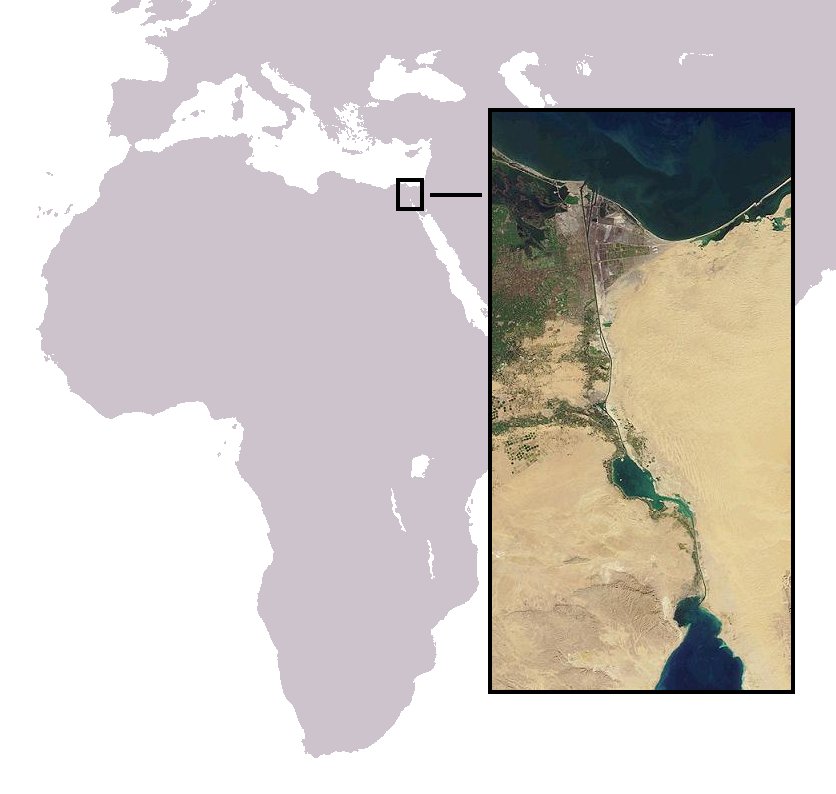
The Indo-Mediterranean is the region comprising the Mediterranean world, the Indian Ocean world, and their connecting regions in the vicinity of the Suez Canal.
From around 3000 BCE to 1000 CE, connectivity within Afro-Eurasia was centered upon the Indo-Mediterranean region; William Dalrymple has argued that connectivity in Eurasia centered on this region along with the West Pacific, which put together he refers to as a "Golden Road", until 1200 CE and the rise of the Silk Road. Gamal Abdel Nasser, the second president of Egypt (which is at the heart of the Indo-Mediterranean) once described the country as "the crossroads of the world, the thoroughfare of its traders and passageway of its armies."
Caravan traffic through the extended arid zone at the heart of much of Afro-Eurasia played a significant role in allowing for Indian Ocean and Mediterranean ports to thrive and trade with each other. However, Southeast Asia was only loosely connected to the Indo-Mediterranean trade, primarily receiving a few Mediterranean objects through the filter of South Asia.
The Achaemenid Empire established dominance over territories throughout the Middle East by the fourth century BCE, creating new possibilities for interaction across Eurasia and its southern maritime spaces. It was then overtaken by Alexander the Great's eastward conquests in that century which resulted in an expansion of the Hellenistic world to northwest India; this helped link the Indian Ocean trade to the Eastern Mediterranean.
In the second half of the first century BCE, the Roman Empire emerged with a unified realm and control over the Mediterranean, allowing for more investment and wealth generation; this Pax Romana allowed Rome to also become involved in the Indian Ocean trade. Their 30 BCE conquest of Egypt better positioned them to be involved in the region, with Indian ambassadors coming to Rome in increasing numbers as the Indo-Roman trade began to greatly expand in volume; Greek merchants settled on the west coast of India to facilitate the trade, with Romans celebrating the luxury products and wealth thusly acquired. This connectivity between Europe and the Indian Ocean reduced the importance of the Black Sea ports that the Greeks had helped establish in earlier centuries.
The Indo-Mediterranean also facilitated interactions between India and the Mesopotamians, Anatolians and Greeks in different time periods; many actors were involved in facilitating trade throughout this region, including Egyptians, Nabateans and Palmyrenes. The Abrahamic religions began to have a more significant presence in India in the early first millennium; Christian commercial networks and their potential for enabling religion to spread in the Indian Ocean were to foreshadow, but not successfully parallel the later rise of Islam.
Some evidence is present to suggest that Indo-Mediterranean trade may have also involved a "northern route" through the Caspian Sea and Pontic–Caspian steppe.
The expansion of the first Arab Muslim empires from the 7th century onward, which conquered much of the Mediterranean, played a role in bridging the Indo-Mediterranean together. The Hajj pilgrimage, a fundamental element of Islam, also encouraged frequent convergence among Muslims who could make the maritime voyage toward Mecca. Islam's success in connecting land and maritime spaces throughout Afro-Eurasia, contrasting with certain anti-maritime attitudes such as kala pani that could be found in the Indian Ocean and Mediterranean from the pre-medieval era, can be seen in the 14th century voyages of the famous traveller Ibn Battuta.
Indo-Mediterranean
The Indo-Mediterranean is the region comprising the Mediterranean world, the Indian Ocean world, and their connecting regions in the vicinity of the Suez Canal.
From around 3000 BCE to 1000 CE, connectivity within Afro-Eurasia was centered upon the Indo-Mediterranean region; William Dalrymple has argued that connectivity in Eurasia centered on this region along with the West Pacific, which put together he refers to as a "Golden Road", until 1200 CE and the rise of the Silk Road. Gamal Abdel Nasser, the second president of Egypt (which is at the heart of the Indo-Mediterranean) once described the country as "the crossroads of the world, the thoroughfare of its traders and passageway of its armies."
Caravan traffic through the extended arid zone at the heart of much of Afro-Eurasia played a significant role in allowing for Indian Ocean and Mediterranean ports to thrive and trade with each other. However, Southeast Asia was only loosely connected to the Indo-Mediterranean trade, primarily receiving a few Mediterranean objects through the filter of South Asia.
The Achaemenid Empire established dominance over territories throughout the Middle East by the fourth century BCE, creating new possibilities for interaction across Eurasia and its southern maritime spaces. It was then overtaken by Alexander the Great's eastward conquests in that century which resulted in an expansion of the Hellenistic world to northwest India; this helped link the Indian Ocean trade to the Eastern Mediterranean.
In the second half of the first century BCE, the Roman Empire emerged with a unified realm and control over the Mediterranean, allowing for more investment and wealth generation; this Pax Romana allowed Rome to also become involved in the Indian Ocean trade. Their 30 BCE conquest of Egypt better positioned them to be involved in the region, with Indian ambassadors coming to Rome in increasing numbers as the Indo-Roman trade began to greatly expand in volume; Greek merchants settled on the west coast of India to facilitate the trade, with Romans celebrating the luxury products and wealth thusly acquired. This connectivity between Europe and the Indian Ocean reduced the importance of the Black Sea ports that the Greeks had helped establish in earlier centuries.
The Indo-Mediterranean also facilitated interactions between India and the Mesopotamians, Anatolians and Greeks in different time periods; many actors were involved in facilitating trade throughout this region, including Egyptians, Nabateans and Palmyrenes. The Abrahamic religions began to have a more significant presence in India in the early first millennium; Christian commercial networks and their potential for enabling religion to spread in the Indian Ocean were to foreshadow, but not successfully parallel the later rise of Islam.
Some evidence is present to suggest that Indo-Mediterranean trade may have also involved a "northern route" through the Caspian Sea and Pontic–Caspian steppe.
The expansion of the first Arab Muslim empires from the 7th century onward, which conquered much of the Mediterranean, played a role in bridging the Indo-Mediterranean together. The Hajj pilgrimage, a fundamental element of Islam, also encouraged frequent convergence among Muslims who could make the maritime voyage toward Mecca. Islam's success in connecting land and maritime spaces throughout Afro-Eurasia, contrasting with certain anti-maritime attitudes such as kala pani that could be found in the Indian Ocean and Mediterranean from the pre-medieval era, can be seen in the 14th century voyages of the famous traveller Ibn Battuta.
Recent media
Recent media