
Recent from talks
Insects in medicine
Knowledge base stats:
Talk channels stats:
Members stats:
Insects in medicine
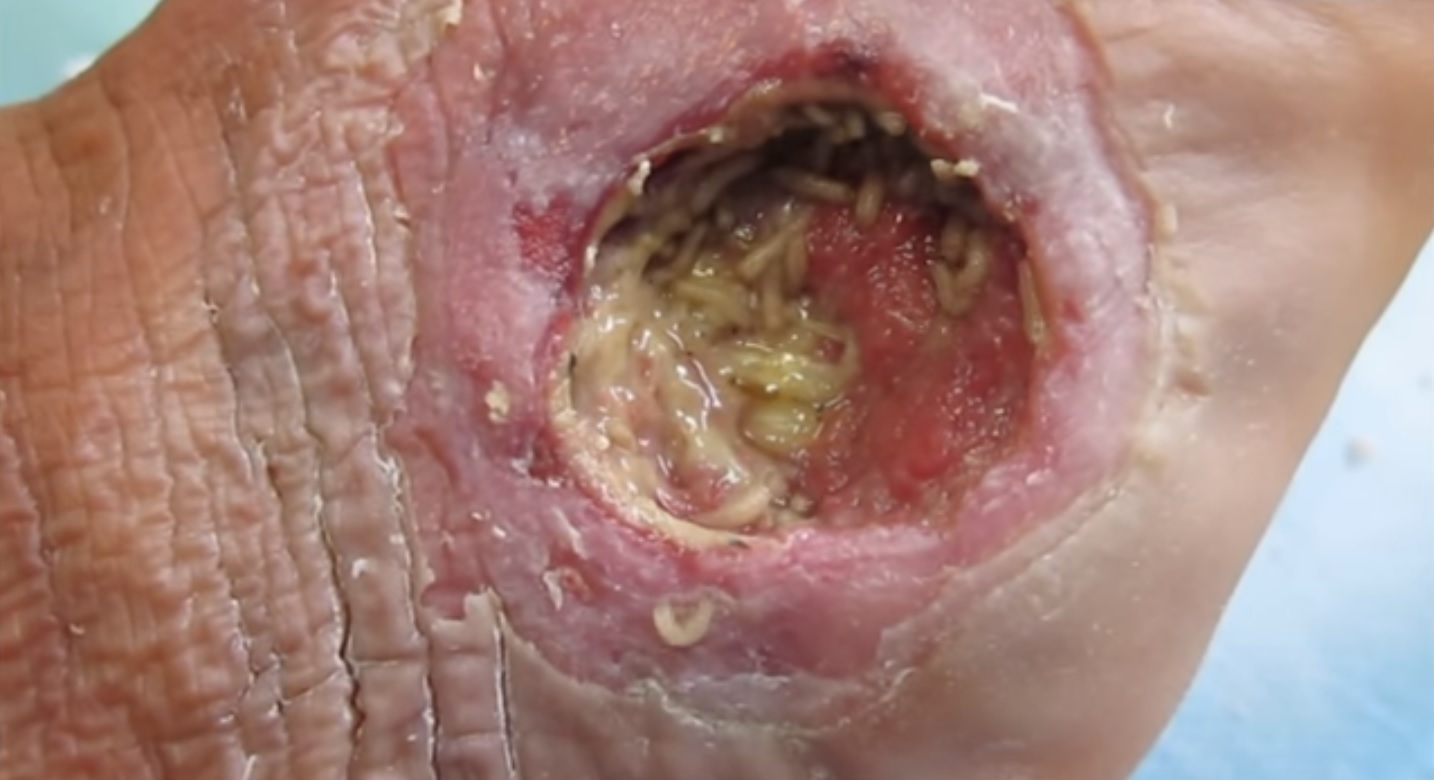
Insects have long been used in medicine, both traditional and modern, sometimes with little evidence of their effectiveness.
The medicinal uses of insects and other arthropods worldwide have been reviewed by Meyer-Rochow, who provides examples of all major insect groups, spiders, worms and molluscs and discusses their potential as suppliers of bioactive components. Using insects (and spiders) to treat various maladies and injuries has a long tradition and, having stood the test of time, can be effective and provide results. However, sometimes folk-medicinal "logic" was based on the Doctrine of Signatures ("let likes be cured by likes") and had, if any at all, little more than a psychological effect. For example, to treat cases of constipation, dung beetles were prescribed; to slim down stick insects were thought to help; hairy tarantulas seemed the right treatment for hair loss and fat grubs resembling the swollen limb caused by the parasite Wuchereria bancrofti were expected to help the elephantiasis patient. An organism bearing parts that resemble human body parts, animals, or other objects, was thought to have useful relevance to those parts, animals or objects. So, for example, the femurs of grasshoppers, which were said to resemble the human liver, were used to treat liver ailments by the indigenous peoples of Mexico. This doctrine is common throughout traditional and alternative medicine, but is most prominent where medical traditions are broadly accepted, as in traditional Chinese medicine and Ayurveda, and less by community and family based medicine, as is more common in parts of Africa.
Traditional Chinese medicine includes the use of herbal medicine, acupuncture, massage, exercise, and dietary therapy. It is a typical component of modern medical care throughout East Asia and in some parts of Southeast Asia (such as Thailand). Insects are very commonly incorporated as part of the herbal medicine component of traditional Chinese medicine, and their medical properties and applications are broadly accepted and agreed upon. Some brief examples follow:
The Chinese Black Mountain Ant, Polyrhachis vicina, is supposed to act as a cure all and is widely used, especially by the elderly. It is said to prolong life, to have anti-aging properties, to replenish Qi, and to increase virility and fertility. Recent interest in the ants' medicinal qualities has led to researchers to study the extract's potential to serve as an anti-inflammatory cancer-fighting agent. Chinese Black Mountain Ant extract is typically consumed mixed with wine.
Ayurveda is ancient traditional Indian treatment almost universally incorporated alongside Western medicine as a typical component of medical treatment in India. Although Ayurvedic medicine is often effective, doses can be inconsistent, and may sometimes be contaminated with toxic heavy metals. Some brief examples to follow:
Termite is said to cure a variety of diseases, both specific and vague. Typically the mound or a portion of the mound is dug up and the termites and the architectural components of the mound are together ground into a paste which is then applied topically to the affected areas or, more rarely, mixed with water and consumed. This treatment was said to cure ulcers, rheumatic diseases, and anemia. It was also suggested to be a general pain reliever and health improver.
The Jatropha Leaf Miner, a lepidopteran which feeds preferentially on Jatropha, is an example of a major insect agricultural pest which is also a medicinal remedy. The larvae, which are also the form of the insect with the greatest economic impact on agriculture, are harvested, boiled, and mashed into a paste which is administered topically and is said to induce lactation, reduce fever, and soothe gastrointestinal tracts.
Unlike China and India, the traditional insect medicine of Africa is extremely variable. It is largely regional, with few, if any, major agreements on which insects are useful as treatments for which ailments. Most insect medicinal treatments are passed on through communities and families, rather than being taught in university settings, as Traditional Chinese Medicine and Ayurveda sometimes are; furthermore, most traditional medicine practices necessitate a person in a "healer" role. Some brief examples to follow:
Hub AI
Insects in medicine AI simulator
(@Insects in medicine_simulator)
Insects in medicine
Insects have long been used in medicine, both traditional and modern, sometimes with little evidence of their effectiveness.
The medicinal uses of insects and other arthropods worldwide have been reviewed by Meyer-Rochow, who provides examples of all major insect groups, spiders, worms and molluscs and discusses their potential as suppliers of bioactive components. Using insects (and spiders) to treat various maladies and injuries has a long tradition and, having stood the test of time, can be effective and provide results. However, sometimes folk-medicinal "logic" was based on the Doctrine of Signatures ("let likes be cured by likes") and had, if any at all, little more than a psychological effect. For example, to treat cases of constipation, dung beetles were prescribed; to slim down stick insects were thought to help; hairy tarantulas seemed the right treatment for hair loss and fat grubs resembling the swollen limb caused by the parasite Wuchereria bancrofti were expected to help the elephantiasis patient. An organism bearing parts that resemble human body parts, animals, or other objects, was thought to have useful relevance to those parts, animals or objects. So, for example, the femurs of grasshoppers, which were said to resemble the human liver, were used to treat liver ailments by the indigenous peoples of Mexico. This doctrine is common throughout traditional and alternative medicine, but is most prominent where medical traditions are broadly accepted, as in traditional Chinese medicine and Ayurveda, and less by community and family based medicine, as is more common in parts of Africa.
Traditional Chinese medicine includes the use of herbal medicine, acupuncture, massage, exercise, and dietary therapy. It is a typical component of modern medical care throughout East Asia and in some parts of Southeast Asia (such as Thailand). Insects are very commonly incorporated as part of the herbal medicine component of traditional Chinese medicine, and their medical properties and applications are broadly accepted and agreed upon. Some brief examples follow:
The Chinese Black Mountain Ant, Polyrhachis vicina, is supposed to act as a cure all and is widely used, especially by the elderly. It is said to prolong life, to have anti-aging properties, to replenish Qi, and to increase virility and fertility. Recent interest in the ants' medicinal qualities has led to researchers to study the extract's potential to serve as an anti-inflammatory cancer-fighting agent. Chinese Black Mountain Ant extract is typically consumed mixed with wine.
Ayurveda is ancient traditional Indian treatment almost universally incorporated alongside Western medicine as a typical component of medical treatment in India. Although Ayurvedic medicine is often effective, doses can be inconsistent, and may sometimes be contaminated with toxic heavy metals. Some brief examples to follow:
Termite is said to cure a variety of diseases, both specific and vague. Typically the mound or a portion of the mound is dug up and the termites and the architectural components of the mound are together ground into a paste which is then applied topically to the affected areas or, more rarely, mixed with water and consumed. This treatment was said to cure ulcers, rheumatic diseases, and anemia. It was also suggested to be a general pain reliever and health improver.
The Jatropha Leaf Miner, a lepidopteran which feeds preferentially on Jatropha, is an example of a major insect agricultural pest which is also a medicinal remedy. The larvae, which are also the form of the insect with the greatest economic impact on agriculture, are harvested, boiled, and mashed into a paste which is administered topically and is said to induce lactation, reduce fever, and soothe gastrointestinal tracts.
Unlike China and India, the traditional insect medicine of Africa is extremely variable. It is largely regional, with few, if any, major agreements on which insects are useful as treatments for which ailments. Most insect medicinal treatments are passed on through communities and families, rather than being taught in university settings, as Traditional Chinese Medicine and Ayurveda sometimes are; furthermore, most traditional medicine practices necessitate a person in a "healer" role. Some brief examples to follow:
Recent media