
Recent from talks
Insular Celts
Knowledge base stats:
Talk channels stats:
Members stats:
Insular Celts
The Insular Celts were speakers of the Insular Celtic languages in the British Isles and Brittany. The term is mostly used for the Celtic peoples of the isles up until the early Middle Ages, covering the British–Irish Iron Age, Roman Britain and Sub-Roman Britain. They included the Celtic Britons, the Picts, and the Gaels.
The Insular Celtic languages spread throughout the islands during the Bronze Age or early Iron Age. They are made up of two major groups: Brittonic in the east and Goidelic in the west. While there are records of Continental Celtic languages from the sixth century BC, allowing a confident reconstruction of Proto-Celtic, Insular Celtic languages became attested only during the early first millennium AD. The Insular Celts followed an Ancient Celtic religion overseen by druids. Some of the southern British tribes had strong links with mainland Europe, especially Gaul and Belgica, and minted their own coins.
The Roman Empire conquered most of Britain in the 1st century AD, and a Romano-British culture emerged in the southeast. The Britons and Picts in the north, and the Gaels of Ireland, remained outside the empire. During the end of Roman rule in Britain in the 400s, there was significant Anglo-Saxon settlement of eastern and southern Britain, and some Gaelic settlement of its western coast. During this time, some Britons migrated to the Armorican peninsula, where their culture became dominant. Meanwhile, much of northern Britain (Scotland) became Gaelic.
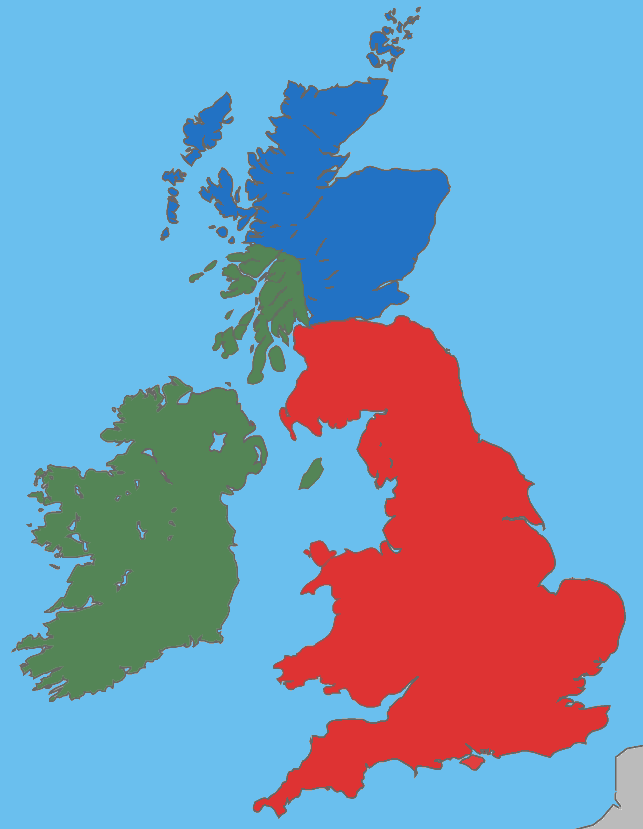
By the 10th century, the Insular Celts had diversified into the Brittonic-speaking Welsh (in Wales), Cornish (in Cornwall), Bretons (in Brittany) and Cumbrians (in the Old North); and the Goidelic-speaking Irish (in Ireland), Scots (in Scotland) and Manx (on the Isle of Man). in southern Scotland and northern England, and the remnants of the Pictish people in northern Scotland.
In older theories, the arrival of Celts, defined as speakers of Celtic languages, which derive from a Proto-Celtic language, roughly coincided with the beginning of the European Iron Age. In 1946, the Celtic scholar T. F. O'Rahilly published his influential model of the early history of Ireland, which postulated four separate waves of Celtic invaders, spanning most of the Iron Age (700 to 100 BCE). However, the archaeological evidence for these waves of invaders proved elusive. Later research indicated that the culture may have developed gradually and continuously between the Celts and the indigenous populations. Similarly in Ireland, little archaeological evidence was found for large intrusive groups of Celtic immigrants, suggesting to archaeologists, such as Colin Renfrew, that the native late Bronze Age inhabitants gradually absorbed European Celtic influences and language.
In the 1970s, a "continuity model" was popularized by Colin Burgess in his book The Age of Stonehenge, which theorised that Celtic culture in Great Britain "emerged" rather than resulted from invasion, and that the Celts were not invading aliens, but the descendants of, or culturally influenced by, figures such as the Amesbury Archer, whose burial included clear continental connections.
The archaeological evidence is of substantial cultural continuity through the 1st millennium BCE, although with a significant overlay of selectively adopted elements of the "Celtic" La Tène culture from the 4th century BCE onwards. There are claims of continental-style states appearing in southern England close to the end of the period, possibly reflecting in part immigration by élites from various Gallic states, such as those of the Belgae. Evidence of chariot burials in England begins about 300 BC and is mostly confined to the Arras culture associated with the Parisii.
It is thought that by about the 6th century BCE most of the inhabitants of the isles of Ireland and Britain were speaking Celtic languages. A controversial phylogenetic linguistic analysis of 2003 puts the age of Insular Celtic a few centuries earlier, at 2,900 years before present, or slightly earlier than the European Iron Age.
Hub AI
Insular Celts AI simulator
(@Insular Celts_simulator)
Insular Celts
The Insular Celts were speakers of the Insular Celtic languages in the British Isles and Brittany. The term is mostly used for the Celtic peoples of the isles up until the early Middle Ages, covering the British–Irish Iron Age, Roman Britain and Sub-Roman Britain. They included the Celtic Britons, the Picts, and the Gaels.
The Insular Celtic languages spread throughout the islands during the Bronze Age or early Iron Age. They are made up of two major groups: Brittonic in the east and Goidelic in the west. While there are records of Continental Celtic languages from the sixth century BC, allowing a confident reconstruction of Proto-Celtic, Insular Celtic languages became attested only during the early first millennium AD. The Insular Celts followed an Ancient Celtic religion overseen by druids. Some of the southern British tribes had strong links with mainland Europe, especially Gaul and Belgica, and minted their own coins.
The Roman Empire conquered most of Britain in the 1st century AD, and a Romano-British culture emerged in the southeast. The Britons and Picts in the north, and the Gaels of Ireland, remained outside the empire. During the end of Roman rule in Britain in the 400s, there was significant Anglo-Saxon settlement of eastern and southern Britain, and some Gaelic settlement of its western coast. During this time, some Britons migrated to the Armorican peninsula, where their culture became dominant. Meanwhile, much of northern Britain (Scotland) became Gaelic.
By the 10th century, the Insular Celts had diversified into the Brittonic-speaking Welsh (in Wales), Cornish (in Cornwall), Bretons (in Brittany) and Cumbrians (in the Old North); and the Goidelic-speaking Irish (in Ireland), Scots (in Scotland) and Manx (on the Isle of Man). in southern Scotland and northern England, and the remnants of the Pictish people in northern Scotland.
In older theories, the arrival of Celts, defined as speakers of Celtic languages, which derive from a Proto-Celtic language, roughly coincided with the beginning of the European Iron Age. In 1946, the Celtic scholar T. F. O'Rahilly published his influential model of the early history of Ireland, which postulated four separate waves of Celtic invaders, spanning most of the Iron Age (700 to 100 BCE). However, the archaeological evidence for these waves of invaders proved elusive. Later research indicated that the culture may have developed gradually and continuously between the Celts and the indigenous populations. Similarly in Ireland, little archaeological evidence was found for large intrusive groups of Celtic immigrants, suggesting to archaeologists, such as Colin Renfrew, that the native late Bronze Age inhabitants gradually absorbed European Celtic influences and language.
In the 1970s, a "continuity model" was popularized by Colin Burgess in his book The Age of Stonehenge, which theorised that Celtic culture in Great Britain "emerged" rather than resulted from invasion, and that the Celts were not invading aliens, but the descendants of, or culturally influenced by, figures such as the Amesbury Archer, whose burial included clear continental connections.
The archaeological evidence is of substantial cultural continuity through the 1st millennium BCE, although with a significant overlay of selectively adopted elements of the "Celtic" La Tène culture from the 4th century BCE onwards. There are claims of continental-style states appearing in southern England close to the end of the period, possibly reflecting in part immigration by élites from various Gallic states, such as those of the Belgae. Evidence of chariot burials in England begins about 300 BC and is mostly confined to the Arras culture associated with the Parisii.
It is thought that by about the 6th century BCE most of the inhabitants of the isles of Ireland and Britain were speaking Celtic languages. A controversial phylogenetic linguistic analysis of 2003 puts the age of Insular Celtic a few centuries earlier, at 2,900 years before present, or slightly earlier than the European Iron Age.
Recent media