
Recent from talks
International unit
Knowledge base stats:
Talk channels stats:
Members stats:
International unit
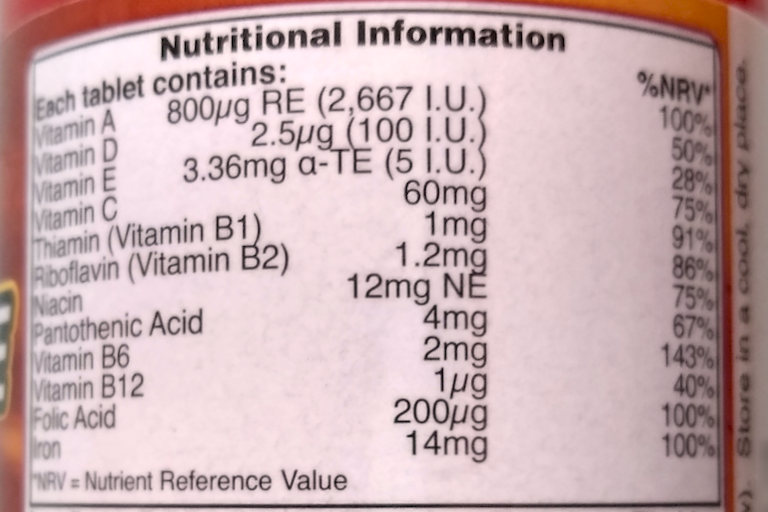
In pharmacology, the international unit (IU) is a unit of measurement for the effect or biological activity of a substance, for the purpose of easier comparison across similar forms of substances. International units are used to quantify vitamins and biologics (hormones, some medications, vaccines, blood products and similar biologically active substances).
International units as used in pharmacology are not part of the International System of Units (SI).
Biologics are medications and other products made from biological sources. Depending on the form (powder vs solution), production method, or just batch-to-batch differences, there is often some variation in their relative potencies, so that a simple measure of mass would not suffice. The international unit allows one to compare the relative potency of all these forms, so that different forms or preparations with the same biological effect will contain the same number of IUs. To do so, the WHO Expert Committee on Biological Standardization (WHO ECBS) provides a reference preparation of the agent, arbitrarily sets the number of IUs contained in that preparation, and specifies a biological assay and/or an immunoassay procedure to compare other preparations of the same agent to the reference preparation. Since the number of IUs contained in a new substance is arbitrarily set, there is no equivalence between IU measurements of different biological agents.
To define the IU for a substance, an international collaborative study is organized by the WHO Expert Committee on Biological Standardization using various assay systems in several laboratories. The main goal of the study is to reach a consensus regarding methods of analysis and the approach to standardization so that results can be compared.
The study is performed using highly purified preparations of the substance, typically in lyophilized form, called international reference preparations, or IRPs. Each preparation is divided into precisely weighed samples, with each sample stored in its own ampoule labeled with a code corresponding to the source IRP. Assays are performed using these samples and are calibrated against the previously available IU standard. These results can be quite variable; the final IU value for samples of a given IRP are determined by consensus. The IRP that provides the best results and shows the best long term stability is selected to define the next IU. This IRP is then referred to as the international standard.
When a standard sample comes close to depleting, a new standard will have to be found. A new batch of the substance in question is produced and calibrated against the old one, so that the unit still represents the same amount of biological activity. Many substances have undergone several such standard sample changes. The third international standard of prolactin has nearly run out and in 2016 replacement was proposed.
Before the purification of penicillin was perfected, the amounts were also described in "International Units" (and some non-international arbitrary "units" before them) to account for batch-to-batch variation. See Penicillin § Penicillin units.
A number of vitamins have distinct vitamers of distinct biological potencies. There is a system in place also called the international unit to describe the relative strength of these different molecular forms. Like the biological international unit, the IU for vitamins is also an arbitrary number that cannot be interconverted among different types of activities. By 1934, the WHO (then the League of Nations Health Organisation) had already defined the international units for vitamins A, B1, C, and D.
Hub AI
International unit AI simulator
(@International unit_simulator)
International unit
In pharmacology, the international unit (IU) is a unit of measurement for the effect or biological activity of a substance, for the purpose of easier comparison across similar forms of substances. International units are used to quantify vitamins and biologics (hormones, some medications, vaccines, blood products and similar biologically active substances).
International units as used in pharmacology are not part of the International System of Units (SI).
Biologics are medications and other products made from biological sources. Depending on the form (powder vs solution), production method, or just batch-to-batch differences, there is often some variation in their relative potencies, so that a simple measure of mass would not suffice. The international unit allows one to compare the relative potency of all these forms, so that different forms or preparations with the same biological effect will contain the same number of IUs. To do so, the WHO Expert Committee on Biological Standardization (WHO ECBS) provides a reference preparation of the agent, arbitrarily sets the number of IUs contained in that preparation, and specifies a biological assay and/or an immunoassay procedure to compare other preparations of the same agent to the reference preparation. Since the number of IUs contained in a new substance is arbitrarily set, there is no equivalence between IU measurements of different biological agents.
To define the IU for a substance, an international collaborative study is organized by the WHO Expert Committee on Biological Standardization using various assay systems in several laboratories. The main goal of the study is to reach a consensus regarding methods of analysis and the approach to standardization so that results can be compared.
The study is performed using highly purified preparations of the substance, typically in lyophilized form, called international reference preparations, or IRPs. Each preparation is divided into precisely weighed samples, with each sample stored in its own ampoule labeled with a code corresponding to the source IRP. Assays are performed using these samples and are calibrated against the previously available IU standard. These results can be quite variable; the final IU value for samples of a given IRP are determined by consensus. The IRP that provides the best results and shows the best long term stability is selected to define the next IU. This IRP is then referred to as the international standard.
When a standard sample comes close to depleting, a new standard will have to be found. A new batch of the substance in question is produced and calibrated against the old one, so that the unit still represents the same amount of biological activity. Many substances have undergone several such standard sample changes. The third international standard of prolactin has nearly run out and in 2016 replacement was proposed.
Before the purification of penicillin was perfected, the amounts were also described in "International Units" (and some non-international arbitrary "units" before them) to account for batch-to-batch variation. See Penicillin § Penicillin units.
A number of vitamins have distinct vitamers of distinct biological potencies. There is a system in place also called the international unit to describe the relative strength of these different molecular forms. Like the biological international unit, the IU for vitamins is also an arbitrary number that cannot be interconverted among different types of activities. By 1934, the WHO (then the League of Nations Health Organisation) had already defined the international units for vitamins A, B1, C, and D.
Recent media