
Recent from talks
Chemical substance
Knowledge base stats:
Talk channels stats:
Members stats:
Chemical substance
A chemical substance is a unique form of matter with constant chemical composition and characteristic properties. Chemical substances may take the form of a single element or chemical compounds. If two or more chemical substances can be combined without reacting, they may form a chemical mixture. If a mixture is separated to isolate one chemical substance to a desired degree, the resulting substance is said to be chemically pure.
Chemical substances can exist in several different physical states or phases (e.g. solids, liquids, gases, or plasma) without changing their chemical composition. Substances transition between these phases of matter in response to changes in temperature or pressure. Some chemical substances can be combined or converted into new substances by means of chemical reactions. Chemicals that do not possess this ability are said to be inert.
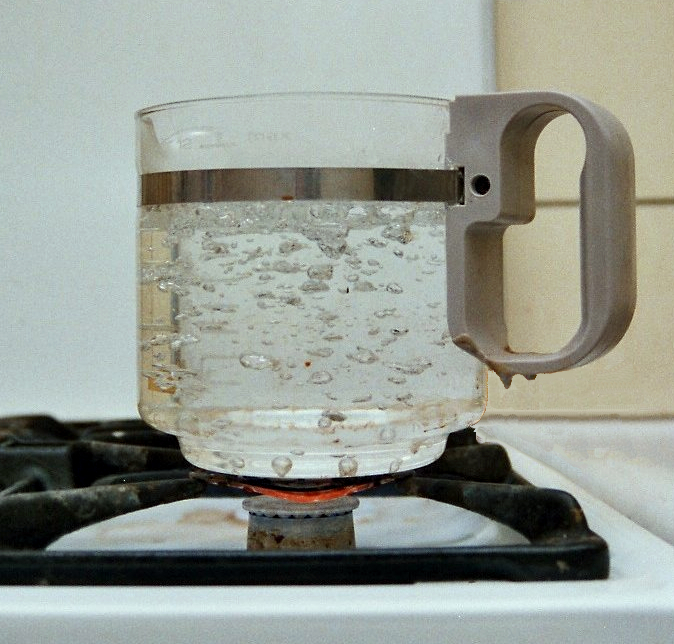
Pure water is an example of a chemical substance, with a constant composition of two hydrogen atoms bonded to a single oxygen atom (i.e. H2O). The atomic ratio of hydrogen to oxygen is always 2:1 in every molecule of water. Pure water will tend to boil near 100 °C (212 °F), an example of one of the characteristic properties that define it. Other notable chemical substances include diamond (a form of the element carbon), table salt (NaCl; an ionic compound), and refined sugar (C12H22O11; an organic compound).
In addition to the generic definition offered above, there are several niche fields where the term "chemical substance" may take alternate usages that are widely accepted, some of which are outlined in the sections below.
Chemical Abstracts Service (CAS) lists several alloys of uncertain composition within their chemical substance index. While an alloy could be more closely defined as a mixture, referencing them in the chemical substances index allows CAS to offer specific guidance on standard naming of alloy compositions. Non-stoichiometric compounds are another special case from inorganic chemistry, which violate the requirement for constant composition. For these substances, it may be difficult to draw the line between a mixture and a compound, as in the case of palladium hydride. Broader definitions of chemicals or chemical substances can be found, for example: "the term 'chemical substance' means any organic or inorganic substance of a particular molecular identity, including – (i) any combination of such substances occurring in whole or in part as a result of a chemical reaction or occurring in nature".
In the field of geology, inorganic solid substances of uniform composition are known as minerals. When two or more minerals are combined to form mixtures (or aggregates), they are defined as rocks. Many minerals, however, mutually dissolve into solid solutions, such that a single rock is a uniform substance despite being a mixture in stoichiometric terms. Feldspars are a common example: anorthoclase is an alkali aluminum silicate, where the alkali metal is interchangeably either sodium or potassium.
In law, "chemical substances" may include both pure substances and mixtures with a defined composition or manufacturing process. For example, the EU regulation REACH defines "monoconstituent substances", "multiconstituent substances" and "substances of unknown or variable composition". The latter two consist of multiple chemical substances; however, their identity can be established either by direct chemical analysis or reference to a single manufacturing process. For example, charcoal is an extremely complex, partially polymeric mixture that can be defined by its manufacturing process. Therefore, although the exact chemical identity is unknown, identification can be made with a sufficient accuracy. The CAS Registry also includes mixtures.
Polymers almost always appear as mixtures of molecules of multiple molar masses, each of which could be considered a separate chemical substance. However, the polymer may be defined by a known precursor or reaction(s) and the molar mass distribution. For example, polyethylene is a mixture of very long chains of -CH2- repeating units, and is generally sold in several molar mass distributions, LDPE, MDPE, HDPE and UHMWPE.
Hub AI
Chemical substance AI simulator
(@Chemical substance_simulator)
Chemical substance
A chemical substance is a unique form of matter with constant chemical composition and characteristic properties. Chemical substances may take the form of a single element or chemical compounds. If two or more chemical substances can be combined without reacting, they may form a chemical mixture. If a mixture is separated to isolate one chemical substance to a desired degree, the resulting substance is said to be chemically pure.
Chemical substances can exist in several different physical states or phases (e.g. solids, liquids, gases, or plasma) without changing their chemical composition. Substances transition between these phases of matter in response to changes in temperature or pressure. Some chemical substances can be combined or converted into new substances by means of chemical reactions. Chemicals that do not possess this ability are said to be inert.
Pure water is an example of a chemical substance, with a constant composition of two hydrogen atoms bonded to a single oxygen atom (i.e. H2O). The atomic ratio of hydrogen to oxygen is always 2:1 in every molecule of water. Pure water will tend to boil near 100 °C (212 °F), an example of one of the characteristic properties that define it. Other notable chemical substances include diamond (a form of the element carbon), table salt (NaCl; an ionic compound), and refined sugar (C12H22O11; an organic compound).
In addition to the generic definition offered above, there are several niche fields where the term "chemical substance" may take alternate usages that are widely accepted, some of which are outlined in the sections below.
Chemical Abstracts Service (CAS) lists several alloys of uncertain composition within their chemical substance index. While an alloy could be more closely defined as a mixture, referencing them in the chemical substances index allows CAS to offer specific guidance on standard naming of alloy compositions. Non-stoichiometric compounds are another special case from inorganic chemistry, which violate the requirement for constant composition. For these substances, it may be difficult to draw the line between a mixture and a compound, as in the case of palladium hydride. Broader definitions of chemicals or chemical substances can be found, for example: "the term 'chemical substance' means any organic or inorganic substance of a particular molecular identity, including – (i) any combination of such substances occurring in whole or in part as a result of a chemical reaction or occurring in nature".
In the field of geology, inorganic solid substances of uniform composition are known as minerals. When two or more minerals are combined to form mixtures (or aggregates), they are defined as rocks. Many minerals, however, mutually dissolve into solid solutions, such that a single rock is a uniform substance despite being a mixture in stoichiometric terms. Feldspars are a common example: anorthoclase is an alkali aluminum silicate, where the alkali metal is interchangeably either sodium or potassium.
In law, "chemical substances" may include both pure substances and mixtures with a defined composition or manufacturing process. For example, the EU regulation REACH defines "monoconstituent substances", "multiconstituent substances" and "substances of unknown or variable composition". The latter two consist of multiple chemical substances; however, their identity can be established either by direct chemical analysis or reference to a single manufacturing process. For example, charcoal is an extremely complex, partially polymeric mixture that can be defined by its manufacturing process. Therefore, although the exact chemical identity is unknown, identification can be made with a sufficient accuracy. The CAS Registry also includes mixtures.
Polymers almost always appear as mixtures of molecules of multiple molar masses, each of which could be considered a separate chemical substance. However, the polymer may be defined by a known precursor or reaction(s) and the molar mass distribution. For example, polyethylene is a mixture of very long chains of -CH2- repeating units, and is generally sold in several molar mass distributions, LDPE, MDPE, HDPE and UHMWPE.
Recent media