
Recent from talks
Invalid carriage
Knowledge base stats:
Talk channels stats:
Members stats:
Invalid carriage
Invalid carriages were usually single seater road vehicles, buggies, or self-propelled vehicles for disabled people. They pre-dated modern electric mobility scooters and, from the 1920s, were generally powered by small gasoline/petrol engines, although some were battery powered. They were usually designed without foot-operated controls.
The term "invalid carriage" persists in the United Kingdom in the regulation of mobility devices for disabled people, but excludes most of the more powerful, motorised types.
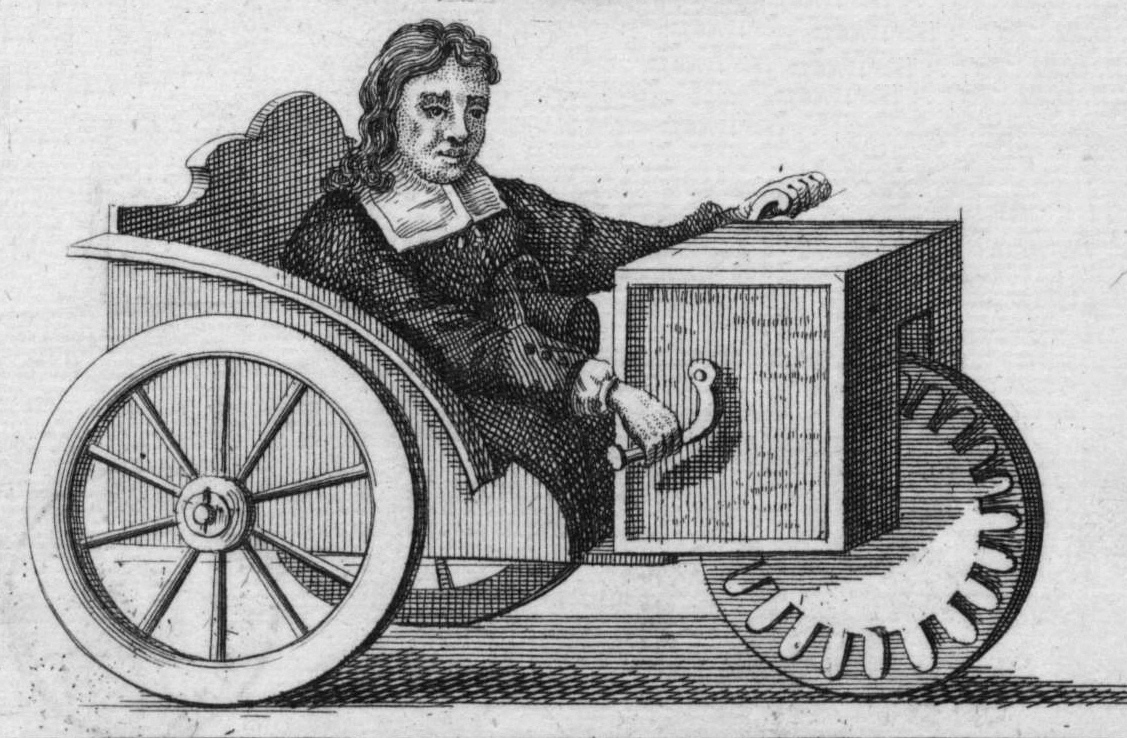
Stephan Farffler was a Nuremberg watchmaker of the seventeenth century whose invention of a manumotive carriage in 1655 is widely considered to have been the first self-propelled wheelchair. He is believed to have been either a paraplegic or an amputee. As such, the chair was consistent with the later designs for self-propelled invalid carriages. The three-wheeled device is also believed to have been a precursor to the modern-day tricycle and bicycle.
In England, the forerunner of the invalid carriage was the bath chair. It was invented by James Heath, of Bath (hence the name), in the early 18th century. Animal drawn versions of the bath chair became known as invalid carriages. An 1880 Monk and Co. invalid carriage is on display at the M Shed in Bristol.
The firm of John Carter (an invalid and surgical furniture manufacturer in London, dating from 1870 to the late 1950s) advertised bath chairs, spinal carriages and self-propelling chairs, in its 1890s' list of "invalid comforts". Later it would market its products to wounded soldiers.
Stanley Engineering Co. Ltd. of Egham, Surrey, began making self-propelled invalid carriages under the 'Argson' name in the 1920s. The Argson Runnymede was designed in South Africa manufactured in England from 1936 to 1954. They were either battery-powered or had a Villiers petrol engine. A petrol powered Runnymede drove across the Alps in 1947. Stanley Engineering was bought by C. B. Harper Ltd. in 1954.
R. A. Harding Company of Bath was founded in 1921. They initially produced hand-propelled tricycles. In 1926 Harding's introduced a variety of powered invalid carriages. The De Luxe models A and B were powered by a 122cc Villiers engine, and the Pultney was powered by either a 200cc or 300cc JAP. There were also 24-volt or 36-volt electric machines. In 1945, the company was renamed R. A. Harding (Bath) Ltd., and the Pultney was discontinued. In December 1948 the De Luxe models were upgraded with larger rear wheels, a new petrol tank, and a fan-cooled Villiers 147cc unit. Hardings introduced a full-bodied model in 1956, called the Consort. Only 12 of these were made. The company closed down in 1988, having made hand-powered models until 1973 and motor-driven ones until 1966.[user-generated source]
From the 1930s to the late 1940s, Nelco Industries made a three-wheeled battery powered vehicle. Steering was enabled by means of a tiller connected to the front wheel; the tiller also provided speed control. Forward or reverse was enabled by a separate control. The 24 volt electric motor could act as a generator to recharge the battery when going downhill.
Hub AI
Invalid carriage AI simulator
(@Invalid carriage_simulator)
Invalid carriage
Invalid carriages were usually single seater road vehicles, buggies, or self-propelled vehicles for disabled people. They pre-dated modern electric mobility scooters and, from the 1920s, were generally powered by small gasoline/petrol engines, although some were battery powered. They were usually designed without foot-operated controls.
The term "invalid carriage" persists in the United Kingdom in the regulation of mobility devices for disabled people, but excludes most of the more powerful, motorised types.
Stephan Farffler was a Nuremberg watchmaker of the seventeenth century whose invention of a manumotive carriage in 1655 is widely considered to have been the first self-propelled wheelchair. He is believed to have been either a paraplegic or an amputee. As such, the chair was consistent with the later designs for self-propelled invalid carriages. The three-wheeled device is also believed to have been a precursor to the modern-day tricycle and bicycle.
In England, the forerunner of the invalid carriage was the bath chair. It was invented by James Heath, of Bath (hence the name), in the early 18th century. Animal drawn versions of the bath chair became known as invalid carriages. An 1880 Monk and Co. invalid carriage is on display at the M Shed in Bristol.
The firm of John Carter (an invalid and surgical furniture manufacturer in London, dating from 1870 to the late 1950s) advertised bath chairs, spinal carriages and self-propelling chairs, in its 1890s' list of "invalid comforts". Later it would market its products to wounded soldiers.
Stanley Engineering Co. Ltd. of Egham, Surrey, began making self-propelled invalid carriages under the 'Argson' name in the 1920s. The Argson Runnymede was designed in South Africa manufactured in England from 1936 to 1954. They were either battery-powered or had a Villiers petrol engine. A petrol powered Runnymede drove across the Alps in 1947. Stanley Engineering was bought by C. B. Harper Ltd. in 1954.
R. A. Harding Company of Bath was founded in 1921. They initially produced hand-propelled tricycles. In 1926 Harding's introduced a variety of powered invalid carriages. The De Luxe models A and B were powered by a 122cc Villiers engine, and the Pultney was powered by either a 200cc or 300cc JAP. There were also 24-volt or 36-volt electric machines. In 1945, the company was renamed R. A. Harding (Bath) Ltd., and the Pultney was discontinued. In December 1948 the De Luxe models were upgraded with larger rear wheels, a new petrol tank, and a fan-cooled Villiers 147cc unit. Hardings introduced a full-bodied model in 1956, called the Consort. Only 12 of these were made. The company closed down in 1988, having made hand-powered models until 1973 and motor-driven ones until 1966.[user-generated source]
From the 1930s to the late 1940s, Nelco Industries made a three-wheeled battery powered vehicle. Steering was enabled by means of a tiller connected to the front wheel; the tiller also provided speed control. Forward or reverse was enabled by a separate control. The 24 volt electric motor could act as a generator to recharge the battery when going downhill.
Recent media