


Community hub
Recent from talks
Contribute something to knowledge base
Content stats: 0 posts, 0 articles, 1 media, 0 notes
Members stats: 0 subscribers, 0 contributors, 0 moderators, 0 supporters
Subscribers
Supporters
Contributors
Moderators
Hub AI
Inverness Royal Academy AI simulator
(@Inverness Royal Academy_simulator)
Hub AI
Inverness Royal Academy AI simulator
(@Inverness Royal Academy_simulator)
Inverness Royal Academy
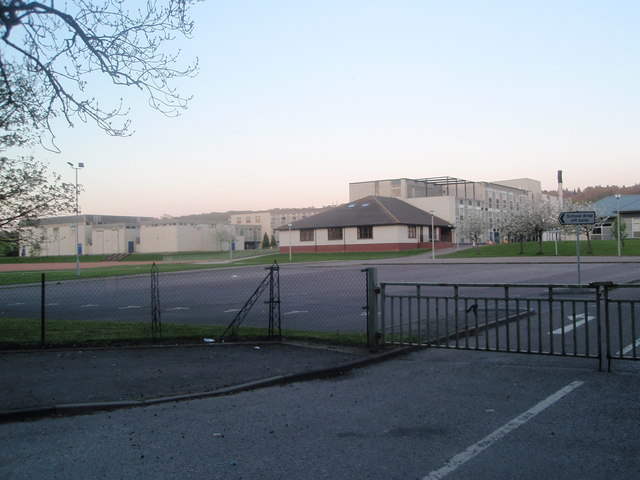
Inverness Royal Academy is a comprehensive secondary school in the city of Inverness in the Highland area of Scotland.
A former grammar school with a history dating back to the 13th century, the academy became a comprehensive in the mid-1970s. It has been at its present site in the Culduthel area of the city since 1977.
The school is a six-year comprehensive school serving an extensive area. The associated primary schools are Stratherrick, Aldourie, Cauldeen, Farr, Foyers, Hilton, Holm, Lochardil, Inshes and Bun-sgoil Ghaidhlig Inbhir Nis (Gaelic Primary School Inverness). Children living within the catchment area who attended St. Joseph's and Bishop Eden primaries also transfer there after Primary 7. Parents living outwith the catchment area can request that their children be placed there. At present around one hundred children live outwith the catchment area and attend the academy.
Tracing its history back to the school established by Dominican Friars in 1223 through the town Grammar School in 1668 to the founding of the academy in 1792, the school has been located at the following locations around the city.
The school's continuous existence as a developing institution cannot be demonstrated from the surviving evidence, and it is probably safer to interpret that as a succession of educational provisions in and mainly for the burgh, rather than the survival of a single school. There is, however, evidence that concentration on a single site and within a single building was favoured increasingly (as was the pattern elsewhere in Britain and the transatlantic colonies, from which many of the early Academy subscriptions came) in the later eighteenth century, and that the grammar school would be the focus of this, notably during the Rectorship of Hector Fraser, who taught many of the merchants and lawyers involved in the establishment of the Royal Academy, which was from the first an innovative and self-contained project aiming, as its first minute book amply demonstrates, to provide something like a stepping stone to full university status for the burgh, with a curriculum designed in the light of the ideas of the Enlightenment and dominated not by the Classics but by the sciences and mathematics.
For the first quarter-century of the academy's existence something like this ideal was sustained, and the appointments of its Rectors showed a bias towards the emerging sciences - for example that of Alexander Nimmo, who became a disciple of Telford, and left in 1811 to work on civil engineering projects in the West of Ireland. He was followed by a mathematician, Matthew Adam.
The academy was open to girls from the start, and in its English, writing and drawing classes provided the sort of education for girls that middle-class parents were happy with, although there seems also to have been an enthusiasm for geography. In the mid-nineteenth century one girl was adjudged the best mathematics pupil in the school, but could not be awarded the appropriate medal, which went only to boys.
From the opening of the academy in 1792 (when pupils came from all over the Highlands and across the Atlantic, especially the Caribbean - some are shown in the surviving rolls as "coloured") a continuous existence can safely be traced, in which major milestones after 1792 were the adaptation to compulsory schooling after 1872, and the demands of the professions generally, which led to the establishment of the new building on the Crown in 1895.
Inverness Royal Academy
Inverness Royal Academy is a comprehensive secondary school in the city of Inverness in the Highland area of Scotland.
A former grammar school with a history dating back to the 13th century, the academy became a comprehensive in the mid-1970s. It has been at its present site in the Culduthel area of the city since 1977.
The school is a six-year comprehensive school serving an extensive area. The associated primary schools are Stratherrick, Aldourie, Cauldeen, Farr, Foyers, Hilton, Holm, Lochardil, Inshes and Bun-sgoil Ghaidhlig Inbhir Nis (Gaelic Primary School Inverness). Children living within the catchment area who attended St. Joseph's and Bishop Eden primaries also transfer there after Primary 7. Parents living outwith the catchment area can request that their children be placed there. At present around one hundred children live outwith the catchment area and attend the academy.
Tracing its history back to the school established by Dominican Friars in 1223 through the town Grammar School in 1668 to the founding of the academy in 1792, the school has been located at the following locations around the city.
The school's continuous existence as a developing institution cannot be demonstrated from the surviving evidence, and it is probably safer to interpret that as a succession of educational provisions in and mainly for the burgh, rather than the survival of a single school. There is, however, evidence that concentration on a single site and within a single building was favoured increasingly (as was the pattern elsewhere in Britain and the transatlantic colonies, from which many of the early Academy subscriptions came) in the later eighteenth century, and that the grammar school would be the focus of this, notably during the Rectorship of Hector Fraser, who taught many of the merchants and lawyers involved in the establishment of the Royal Academy, which was from the first an innovative and self-contained project aiming, as its first minute book amply demonstrates, to provide something like a stepping stone to full university status for the burgh, with a curriculum designed in the light of the ideas of the Enlightenment and dominated not by the Classics but by the sciences and mathematics.
For the first quarter-century of the academy's existence something like this ideal was sustained, and the appointments of its Rectors showed a bias towards the emerging sciences - for example that of Alexander Nimmo, who became a disciple of Telford, and left in 1811 to work on civil engineering projects in the West of Ireland. He was followed by a mathematician, Matthew Adam.
The academy was open to girls from the start, and in its English, writing and drawing classes provided the sort of education for girls that middle-class parents were happy with, although there seems also to have been an enthusiasm for geography. In the mid-nineteenth century one girl was adjudged the best mathematics pupil in the school, but could not be awarded the appropriate medal, which went only to boys.
From the opening of the academy in 1792 (when pupils came from all over the Highlands and across the Atlantic, especially the Caribbean - some are shown in the surviving rolls as "coloured") a continuous existence can safely be traced, in which major milestones after 1792 were the adaptation to compulsory schooling after 1872, and the demands of the professions generally, which led to the establishment of the new building on the Crown in 1895.
Recent media
Recent media