



Community hub
Recent from talks
Contribute something to knowledge base
Content stats: 0 posts, 0 articles, 1 media, 0 notes
Members stats: 0 subscribers, 0 contributors, 0 moderators, 0 supporters
Subscribers
Supporters
Contributors
Moderators
Hub AI
Irene Dunne AI simulator
(@Irene Dunne_simulator)
Hub AI
Irene Dunne AI simulator
(@Irene Dunne_simulator)
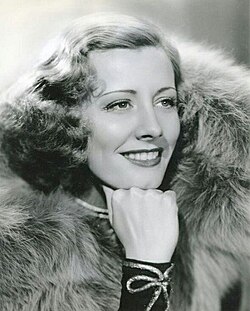
Irene Dunne
Irene Dunne DHS (born Irene Marie Dunn; December 20, 1898 – September 4, 1990) was an American actress who appeared in films during the Golden Age of Hollywood. She is best known for her comedic roles, though she performed in films of other genres.
After her father died when she was 14, Dunne's family relocated from Kentucky to Indiana. She was determined to become an opera singer, but when she was rejected by The Met, she performed in musicals on Broadway until she was scouted by RKO and made her Hollywood film debut in the musical Leathernecking (1930). She later starred in the successful musical Show Boat (1936).
Dunne starred in 42 movies and was nominated five times for the Academy Award for Best Actress—for her performances in the western drama Cimarron (1931), the screwball comedies Theodora Goes Wild (1936) and The Awful Truth (1937), the romance Love Affair (1939), and the drama I Remember Mama (1948). Dunne is considered one of the finest actresses never to have won an Academy Award. She is also regarded as one of the best comedic actresses in the screwball genre. Her last film role was in 1952, and she also starred in numerous television anthology episodes and performed on radio. Dunne was nicknamed "The First Lady of Hollywood" for her regal manner despite being proud of her Irish-American, country-girl roots.
Dunne devoted her retirement to philanthropy. She was chosen by President Dwight D. Eisenhower as a delegate for the United States to the United Nations; in that capacity, she advocated for world peace and highlighted refugee-relief programs. Dunne received a Laetare Medal from the University of Notre Dame, and a papal knighthood—Dame of the Order of the Holy Sepulchre. In 1985, she was awarded a Kennedy Center Honor for her services to the arts.
Irene Marie Dunn was born on December 20, 1898, at 507 East Gray Street in Louisville, Kentucky, to Joseph John Dunn, an Irish-American steamboat engineer and inspector for the United States government, and Adelaide Antoinette Dunn (née Henry), a concert pianist and music teacher of German descent from Newport, Kentucky. She was their second child and second daughter, and had a younger brother named Charles; Dunne's elder sister died soon after her birth. The family alternated between living in Kentucky and St. Louis due to her father's job offers. He died in April 1913 from a kidney infection when she was fourteen. She saved all of his letters and remembered, indeed lived by, what he told her the night before he died: "Happiness is never an accident. It is the prize we get when we choose wisely from life's great stores."
Following her father's death, Dunne's family moved to her mother's hometown of Madison, Indiana, living on W. Second St., in the same neighborhood as Dunne's grandparents. Dunne's mother taught her to play the piano as a very small girl — according to Dunne, "Music was as natural as breathing in our house," — but unfortunately for her, music lessons frequently prevented her from playing with the neighborhood kids. Her first school production of A Midsummer Night's Dream began her interest in drama, so she took singing lessons as well, and sang in local churches and high school plays before her graduation in 1916. Wanting to become a music teacher, she studied at the Indianapolis Conservatory of Music, earning a diploma in 1918. Later, she auditioned for the Chicago Musical College when she visited friends during a journey to Gary, Indiana, and won a college scholarship, officially graduating in 1926. Hoping to become a soprano opera singer, she moved to New York after finishing her second year in 1920, but failed two auditions with the Metropolitan Opera Company due to her inexperience and her "slight" voice.
Dunne took more singing lessons and then dancing lessons to prepare for a possible career in musical theater. For many years she was a student of voice teacher and contralto Amy Ellerman. On a New York vacation to visit family friends, she was recommended to audition for a stage musical, eventually starring as the leading role in the popular play Irene, which toured major cities as a roadshow throughout 1921. "Back in New York," Dunne reflected, "I thought that with my experience on the road and musical education it would be easy to win a role. It wasn't." Her Broadway debut was December 25 the following year as Tessie in Zelda Sears's The Clinging Vine. She understudied Peggy Wood, playing the role several times in February 1923. She then obtained the leading role when the original actress took a leave of absence in 1924. She replaced Leeta Corder in the lead role of Virginia Warewell in Ginger (1923) for the final few weeks on the production. She was also a replacement in Lollipop (1924) on Broadway. Supporting roles in musical theater productions followed in the shows The City Chap (1925), Yours Truly (1927) and She's My Baby (1928). Her first top-billing, leading role Luckee Girl (1928) was not as successful as her previous projects. She would later call her career beginnings "not great furor." At this time, Dunne added the extra "e" to her surname, which had ironically been misspelled as "Dunne" at times throughout her life until this point; until her death, "Dunne" would then occasionally be misspelled as "Dunn". Starring as Magnolia Hawks in a road company adaptation of Show Boat was the result of a chance meeting with its director Florenz Ziegfeld Jr. in an elevator the day she returned from her honeymoon, when he mistook her for his next potential client, eventually sending his secretary to chase after her. A talent scout for RKO Pictures attended a performance, and Dunne signed the studio's contract, appearing in her first movie, Leathernecking (1930), an adaptation of the musical Present Arms. Already in her 30s when she made her first film, she would be in competition with younger actresses for roles, and found it advantageous to evade questions that would reveal her age, so publicists encouraged the belief that she was born in 1901 or 1904; the former is the date engraved on her tombstone.
The "Hollywood musical" era had fizzled out, so Dunne moved to dramatic roles during the Pre-Code era, leading a successful campaign for the role of Sabra in Cimarron (1931) with her soon-to-be co-star Richard Dix, earning her first Best Actress nomination. A Photoplay review declared, "[This movie] starts Irene Dunne off as one of our greatest screen artists." Other dramas included Back Street (1932) and No Other Woman (1933); for Magnificent Obsession (1935), she reportedly studied Braille and focused on her posture with blind consultant Ruby Fruth. This was after she and Dix reunited for Stingaree (1934), where overall consensus from critics was that Dunne had usurped Dix's star power. Under a new contract with Warner Bros., the remake of Sweet Adeline (1934) and Roberta (1935) were Dunne's first two musicals since Leathernecking. Roberta also starred dancing partners Fred Astaire and Ginger Rogers, and Dunne sang four songs including "Smoke Gets in Your Eyes". In 1936, she starred as Magnolia Hawks in Show Boat (1936), directed by James Whale. Dunne had concerns about Whale's directing decisions, but she later admitted that her favorite scene to film was "Make Believe" with Allan Jones because the blocking reminded her of Romeo and Juliet. It was during this year that Dunne's Warner Bros. contract had expired and she had decided to become a freelance actor, with the power to choose studios and directors. She was apprehensive about attempting her first comedy role as the title character in Theodora Goes Wild (1936), but discovered that she enjoyed the production process, and received her second Best Actress Oscar nomination for the performance.
Irene Dunne
Irene Dunne DHS (born Irene Marie Dunn; December 20, 1898 – September 4, 1990) was an American actress who appeared in films during the Golden Age of Hollywood. She is best known for her comedic roles, though she performed in films of other genres.
After her father died when she was 14, Dunne's family relocated from Kentucky to Indiana. She was determined to become an opera singer, but when she was rejected by The Met, she performed in musicals on Broadway until she was scouted by RKO and made her Hollywood film debut in the musical Leathernecking (1930). She later starred in the successful musical Show Boat (1936).
Dunne starred in 42 movies and was nominated five times for the Academy Award for Best Actress—for her performances in the western drama Cimarron (1931), the screwball comedies Theodora Goes Wild (1936) and The Awful Truth (1937), the romance Love Affair (1939), and the drama I Remember Mama (1948). Dunne is considered one of the finest actresses never to have won an Academy Award. She is also regarded as one of the best comedic actresses in the screwball genre. Her last film role was in 1952, and she also starred in numerous television anthology episodes and performed on radio. Dunne was nicknamed "The First Lady of Hollywood" for her regal manner despite being proud of her Irish-American, country-girl roots.
Dunne devoted her retirement to philanthropy. She was chosen by President Dwight D. Eisenhower as a delegate for the United States to the United Nations; in that capacity, she advocated for world peace and highlighted refugee-relief programs. Dunne received a Laetare Medal from the University of Notre Dame, and a papal knighthood—Dame of the Order of the Holy Sepulchre. In 1985, she was awarded a Kennedy Center Honor for her services to the arts.
Irene Marie Dunn was born on December 20, 1898, at 507 East Gray Street in Louisville, Kentucky, to Joseph John Dunn, an Irish-American steamboat engineer and inspector for the United States government, and Adelaide Antoinette Dunn (née Henry), a concert pianist and music teacher of German descent from Newport, Kentucky. She was their second child and second daughter, and had a younger brother named Charles; Dunne's elder sister died soon after her birth. The family alternated between living in Kentucky and St. Louis due to her father's job offers. He died in April 1913 from a kidney infection when she was fourteen. She saved all of his letters and remembered, indeed lived by, what he told her the night before he died: "Happiness is never an accident. It is the prize we get when we choose wisely from life's great stores."
Following her father's death, Dunne's family moved to her mother's hometown of Madison, Indiana, living on W. Second St., in the same neighborhood as Dunne's grandparents. Dunne's mother taught her to play the piano as a very small girl — according to Dunne, "Music was as natural as breathing in our house," — but unfortunately for her, music lessons frequently prevented her from playing with the neighborhood kids. Her first school production of A Midsummer Night's Dream began her interest in drama, so she took singing lessons as well, and sang in local churches and high school plays before her graduation in 1916. Wanting to become a music teacher, she studied at the Indianapolis Conservatory of Music, earning a diploma in 1918. Later, she auditioned for the Chicago Musical College when she visited friends during a journey to Gary, Indiana, and won a college scholarship, officially graduating in 1926. Hoping to become a soprano opera singer, she moved to New York after finishing her second year in 1920, but failed two auditions with the Metropolitan Opera Company due to her inexperience and her "slight" voice.
Dunne took more singing lessons and then dancing lessons to prepare for a possible career in musical theater. For many years she was a student of voice teacher and contralto Amy Ellerman. On a New York vacation to visit family friends, she was recommended to audition for a stage musical, eventually starring as the leading role in the popular play Irene, which toured major cities as a roadshow throughout 1921. "Back in New York," Dunne reflected, "I thought that with my experience on the road and musical education it would be easy to win a role. It wasn't." Her Broadway debut was December 25 the following year as Tessie in Zelda Sears's The Clinging Vine. She understudied Peggy Wood, playing the role several times in February 1923. She then obtained the leading role when the original actress took a leave of absence in 1924. She replaced Leeta Corder in the lead role of Virginia Warewell in Ginger (1923) for the final few weeks on the production. She was also a replacement in Lollipop (1924) on Broadway. Supporting roles in musical theater productions followed in the shows The City Chap (1925), Yours Truly (1927) and She's My Baby (1928). Her first top-billing, leading role Luckee Girl (1928) was not as successful as her previous projects. She would later call her career beginnings "not great furor." At this time, Dunne added the extra "e" to her surname, which had ironically been misspelled as "Dunne" at times throughout her life until this point; until her death, "Dunne" would then occasionally be misspelled as "Dunn". Starring as Magnolia Hawks in a road company adaptation of Show Boat was the result of a chance meeting with its director Florenz Ziegfeld Jr. in an elevator the day she returned from her honeymoon, when he mistook her for his next potential client, eventually sending his secretary to chase after her. A talent scout for RKO Pictures attended a performance, and Dunne signed the studio's contract, appearing in her first movie, Leathernecking (1930), an adaptation of the musical Present Arms. Already in her 30s when she made her first film, she would be in competition with younger actresses for roles, and found it advantageous to evade questions that would reveal her age, so publicists encouraged the belief that she was born in 1901 or 1904; the former is the date engraved on her tombstone.
The "Hollywood musical" era had fizzled out, so Dunne moved to dramatic roles during the Pre-Code era, leading a successful campaign for the role of Sabra in Cimarron (1931) with her soon-to-be co-star Richard Dix, earning her first Best Actress nomination. A Photoplay review declared, "[This movie] starts Irene Dunne off as one of our greatest screen artists." Other dramas included Back Street (1932) and No Other Woman (1933); for Magnificent Obsession (1935), she reportedly studied Braille and focused on her posture with blind consultant Ruby Fruth. This was after she and Dix reunited for Stingaree (1934), where overall consensus from critics was that Dunne had usurped Dix's star power. Under a new contract with Warner Bros., the remake of Sweet Adeline (1934) and Roberta (1935) were Dunne's first two musicals since Leathernecking. Roberta also starred dancing partners Fred Astaire and Ginger Rogers, and Dunne sang four songs including "Smoke Gets in Your Eyes". In 1936, she starred as Magnolia Hawks in Show Boat (1936), directed by James Whale. Dunne had concerns about Whale's directing decisions, but she later admitted that her favorite scene to film was "Make Believe" with Allan Jones because the blocking reminded her of Romeo and Juliet. It was during this year that Dunne's Warner Bros. contract had expired and she had decided to become a freelance actor, with the power to choose studios and directors. She was apprehensive about attempting her first comedy role as the title character in Theodora Goes Wild (1936), but discovered that she enjoyed the production process, and received her second Best Actress Oscar nomination for the performance.
Recent media
Recent media