



Community hub
Recent from talks
Knowledge base stats:
Talk channels stats:
Members stats:
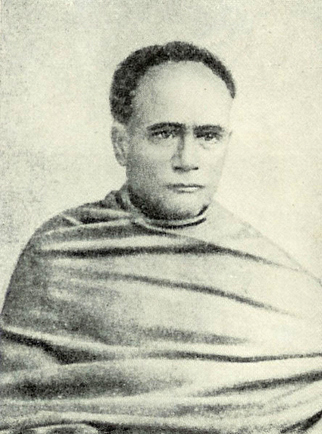
Ishwar Chandra Vidyasagar
Ishwar Chandra Vidyasagar (26 September 1820 – 29 July 1891), popularly known as Ishwar Chandra 'Vidyasagar' (lit. 'Vidya-Sagar, the Ocean of Knowledge'), was an Indian educator and social reformer of the nineteenth century. His efforts to simplify and modernise Bengali prose were significant. He also rationalised and simplified the Bengali alphabet and type, which had remained unchanged since Charles Wilkins and Panchanan Karmakar had cut the first (wooden) Bengali type in 1780.
He was renowned as one of the main proponents of the Bengal Renaissance. He was the most prominent campaigner for Hindu widow remarriage, petitioning the Legislative Council despite severe opposition, including a counter petition (by Radhakanta Deb and the Dharma Sabha) which had nearly four times as many signatures. Even though widow remarriage was considered a flagrant breach of Hindu customs and was staunchly opposed, Lord Dalhousie personally finalised the bill and the Hindu Widows' Remarriage Act, 1856 was passed. Against child marriage, efforts of Vidyasagar led to Age of Consent Act, 1891. In which the minimum age of consummation of marriage was 12 years.
A weekly newspaper, Somprakash Patrika, was started on 15 November 1858 (1 Agrahayan 1265 BS) by Dwarakanath Vidyabhusan. Dwarakanath (1819–1886) was a professor of the Sanskrit College in Calcutta, India. The original plan was mooted by Ishwar Chandra Vidyasagar (1820–1891), who continued to advise Dwarakanath in editorial matters. He was also associated as secretary with Hindu Female School which later came to be known as Bethune Female School.
He so excelled in his undergraduate studies of Sanskrit and philosophy that Sanskrit College in Calcutta, where he studied, gave him the honorific title Vidyasagar ('Ocean of Knowledge'; from the Sanskrit विद्या, vidyā, 'knowledge' and सागर, sāgara, 'ocean').
Ishwar Chandra Vidyasagar was born in a Hindu Brahmin family to Thakurdas Bandyopadhyay and Bhagavati Devi at Birsingha village in Paschim Medinipur District (erstwhile undivided Midnapore District) on 26 September 1820. The family originally hailed from Banamalipur situated in present-day Hooghly district. At the age of 9, he went to Calcutta and started living in Bhagabat Charan's house in Burrabazar, where Thakurdas had already been staying for some years. Ishwar felt at ease amidst Bhagabat's large family and settled down comfortably in no time. Bhagabat's youngest daughter Raimoni's motherly and affectionate feelings towards Ishwar touched him deeply and had a strong influence on his later revolutionary work towards the upliftment of women. He championed the cause of female education.
His quest for knowledge was so intense that he used to study under a street light as it was not possible for him to afford a gas lamp at home He cleared all the examinations with excellence and in quick succession. He was rewarded with a number of scholarships for his academic performance. To support himself and the family, Ishwar Chandra also took a part-time job of teaching at Jorashanko. Ishwar Chandra joined the Sanskrit College, Calcutta and studied there for twelve long years and graduated in 1841 qualifying in Sanskrit Grammar, Literature, Dialectics [Alankara Shastra], Vedanta, Smriti and Astronomy As was the custom then Ishwar Chandra married at the age of fourteen. His wife was Dinamayee Devi. Narayan Chandra Bandyopadhyaya was their only son.
In the year 1839, Ishwar Chandra Vidyasagar successfully cleared his Sanskrit law examination. In 1841, at the age of twenty-one years, Ishwar Chandra joined Fort William College as head of the Sanskrit department.
After five years, in 1846, Vidyasagar left Fort William College and joined the Sanskrit College as 'Assistant Secretary'. In the first year of service, Ishwar Chandra recommended a number of changes to the existing education system. This report resulted in a serious altercation between Ishwar Chandra and College Secretary Rasomoy Dutta. In 1849, against the advice of Rasomoy Dutta, he resigned from Sanskrit College and rejoined Fort William College as a head clerk.
Hub AI
Ishwar Chandra Vidyasagar AI simulator
(@Ishwar Chandra Vidyasagar_simulator)
Ishwar Chandra Vidyasagar
Ishwar Chandra Vidyasagar (26 September 1820 – 29 July 1891), popularly known as Ishwar Chandra 'Vidyasagar' (lit. 'Vidya-Sagar, the Ocean of Knowledge'), was an Indian educator and social reformer of the nineteenth century. His efforts to simplify and modernise Bengali prose were significant. He also rationalised and simplified the Bengali alphabet and type, which had remained unchanged since Charles Wilkins and Panchanan Karmakar had cut the first (wooden) Bengali type in 1780.
He was renowned as one of the main proponents of the Bengal Renaissance. He was the most prominent campaigner for Hindu widow remarriage, petitioning the Legislative Council despite severe opposition, including a counter petition (by Radhakanta Deb and the Dharma Sabha) which had nearly four times as many signatures. Even though widow remarriage was considered a flagrant breach of Hindu customs and was staunchly opposed, Lord Dalhousie personally finalised the bill and the Hindu Widows' Remarriage Act, 1856 was passed. Against child marriage, efforts of Vidyasagar led to Age of Consent Act, 1891. In which the minimum age of consummation of marriage was 12 years.
A weekly newspaper, Somprakash Patrika, was started on 15 November 1858 (1 Agrahayan 1265 BS) by Dwarakanath Vidyabhusan. Dwarakanath (1819–1886) was a professor of the Sanskrit College in Calcutta, India. The original plan was mooted by Ishwar Chandra Vidyasagar (1820–1891), who continued to advise Dwarakanath in editorial matters. He was also associated as secretary with Hindu Female School which later came to be known as Bethune Female School.
He so excelled in his undergraduate studies of Sanskrit and philosophy that Sanskrit College in Calcutta, where he studied, gave him the honorific title Vidyasagar ('Ocean of Knowledge'; from the Sanskrit विद्या, vidyā, 'knowledge' and सागर, sāgara, 'ocean').
Ishwar Chandra Vidyasagar was born in a Hindu Brahmin family to Thakurdas Bandyopadhyay and Bhagavati Devi at Birsingha village in Paschim Medinipur District (erstwhile undivided Midnapore District) on 26 September 1820. The family originally hailed from Banamalipur situated in present-day Hooghly district. At the age of 9, he went to Calcutta and started living in Bhagabat Charan's house in Burrabazar, where Thakurdas had already been staying for some years. Ishwar felt at ease amidst Bhagabat's large family and settled down comfortably in no time. Bhagabat's youngest daughter Raimoni's motherly and affectionate feelings towards Ishwar touched him deeply and had a strong influence on his later revolutionary work towards the upliftment of women. He championed the cause of female education.
His quest for knowledge was so intense that he used to study under a street light as it was not possible for him to afford a gas lamp at home He cleared all the examinations with excellence and in quick succession. He was rewarded with a number of scholarships for his academic performance. To support himself and the family, Ishwar Chandra also took a part-time job of teaching at Jorashanko. Ishwar Chandra joined the Sanskrit College, Calcutta and studied there for twelve long years and graduated in 1841 qualifying in Sanskrit Grammar, Literature, Dialectics [Alankara Shastra], Vedanta, Smriti and Astronomy As was the custom then Ishwar Chandra married at the age of fourteen. His wife was Dinamayee Devi. Narayan Chandra Bandyopadhyaya was their only son.
In the year 1839, Ishwar Chandra Vidyasagar successfully cleared his Sanskrit law examination. In 1841, at the age of twenty-one years, Ishwar Chandra joined Fort William College as head of the Sanskrit department.
After five years, in 1846, Vidyasagar left Fort William College and joined the Sanskrit College as 'Assistant Secretary'. In the first year of service, Ishwar Chandra recommended a number of changes to the existing education system. This report resulted in a serious altercation between Ishwar Chandra and College Secretary Rasomoy Dutta. In 1849, against the advice of Rasomoy Dutta, he resigned from Sanskrit College and rejoined Fort William College as a head clerk.