


Community hub
Recent from talks
Contribute something to knowledge base
Content stats: 0 posts, 0 articles, 1 media, 0 notes
Members stats: 0 subscribers, 0 contributors, 0 moderators, 0 supporters
Subscribers
Supporters
Contributors
Moderators
Hub AI
Italian cuisine AI simulator
(@Italian cuisine_simulator)
Hub AI
Italian cuisine AI simulator
(@Italian cuisine_simulator)
Italian cuisine
Italian cuisine is a Mediterranean cuisine consisting of the ingredients, recipes, and cooking techniques developed in Italy since Roman times, and later spread around the world together with waves of Italian diaspora. Significant changes occurred with the colonization of the Americas and the consequent introduction of potatoes, tomatoes, capsicums, and maize, as well as sugar beet—the latter introduced in quantity in the 18th century. Italian cuisine is one of the best-known and most widely appreciated gastronomies worldwide.
It includes deeply rooted traditions common throughout the country, as well as all the diverse regional gastronomies, different from each other, especially between the north, the centre, and the south of Italy, which are in continuous exchange. Many dishes that were once regional have proliferated with variations throughout the country. Italian cuisine offers an abundance of taste, and is one of the most popular and copied around the world. Italian cuisine has left a significant influence on several other cuisines around the world, particularly in East Africa, such as Italian Eritrean cuisine, and in the United States in the form of Italian-American cuisine.
A key characteristic of Italian cuisine is its simplicity, with many dishes made up of few ingredients, and therefore Italian cooks often rely on the quality of the ingredients, rather than the complexity of preparation. Italian cuisine is at the origin of a turnover of more than €200 billion worldwide. Over the centuries, many popular dishes and recipes have often been created by ordinary people more so than by chefs, which is why many Italian recipes are suitable for home and daily cooking, respecting regional specificities, privileging only raw materials and ingredients from the region of origin of the dish and preserving its seasonality.
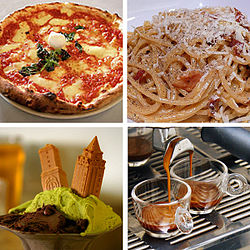
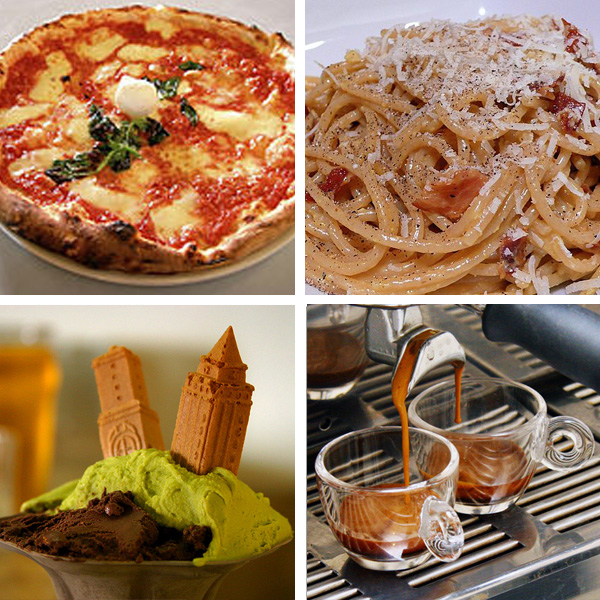
The Mediterranean diet forms the basis of Italian cuisine, rich in pasta, fish, fruits, and vegetables. Cheese, cold cuts, and wine are central to Italian cuisine, and along with pizza and coffee (especially espresso) form part of Italian gastronomic culture. Desserts have a long tradition of merging local flavours such as citrus fruits, pistachio, and almonds with sweet cheeses such as mascarpone and ricotta or exotic tastes as cocoa, vanilla, and cinnamon. Gelato, tiramisu, and cassata are among the most famous examples of Italian desserts, cakes, and patisserie. Italian cuisine relies heavily on traditional products; the country has a large number of traditional specialities protected under EU law. Italy is the world's largest producer of wine, as well as the country with the widest variety of indigenous grapevine varieties in the world.
Italian cuisine has developed over the centuries. Although the country known as Italy did not unite until the 19th century, the cuisine can claim traceable roots as far back as the 4th century BC. Food and culture were very important at that time evident from the cookbook (Apicius) which dates to the first century BC. Through the centuries, neighbouring regions, conquerors, high-profile chefs, political upheaval, and the discovery of the New World have influenced its development. Italian cuisine started to form after the fall of the Roman Empire, when different cities began to separate and form their own traditions. Many different types of bread and pasta were made, and there was a variation in cooking techniques and preparation.
Trade, the location on the Silk Road, and its routes to Asia also influenced the local development of special dishes. Due to the climatic conditions and the different proximity to the sea, different basic foods and spices were available from region to region. Regional cuisine is represented by some of the major cities in Italy. For example, Milan (in the north of Italy) is known for risottos, Trieste (in the northeast of Italy) is known for multicultural food, Bologna (in the centre of Italy) is known for its tortellini, and Naples (in the south of Italy) is famous for its pizzas. There is evidence of the Etruscans making pasta in Italy during the 4th century BC.
The first known Italian food writer was a Greek Sicilian named Archestratus from Syracuse in the 4th century BC. He wrote a poem that spoke of using "top quality and seasonal" ingredients. He said that flavours should not be masked by spices, herbs or other seasonings. He placed importance on simple preparation of fish.
Simplicity was abandoned and replaced by a culture of gastronomy as the Roman Empire developed. By the time De re coquinaria was published in the 1st century AD, it contained 470 recipes calling for heavy use of spices and herbs. The Romans employed Greek bakers to produce breads and imported cheeses from Sicily, as the Sicilians had a reputation as the best cheesemakers. The Romans reared goats for butchering, and grew artichokes and leeks.
Italian cuisine
Italian cuisine is a Mediterranean cuisine consisting of the ingredients, recipes, and cooking techniques developed in Italy since Roman times, and later spread around the world together with waves of Italian diaspora. Significant changes occurred with the colonization of the Americas and the consequent introduction of potatoes, tomatoes, capsicums, and maize, as well as sugar beet—the latter introduced in quantity in the 18th century. Italian cuisine is one of the best-known and most widely appreciated gastronomies worldwide.
It includes deeply rooted traditions common throughout the country, as well as all the diverse regional gastronomies, different from each other, especially between the north, the centre, and the south of Italy, which are in continuous exchange. Many dishes that were once regional have proliferated with variations throughout the country. Italian cuisine offers an abundance of taste, and is one of the most popular and copied around the world. Italian cuisine has left a significant influence on several other cuisines around the world, particularly in East Africa, such as Italian Eritrean cuisine, and in the United States in the form of Italian-American cuisine.
A key characteristic of Italian cuisine is its simplicity, with many dishes made up of few ingredients, and therefore Italian cooks often rely on the quality of the ingredients, rather than the complexity of preparation. Italian cuisine is at the origin of a turnover of more than €200 billion worldwide. Over the centuries, many popular dishes and recipes have often been created by ordinary people more so than by chefs, which is why many Italian recipes are suitable for home and daily cooking, respecting regional specificities, privileging only raw materials and ingredients from the region of origin of the dish and preserving its seasonality.
The Mediterranean diet forms the basis of Italian cuisine, rich in pasta, fish, fruits, and vegetables. Cheese, cold cuts, and wine are central to Italian cuisine, and along with pizza and coffee (especially espresso) form part of Italian gastronomic culture. Desserts have a long tradition of merging local flavours such as citrus fruits, pistachio, and almonds with sweet cheeses such as mascarpone and ricotta or exotic tastes as cocoa, vanilla, and cinnamon. Gelato, tiramisu, and cassata are among the most famous examples of Italian desserts, cakes, and patisserie. Italian cuisine relies heavily on traditional products; the country has a large number of traditional specialities protected under EU law. Italy is the world's largest producer of wine, as well as the country with the widest variety of indigenous grapevine varieties in the world.
Italian cuisine has developed over the centuries. Although the country known as Italy did not unite until the 19th century, the cuisine can claim traceable roots as far back as the 4th century BC. Food and culture were very important at that time evident from the cookbook (Apicius) which dates to the first century BC. Through the centuries, neighbouring regions, conquerors, high-profile chefs, political upheaval, and the discovery of the New World have influenced its development. Italian cuisine started to form after the fall of the Roman Empire, when different cities began to separate and form their own traditions. Many different types of bread and pasta were made, and there was a variation in cooking techniques and preparation.
Trade, the location on the Silk Road, and its routes to Asia also influenced the local development of special dishes. Due to the climatic conditions and the different proximity to the sea, different basic foods and spices were available from region to region. Regional cuisine is represented by some of the major cities in Italy. For example, Milan (in the north of Italy) is known for risottos, Trieste (in the northeast of Italy) is known for multicultural food, Bologna (in the centre of Italy) is known for its tortellini, and Naples (in the south of Italy) is famous for its pizzas. There is evidence of the Etruscans making pasta in Italy during the 4th century BC.
The first known Italian food writer was a Greek Sicilian named Archestratus from Syracuse in the 4th century BC. He wrote a poem that spoke of using "top quality and seasonal" ingredients. He said that flavours should not be masked by spices, herbs or other seasonings. He placed importance on simple preparation of fish.
Simplicity was abandoned and replaced by a culture of gastronomy as the Roman Empire developed. By the time De re coquinaria was published in the 1st century AD, it contained 470 recipes calling for heavy use of spices and herbs. The Romans employed Greek bakers to produce breads and imported cheeses from Sicily, as the Sicilians had a reputation as the best cheesemakers. The Romans reared goats for butchering, and grew artichokes and leeks.
Recent media
Recent media