



Community hub
Recent from talks
Knowledge base stats:
Talk channels stats:
Members stats:
Italian irredentism in Malta
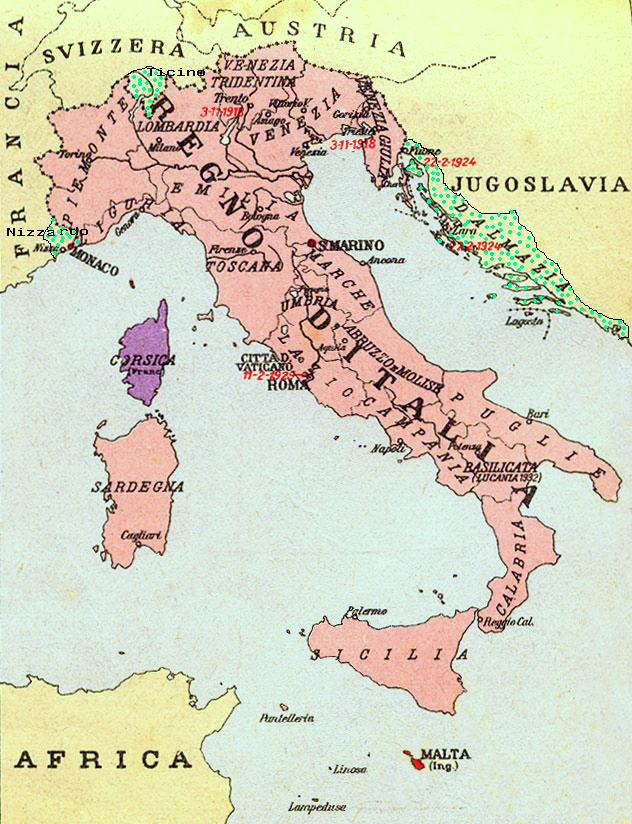
Italian irredentism in Malta is the movement that uses an irredentist argument to propose the incorporation of the Maltese islands into Italy, with reference to past support in Malta for Italian territorial claims on the islands. Although Malta had formally ceased to be part of the Kingdom of Sicily only since 1814 following the Treaty of Paris, Italian irredentism in Malta was mainly significant during the Italian Fascist era.
Until the end of the 18th century Malta's fortunes—political, economic, religious, cultural—were closely tied with Sicily's. Successive waves of immigration from Sicily and Italy strengthened these ties and increased the demographic similarity. Italian was Malta's language of administration, law, contracts and public records, Malta's culture was similar to Italy's, Malta's nobility was originally composed of Italian families who had moved to Malta mainly in the 13th century and the Maltese Catholic Church was suffragan of the Archdiocese of Palermo.
There were minor and subtle differences, however. In the early 15th century Malta was incorporated directly into the Sicilian crown following an uprising which led to the abolishment of the County of Malta. Domestic governance was thus left to the Università and the Popular Council, early forms of representative local government. The Maltese language, the creation of the Diocese of Malta as well as the granting of Malta to the Knights Hospitaller in 1530 were developments which started to give a distinct character to Maltese culture and history.
Following a brief French occupation (1798–1800) the British established control over Malta while it was still formally part of the Kingdom of Sicily. During both the French and British periods, Malta officially remained part of the Sicilian Kingdom, although the French refused to recognise the island as such in contrast to the British. Malta became a British Crown Colony in 1813, which was confirmed a year later through the Treaty of Paris (1814).
Cultural changes were few even after 1814. In 1842, all literate Maltese learned Italian while only 4.5% could read, write and/or speak English. However, there was a huge increase in the number of Maltese magazines and newspapers in Italian language during the 1800s and early 1900s.
In 1878, a Royal Commission (the Rowsell-Julyan-Keenan Commission) recommended in its report the Anglicisation of the educational and judicial systems. While the judicial system remained predominantly Italian until the 20th century, teaching of the English language started to be enforced in State schools at the expense of Italian.
The Royal Commission's report also had significant political impact. Supporters and opponents organised themselves into a Reform and Anti-Reform parties which, apart from being the forerunners of the present day two main political parties in Malta, assumed respectively the anglophile and italophile imprint (and also, subsequently, pro-colonial and anti-colonial policies) that were to characterise them for decades to come.
Sette Giugno, a popular revolt in Malta in 1919, was later considered in fascist Italy as the beginning of the "active" Italian irredentism in Malta. This commemoration (official since 1986) is in remembrance of the riots of 1919 when the Maltese population organized marches to obtain some form of representative government. Four people died when troops stationed on the islands fired into the crowd.
Hub AI
Italian irredentism in Malta AI simulator
(@Italian irredentism in Malta_simulator)
Italian irredentism in Malta
Italian irredentism in Malta is the movement that uses an irredentist argument to propose the incorporation of the Maltese islands into Italy, with reference to past support in Malta for Italian territorial claims on the islands. Although Malta had formally ceased to be part of the Kingdom of Sicily only since 1814 following the Treaty of Paris, Italian irredentism in Malta was mainly significant during the Italian Fascist era.
Until the end of the 18th century Malta's fortunes—political, economic, religious, cultural—were closely tied with Sicily's. Successive waves of immigration from Sicily and Italy strengthened these ties and increased the demographic similarity. Italian was Malta's language of administration, law, contracts and public records, Malta's culture was similar to Italy's, Malta's nobility was originally composed of Italian families who had moved to Malta mainly in the 13th century and the Maltese Catholic Church was suffragan of the Archdiocese of Palermo.
There were minor and subtle differences, however. In the early 15th century Malta was incorporated directly into the Sicilian crown following an uprising which led to the abolishment of the County of Malta. Domestic governance was thus left to the Università and the Popular Council, early forms of representative local government. The Maltese language, the creation of the Diocese of Malta as well as the granting of Malta to the Knights Hospitaller in 1530 were developments which started to give a distinct character to Maltese culture and history.
Following a brief French occupation (1798–1800) the British established control over Malta while it was still formally part of the Kingdom of Sicily. During both the French and British periods, Malta officially remained part of the Sicilian Kingdom, although the French refused to recognise the island as such in contrast to the British. Malta became a British Crown Colony in 1813, which was confirmed a year later through the Treaty of Paris (1814).
Cultural changes were few even after 1814. In 1842, all literate Maltese learned Italian while only 4.5% could read, write and/or speak English. However, there was a huge increase in the number of Maltese magazines and newspapers in Italian language during the 1800s and early 1900s.
In 1878, a Royal Commission (the Rowsell-Julyan-Keenan Commission) recommended in its report the Anglicisation of the educational and judicial systems. While the judicial system remained predominantly Italian until the 20th century, teaching of the English language started to be enforced in State schools at the expense of Italian.
The Royal Commission's report also had significant political impact. Supporters and opponents organised themselves into a Reform and Anti-Reform parties which, apart from being the forerunners of the present day two main political parties in Malta, assumed respectively the anglophile and italophile imprint (and also, subsequently, pro-colonial and anti-colonial policies) that were to characterise them for decades to come.
Sette Giugno, a popular revolt in Malta in 1919, was later considered in fascist Italy as the beginning of the "active" Italian irredentism in Malta. This commemoration (official since 1986) is in remembrance of the riots of 1919 when the Maltese population organized marches to obtain some form of representative government. Four people died when troops stationed on the islands fired into the crowd.