
Recent from talks
Irredentism
Knowledge base stats:
Talk channels stats:
Members stats:
Irredentism
Irredentism (Italian: irredentismo) is one state's desire to annex the territory of another state. This desire can be motivated by ethnic reasons because the population of the territory is ethnically similar to or the same as the population of the parent state. Historical reasons may also be responsible, i.e., that the territory previously formed part of the parent state. Difficulties in applying the concept to concrete cases have given rise to academic debates about its precise definition. Disagreements concern whether either or both ethnic and historical reasons have to be present and whether non-state actors can also engage in irredentism. A further dispute is whether attempts to absorb a full neighboring state are also included. There are various types of irredentism. For typical forms of irredentism, the parent state already exists before the territorial conflict with a neighboring state arises. There are also forms of irredentism in which the parent state is newly created by uniting an ethnic group spread across several countries. Another distinction concerns whether the country to which the disputed territory currently belongs is a regular state, a former colony, or a collapsed state.
A central research topic concerning irredentism is the question of how it is to be explained or what causes it. Many explanations hold that ethnic homogeneity within a state makes irredentism more likely. Discrimination against the ethnic group in the neighboring territory is another contributing factor. A closely related explanation argues that national identities based primarily on ethnicity, culture, and history increase irredentist tendencies. Another approach is to explain irredentism as an attempt to increase power and wealth. In this regard, it is argued that irredentist claims are more likely if the neighboring territory is relatively rich. Many explanations also focus on the regime type and hold that democracies are less likely to engage in irredentism while anocracies are particularly open to it.
Irredentism has been an influential force in world politics since the mid-nineteenth century. It has been responsible for many armed conflicts, even though international law is hostile to it and irredentist movements often fail to achieve their goals. The term was originally coined from the Italian phrase Italia irredenta and referred to an Italian movement after 1878 claiming parts of Switzerland and the Austro-Hungarian Empire. Often discussed cases of irredentism include Nazi Germany's annexation of the Sudetenland in 1938, Somalia's invasion of Ethiopia in 1977, and Argentina's invasion of the Falkland Islands in 1982. Further examples are attempts to establish a Greater Serbia following the breakup of Yugoslavia in the early 1990s and Russia's annexation of Crimea in 2014. Irredentism is closely related to revanchism and secession. Revanchism is an attempt to annex territory belonging to another state. It is motivated by the goal of taking revenge for a previous grievance, in contrast to the goal of irredentism of building an ethnically unified nation-state. In the case of secession, a territory breaks away and forms an independent state instead of merging with another state.
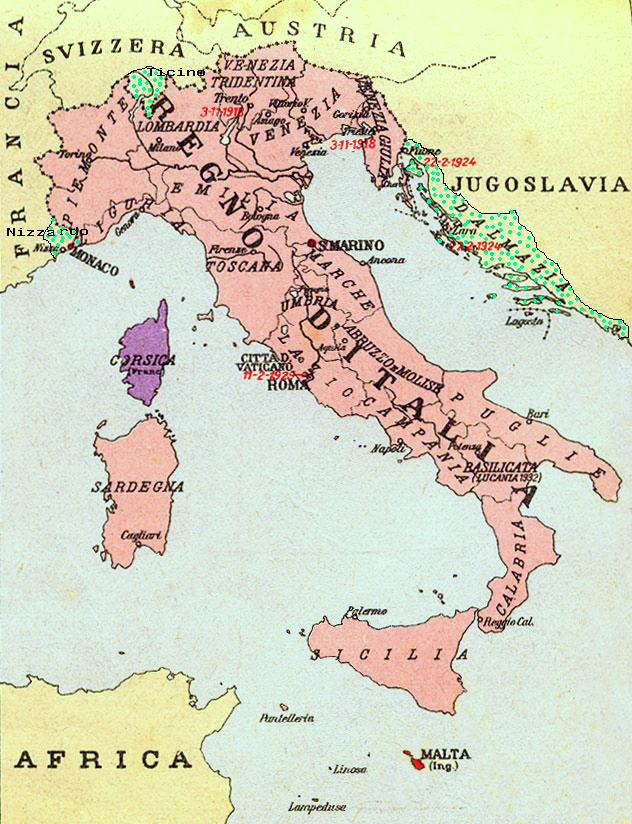
The term irredentism was coined from the Italian phrase Italia irredenta (unredeemed Italy). This phrase originally referred to territory in Austria-Hungary that was mostly or partly inhabited by ethnic Italians. In particular, it applies to Trentino and Trieste, but also Gorizia, Istria, Fiume, and Dalmatia during the 19th and early 20th centuries. Irredentist projects often use the term "Greater" to label the desired outcome of their expansion, as in "Greater Serbia" or "Greater Russia".
Irredentism is often understood as the claim that territories belonging to one state should be incorporated into another state because their population is ethnically similar or because it historically belonged to the other state before. Many definitions of irredentism have been proposed to give a more precise formulation. Despite a wide overlap concerning its general features, there is no consensus about its exact characterization. The disagreements matter for evaluating whether irredentism was the cause of war which is difficult in many cases and different definitions often lead to opposite conclusions.
There is wide consensus that irredentism is a form of territorial dispute involving the attempt to annex territories belonging to a neighboring state. However, not all such attempts constitute forms of irredentism and there is no academic consensus on precisely what other features need to be present. This concerns disagreements about who claims the territory, for what reasons they do so, and how much territory is claimed. Most scholars define irredentism as a claim made by one state on the territory of another state. In this regard, there are three essential entities to irredentism: (1) an irredentist state or parent state, (2) a neighboring host state or target state, and (3) the disputed territory belonging to the host state, often referred to as irredenta. According to this definition, popular movements demanding territorial change by non-state actors do not count as irredentist in the strict sense. A different definition characterizes irredentism as the attempt of an ethnic minority to break away and join their "real" motherland even though this minority is a non-state actor.
The reason for engaging in territorial conflict is another issue, with some scholars stating that irredentism is primarily motivated by ethnicity. In this view, the population in the neighboring territory is ethnically similar and the intention is to retrieve the area to unite the people. This definition implies, for example, that the majority of the border disputes in the history of Latin America were not forms of irredentism. Usually, irredentism is defined in terms of the motivation of the irredentist state, even if the territory is annexed against the will of the local population. Other theorists focus more on the historical claim that the disputed territory used to be part of the state's ancestral homeland. This is close to the literal meaning of the original Italian expression terra irredenta as "unredeemed land". In this view, the ethnicity of the people inhabiting this territory is not important. However, it is also possible to combine both characterizations, i.e. that the motivation is either ethnic or historical or both. Some scholars, like Benjamin Neuberger, include geographical reasons in their definitions.
A further disagreement concerns the amount of area that is to be annexed. Usually, irredentism is restricted to the attempt to incorporate some parts of another state. In this regard, irredentism challenges established borders with the neighboring state but does not challenge the existence of the neighboring state in general. However, some definitions of irredentism also include attempts to absorb the whole neighboring state and not just a part of it. In this sense, claims by both South Korea and North Korea to incorporate the whole of the Korean Peninsula would be considered a form of irredentism.
Hub AI
Irredentism AI simulator
(@Irredentism_simulator)
Irredentism
Irredentism (Italian: irredentismo) is one state's desire to annex the territory of another state. This desire can be motivated by ethnic reasons because the population of the territory is ethnically similar to or the same as the population of the parent state. Historical reasons may also be responsible, i.e., that the territory previously formed part of the parent state. Difficulties in applying the concept to concrete cases have given rise to academic debates about its precise definition. Disagreements concern whether either or both ethnic and historical reasons have to be present and whether non-state actors can also engage in irredentism. A further dispute is whether attempts to absorb a full neighboring state are also included. There are various types of irredentism. For typical forms of irredentism, the parent state already exists before the territorial conflict with a neighboring state arises. There are also forms of irredentism in which the parent state is newly created by uniting an ethnic group spread across several countries. Another distinction concerns whether the country to which the disputed territory currently belongs is a regular state, a former colony, or a collapsed state.
A central research topic concerning irredentism is the question of how it is to be explained or what causes it. Many explanations hold that ethnic homogeneity within a state makes irredentism more likely. Discrimination against the ethnic group in the neighboring territory is another contributing factor. A closely related explanation argues that national identities based primarily on ethnicity, culture, and history increase irredentist tendencies. Another approach is to explain irredentism as an attempt to increase power and wealth. In this regard, it is argued that irredentist claims are more likely if the neighboring territory is relatively rich. Many explanations also focus on the regime type and hold that democracies are less likely to engage in irredentism while anocracies are particularly open to it.
Irredentism has been an influential force in world politics since the mid-nineteenth century. It has been responsible for many armed conflicts, even though international law is hostile to it and irredentist movements often fail to achieve their goals. The term was originally coined from the Italian phrase Italia irredenta and referred to an Italian movement after 1878 claiming parts of Switzerland and the Austro-Hungarian Empire. Often discussed cases of irredentism include Nazi Germany's annexation of the Sudetenland in 1938, Somalia's invasion of Ethiopia in 1977, and Argentina's invasion of the Falkland Islands in 1982. Further examples are attempts to establish a Greater Serbia following the breakup of Yugoslavia in the early 1990s and Russia's annexation of Crimea in 2014. Irredentism is closely related to revanchism and secession. Revanchism is an attempt to annex territory belonging to another state. It is motivated by the goal of taking revenge for a previous grievance, in contrast to the goal of irredentism of building an ethnically unified nation-state. In the case of secession, a territory breaks away and forms an independent state instead of merging with another state.
The term irredentism was coined from the Italian phrase Italia irredenta (unredeemed Italy). This phrase originally referred to territory in Austria-Hungary that was mostly or partly inhabited by ethnic Italians. In particular, it applies to Trentino and Trieste, but also Gorizia, Istria, Fiume, and Dalmatia during the 19th and early 20th centuries. Irredentist projects often use the term "Greater" to label the desired outcome of their expansion, as in "Greater Serbia" or "Greater Russia".
Irredentism is often understood as the claim that territories belonging to one state should be incorporated into another state because their population is ethnically similar or because it historically belonged to the other state before. Many definitions of irredentism have been proposed to give a more precise formulation. Despite a wide overlap concerning its general features, there is no consensus about its exact characterization. The disagreements matter for evaluating whether irredentism was the cause of war which is difficult in many cases and different definitions often lead to opposite conclusions.
There is wide consensus that irredentism is a form of territorial dispute involving the attempt to annex territories belonging to a neighboring state. However, not all such attempts constitute forms of irredentism and there is no academic consensus on precisely what other features need to be present. This concerns disagreements about who claims the territory, for what reasons they do so, and how much territory is claimed. Most scholars define irredentism as a claim made by one state on the territory of another state. In this regard, there are three essential entities to irredentism: (1) an irredentist state or parent state, (2) a neighboring host state or target state, and (3) the disputed territory belonging to the host state, often referred to as irredenta. According to this definition, popular movements demanding territorial change by non-state actors do not count as irredentist in the strict sense. A different definition characterizes irredentism as the attempt of an ethnic minority to break away and join their "real" motherland even though this minority is a non-state actor.
The reason for engaging in territorial conflict is another issue, with some scholars stating that irredentism is primarily motivated by ethnicity. In this view, the population in the neighboring territory is ethnically similar and the intention is to retrieve the area to unite the people. This definition implies, for example, that the majority of the border disputes in the history of Latin America were not forms of irredentism. Usually, irredentism is defined in terms of the motivation of the irredentist state, even if the territory is annexed against the will of the local population. Other theorists focus more on the historical claim that the disputed territory used to be part of the state's ancestral homeland. This is close to the literal meaning of the original Italian expression terra irredenta as "unredeemed land". In this view, the ethnicity of the people inhabiting this territory is not important. However, it is also possible to combine both characterizations, i.e. that the motivation is either ethnic or historical or both. Some scholars, like Benjamin Neuberger, include geographical reasons in their definitions.
A further disagreement concerns the amount of area that is to be annexed. Usually, irredentism is restricted to the attempt to incorporate some parts of another state. In this regard, irredentism challenges established borders with the neighboring state but does not challenge the existence of the neighboring state in general. However, some definitions of irredentism also include attempts to absorb the whole neighboring state and not just a part of it. In this sense, claims by both South Korea and North Korea to incorporate the whole of the Korean Peninsula would be considered a form of irredentism.
Recent media