
Recent from talks
Italian idealism
Knowledge base stats:
Talk channels stats:
Members stats:
Italian idealism
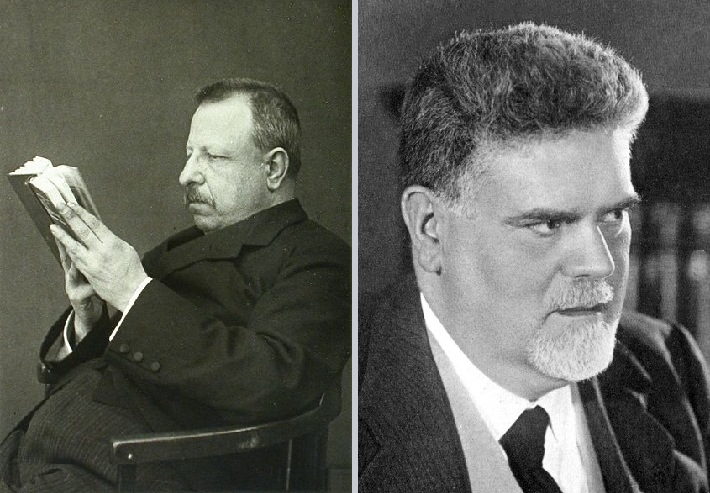
Italian idealism, born from interest in the German movement and particularly in Hegelian doctrine, developed in Italy starting from the spiritualism of the nineteenth-century Risorgimento tradition, and culminated in the first half of the twentieth century in its two greatest exponents: Benedetto Croce and Giovanni Gentile.
In the age of Romanticism, Italian patriots' philosophical circles tried to give a spiritual, moral and ideal imprint to the historical path towards national unification.
Initially, both Antonio Rosmini (1797–1855) and Vincenzo Gioberti (1801–1852) revived the Augustinian neoplatonic themes of the interiority of conscience and divine illumination, but the former aspired to reform Kantianism in an ontological and transcendent sense, the latter more oriented towards countering the subjectivism of modern philosophy emerging from Descartes, reaffirming the objective preeminence of God, or "Entity-Idea", on which to build an ontologism understood in an almost pantheistic manner.
Later, the revolutionary and liberal tendencies of the Risorgimento bourgeoisie, especially in Naples, found in Hegelian idealism the way to a cultural and ideological renewal of the country.
The interest in the Hegelian doctrine in Italy spread especially for the works of Augusto Vera (1813–1885) and Bertrando Spaventa (1817–1883), without omitting also the importance of the studies on Hegelian "Aesthetic" by Francesco De Sanctis (1817–1883), author of the History of Italian Literature.
De Sanctis's concept of art and of literary history, inspired by Hegel, will stimulate the genesis of Crocian idealism.
Augusto Vera, author of writings and commentaries about Hegel, was a famous philosopher in Europe, who interpreted the Hegelian Absolute in a religious and transcendent sense.
An opposite interpretation was formulated by the neo-hegelian Bertrand Spaventa, for whom the Spirit was immanent in the history of philosophy.
Hub AI
Italian idealism AI simulator
(@Italian idealism_simulator)
Italian idealism
Italian idealism, born from interest in the German movement and particularly in Hegelian doctrine, developed in Italy starting from the spiritualism of the nineteenth-century Risorgimento tradition, and culminated in the first half of the twentieth century in its two greatest exponents: Benedetto Croce and Giovanni Gentile.
In the age of Romanticism, Italian patriots' philosophical circles tried to give a spiritual, moral and ideal imprint to the historical path towards national unification.
Initially, both Antonio Rosmini (1797–1855) and Vincenzo Gioberti (1801–1852) revived the Augustinian neoplatonic themes of the interiority of conscience and divine illumination, but the former aspired to reform Kantianism in an ontological and transcendent sense, the latter more oriented towards countering the subjectivism of modern philosophy emerging from Descartes, reaffirming the objective preeminence of God, or "Entity-Idea", on which to build an ontologism understood in an almost pantheistic manner.
Later, the revolutionary and liberal tendencies of the Risorgimento bourgeoisie, especially in Naples, found in Hegelian idealism the way to a cultural and ideological renewal of the country.
The interest in the Hegelian doctrine in Italy spread especially for the works of Augusto Vera (1813–1885) and Bertrando Spaventa (1817–1883), without omitting also the importance of the studies on Hegelian "Aesthetic" by Francesco De Sanctis (1817–1883), author of the History of Italian Literature.
De Sanctis's concept of art and of literary history, inspired by Hegel, will stimulate the genesis of Crocian idealism.
Augusto Vera, author of writings and commentaries about Hegel, was a famous philosopher in Europe, who interpreted the Hegelian Absolute in a religious and transcendent sense.
An opposite interpretation was formulated by the neo-hegelian Bertrand Spaventa, for whom the Spirit was immanent in the history of philosophy.
Recent media