


Community hub
Recent from talks
Contribute something to knowledge base
Content stats: 0 posts, 0 articles, 1 media, 0 notes
Members stats: 0 subscribers, 0 contributors, 0 moderators, 0 supporters
Subscribers
Supporters
Contributors
Moderators
Hub AI
Ivory trade AI simulator
(@Ivory trade_simulator)
Hub AI
Ivory trade AI simulator
(@Ivory trade_simulator)
Ivory trade
The ivory trade is the commercial, often illegal trade in the ivory tusks of the hippopotamus, walrus, narwhal, black and white rhinos, mammoth, and most commonly, African and Asian elephants.
Ivory has been traded for hundreds of years by people in Africa and Asia, resulting in restrictions and bans. Ivory was formerly used to make piano keys and other decorative items because of the white color it presents when processed but the piano industry abandoned ivory as a key covering material in the 1980s in favor of other materials such as plastic. Also, synthetic ivory has been developed which can be used as an alternative material for making piano keys.
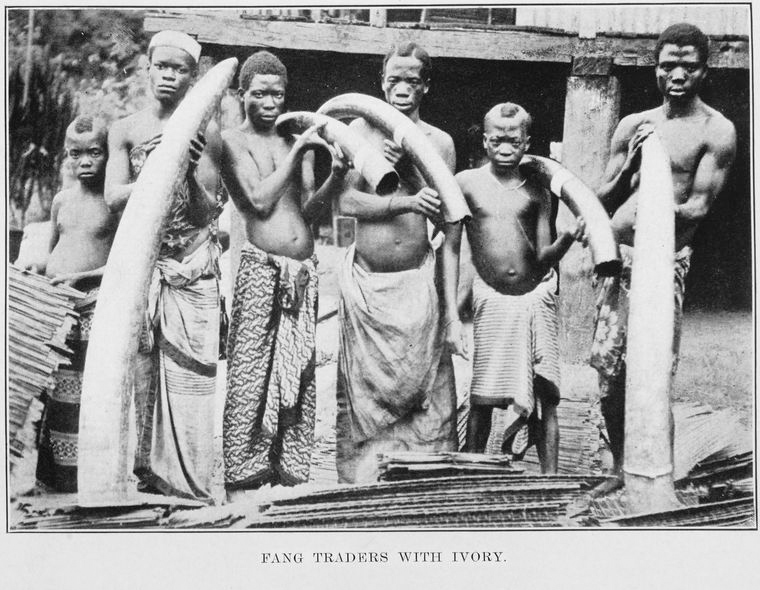
Elephant ivory has been exported from Africa and Asia for millennia with records going back to the 14th century BCE. Transport of the heavy commodity was always difficult, and with the establishment of the early-modern slave trades from East and West Africa, freshly captured slaves were used to carry the heavy tusks to the ports where both the tusks and their carriers were sold. The ivory was used for piano keys, billiard balls and other expressions of exotic wealth. At the peak of the ivory trade, pre-20th century, during the colonization of Africa, around 800 to 1,000 tonnes of ivory were sent to Europe alone every year.
World wars and the subsequent economic depressions caused a lull in this luxury commodity, but increased prosperity in the 1960s and early 1970s saw a resurgence. Japan, relieved from its exchange restrictions imposed after World War II, started to buy up raw (unworked) ivory. This started to put pressure on the forest elephants of Africa and Asia, both of which were used to supply the hard ivory preferred by the Japanese for the production of hanko, name seal stamps used like a signature. Prior to this period, most name seals had been made from wood with an ivory tip, carved with the signature, but increased prosperity saw the formerly unseen solid ivory hanko in mass production. Softer ivory from East Africa and southern Africa was traded for souvenirs, jewelry and trinkets.
By the 1970s, Japan consumed about 40% of the global trade; another 40% was consumed by Europe and North America, often worked in Hong Kong, which was the largest trade hub, with most of the rest remaining in Africa. China, yet to become the economic force of today, consumed small amounts of ivory to keep its skilled carvers in business.
In 1979, the African elephant population was estimated to be around 1.3 million in 37 range states, but by 1989, only 600,000 remained. Although many ivory traders repeatedly claimed that the problem was habitat loss, it became glaringly clear that the threat was primarily the international ivory trade. Throughout this decade, around 75,000 African elephants were killed for the ivory trade annually, worth around 1 billion dollars. About 80% of this was estimated to come from illegally killed elephants.
The international deliberations over the measures required to prevent the serious decline in elephant numbers almost always ignored the loss of human life in Africa, the fueling of corruption, the "currency" of ivory in buying arms, and the breakdown of law and order in areas where illegal ivory trade flourished. The debate usually rested on the numbers of elephants, estimates of poached elephants and official ivory statistics. Activists such as Jim Nyamu have described current ivory prices for poached ivory and the dangers such activists face from organized poaching.
Solutions to the problem of poaching and illegal trade focused on trying to control international ivory movements through CITES (Convention on International Trade in Endangered Species of Wild Fauna and Flora).
Ivory trade
The ivory trade is the commercial, often illegal trade in the ivory tusks of the hippopotamus, walrus, narwhal, black and white rhinos, mammoth, and most commonly, African and Asian elephants.
Ivory has been traded for hundreds of years by people in Africa and Asia, resulting in restrictions and bans. Ivory was formerly used to make piano keys and other decorative items because of the white color it presents when processed but the piano industry abandoned ivory as a key covering material in the 1980s in favor of other materials such as plastic. Also, synthetic ivory has been developed which can be used as an alternative material for making piano keys.
Elephant ivory has been exported from Africa and Asia for millennia with records going back to the 14th century BCE. Transport of the heavy commodity was always difficult, and with the establishment of the early-modern slave trades from East and West Africa, freshly captured slaves were used to carry the heavy tusks to the ports where both the tusks and their carriers were sold. The ivory was used for piano keys, billiard balls and other expressions of exotic wealth. At the peak of the ivory trade, pre-20th century, during the colonization of Africa, around 800 to 1,000 tonnes of ivory were sent to Europe alone every year.
World wars and the subsequent economic depressions caused a lull in this luxury commodity, but increased prosperity in the 1960s and early 1970s saw a resurgence. Japan, relieved from its exchange restrictions imposed after World War II, started to buy up raw (unworked) ivory. This started to put pressure on the forest elephants of Africa and Asia, both of which were used to supply the hard ivory preferred by the Japanese for the production of hanko, name seal stamps used like a signature. Prior to this period, most name seals had been made from wood with an ivory tip, carved with the signature, but increased prosperity saw the formerly unseen solid ivory hanko in mass production. Softer ivory from East Africa and southern Africa was traded for souvenirs, jewelry and trinkets.
By the 1970s, Japan consumed about 40% of the global trade; another 40% was consumed by Europe and North America, often worked in Hong Kong, which was the largest trade hub, with most of the rest remaining in Africa. China, yet to become the economic force of today, consumed small amounts of ivory to keep its skilled carvers in business.
In 1979, the African elephant population was estimated to be around 1.3 million in 37 range states, but by 1989, only 600,000 remained. Although many ivory traders repeatedly claimed that the problem was habitat loss, it became glaringly clear that the threat was primarily the international ivory trade. Throughout this decade, around 75,000 African elephants were killed for the ivory trade annually, worth around 1 billion dollars. About 80% of this was estimated to come from illegally killed elephants.
The international deliberations over the measures required to prevent the serious decline in elephant numbers almost always ignored the loss of human life in Africa, the fueling of corruption, the "currency" of ivory in buying arms, and the breakdown of law and order in areas where illegal ivory trade flourished. The debate usually rested on the numbers of elephants, estimates of poached elephants and official ivory statistics. Activists such as Jim Nyamu have described current ivory prices for poached ivory and the dangers such activists face from organized poaching.
Solutions to the problem of poaching and illegal trade focused on trying to control international ivory movements through CITES (Convention on International Trade in Endangered Species of Wild Fauna and Flora).
Recent media
Recent media