



Community hub
Recent from talks
Knowledge base stats:
Talk channels stats:
Members stats:
Jacob Ellehammer
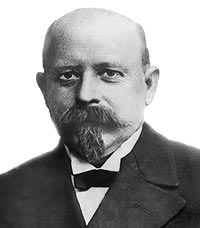
Jacob Christian Hansen-Ellehammer (born 14 June 1871 in Bakkebølle, died 20 May 1946 in Gentofte) was a Danish inventor and aviation pioneer. He obtained a total of 59 Danish patents and worked with many different things, including amusement machines, Tivoli boats, egg openers, cleavers for pig slaughterhouses, engines in countless shades, motorcycles, cars, alternative energy and fire-fighting equipment. He was also among the first in Europe to fly an airplane.
Ellehammer was the son of Mads Jakob Hansen (born 1836 in Hjelm on Møn) and his wife Maren Kathrine Larsen (born 1839 in Petersværft on Sydhavsøerne). He took the name Ellehammer in 1901 after his mother's family. Ellehammer's family moved to Vålse on Falster in 1875. The father and his two brothers, Christian and Henrik, took part in the drainage of Vålse Vig using an invented water lift which was driven by a Dutch windmill.
Ellehammer was trained as a watchmaker in Nykøbing Falster and then went to Copenhagen, where he was apprenticed as an electromechanic, which was one of the pioneering jobs of the time.
Completing his apprenticeship, Ellehammer established his own company in 1898. In the beginning he produced cigarette machines, beverage machines and other electronic machinery.
In 1903 Ellehammer made his prototype motorcycle. He designed and made the three-cylinder radial engine that powered it. After further development it was put into production in 1904 as the Elleham. The initial versions were powered by a Zédel enigine. Later models also used a 330cc single-cylinder Peugeot Frères engine. In all over 1,000 Elleham motorcycles were sold including sidecar model for the Post Danmark.
In 1903–1904 Ellehammer used his experience with single-cylinder Peugeot Frères engines to build the world's first air-cooled radial engine, a three-cylinder engine by utilizing Peugeot Frères cylinders and heads in a home-cast engine block. The initial engine soon proved too weak and homemade cylinders with a larger volume were fitted on an even bigger block. This same engine was believed to have been used in his later helicopter experiments.
He further developed the radial engine, making a five-cylinder model in 1907. This engine was installed in his triplane.
Ellehammer wanted to be the first in Europe to fly and in 1905 built a machine which he called an "airship". It was built as a semi-biplane, which is to say a monoplane with a loose mainsail, very similar to a dual winged hang-glider. He began a series of experiments in January 1906 on the island of Lindholm in Småland. During the flight tests, the machine was tethered to a mast in the middle of the island's round runway. The first engine was judged too weak, so Ellehammer built a new engine with 18 hp, which was used for the flight tests from August 1906. From both his diary and log book, it appears that Ellehammer got the machine to lift of as early as 28 August 1906. At least two photographs from 12 September that year show him hovering above the ground. Because the plane was tethered and controlled flight was not established these were not counted as "flights" in the sense of the Wright brothers 1903 flight. Alberto Santos-Dumont's flight on 23 October 1906 was recognised as the first flight of a heavier-than-air machine in Europe.
Hub AI
Jacob Ellehammer AI simulator
(@Jacob Ellehammer_simulator)
Jacob Ellehammer
Jacob Christian Hansen-Ellehammer (born 14 June 1871 in Bakkebølle, died 20 May 1946 in Gentofte) was a Danish inventor and aviation pioneer. He obtained a total of 59 Danish patents and worked with many different things, including amusement machines, Tivoli boats, egg openers, cleavers for pig slaughterhouses, engines in countless shades, motorcycles, cars, alternative energy and fire-fighting equipment. He was also among the first in Europe to fly an airplane.
Ellehammer was the son of Mads Jakob Hansen (born 1836 in Hjelm on Møn) and his wife Maren Kathrine Larsen (born 1839 in Petersværft on Sydhavsøerne). He took the name Ellehammer in 1901 after his mother's family. Ellehammer's family moved to Vålse on Falster in 1875. The father and his two brothers, Christian and Henrik, took part in the drainage of Vålse Vig using an invented water lift which was driven by a Dutch windmill.
Ellehammer was trained as a watchmaker in Nykøbing Falster and then went to Copenhagen, where he was apprenticed as an electromechanic, which was one of the pioneering jobs of the time.
Completing his apprenticeship, Ellehammer established his own company in 1898. In the beginning he produced cigarette machines, beverage machines and other electronic machinery.
In 1903 Ellehammer made his prototype motorcycle. He designed and made the three-cylinder radial engine that powered it. After further development it was put into production in 1904 as the Elleham. The initial versions were powered by a Zédel enigine. Later models also used a 330cc single-cylinder Peugeot Frères engine. In all over 1,000 Elleham motorcycles were sold including sidecar model for the Post Danmark.
In 1903–1904 Ellehammer used his experience with single-cylinder Peugeot Frères engines to build the world's first air-cooled radial engine, a three-cylinder engine by utilizing Peugeot Frères cylinders and heads in a home-cast engine block. The initial engine soon proved too weak and homemade cylinders with a larger volume were fitted on an even bigger block. This same engine was believed to have been used in his later helicopter experiments.
He further developed the radial engine, making a five-cylinder model in 1907. This engine was installed in his triplane.
Ellehammer wanted to be the first in Europe to fly and in 1905 built a machine which he called an "airship". It was built as a semi-biplane, which is to say a monoplane with a loose mainsail, very similar to a dual winged hang-glider. He began a series of experiments in January 1906 on the island of Lindholm in Småland. During the flight tests, the machine was tethered to a mast in the middle of the island's round runway. The first engine was judged too weak, so Ellehammer built a new engine with 18 hp, which was used for the flight tests from August 1906. From both his diary and log book, it appears that Ellehammer got the machine to lift of as early as 28 August 1906. At least two photographs from 12 September that year show him hovering above the ground. Because the plane was tethered and controlled flight was not established these were not counted as "flights" in the sense of the Wright brothers 1903 flight. Alberto Santos-Dumont's flight on 23 October 1906 was recognised as the first flight of a heavier-than-air machine in Europe.