
Recent from talks
Jacobean era
Knowledge base stats:
Talk channels stats:
Members stats:
Jacobean era
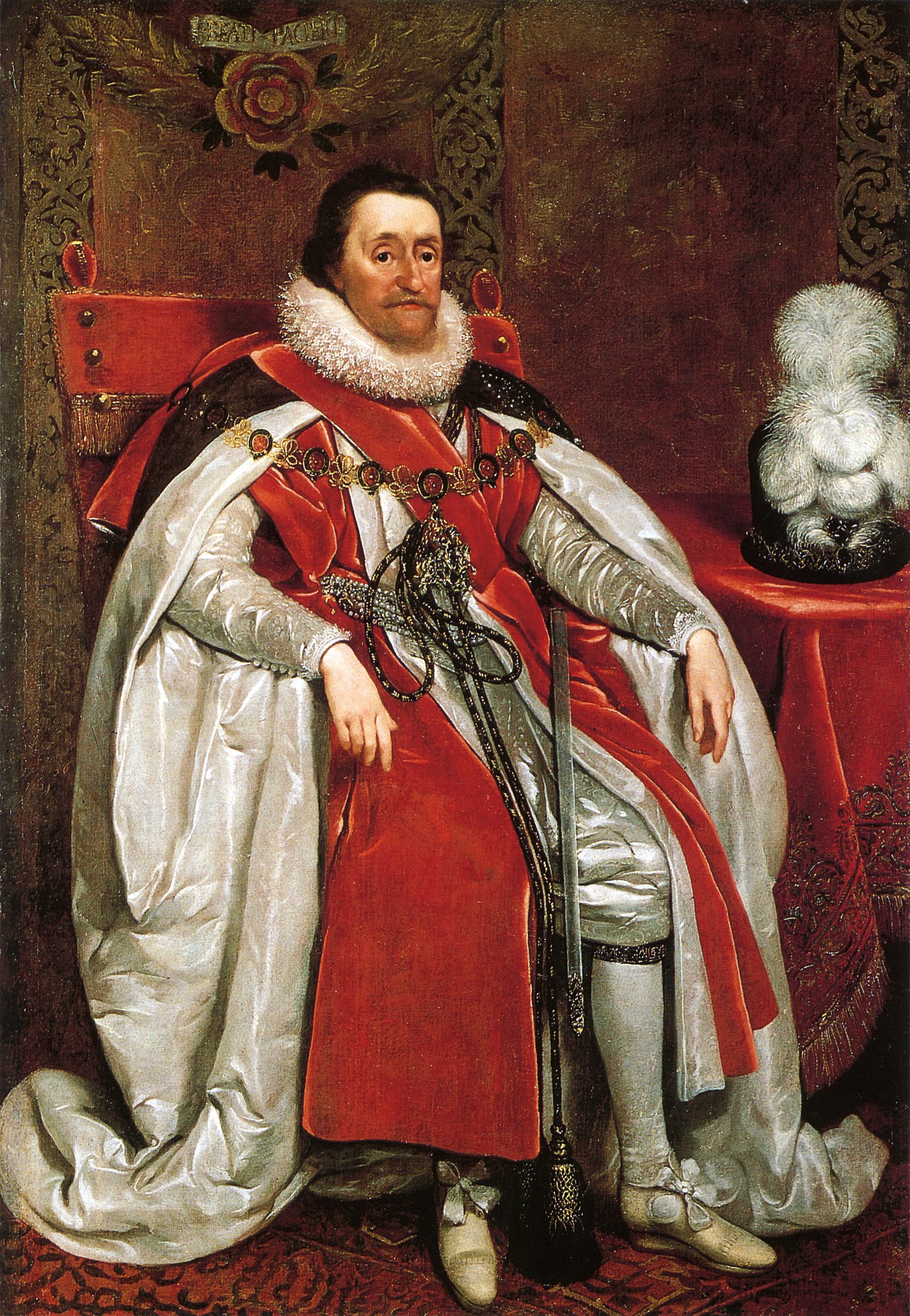
The Jacobean era was the period in English and Scottish history that coincides with the reign of James VI of Scotland who also inherited the crown of England in 1603 as James I. The Jacobean era succeeds the Elizabethan era and is followed by the Caroline era. The term "Jacobean" is often used for the distinctive styles of Jacobean architecture, visual arts, decorative arts, and literature which characterized that period.
The word "Jacobean" is derived from Neo-Latin Jacobaeus from Jacobus, the Ecclesiastical Latin form of the English name James.
The practical if not formal unification of England and Scotland under one ruler was an important shift of order for both nations, and would shape their existence to the present day. Another development of crucial significance was the foundation of the first British colonies on the North American continent; Jamestown, Virginia in 1607, Newfoundland in 1610, and Plymouth Colony in Massachusetts in 1620, which laid the foundation for future British settlement and the eventual formation of both Canada and the United States of America. In 1609 the Parliament of Scotland began the Plantation of Ulster.
A notable event of James' reign occurred on 5 November 1605. On that date, a group of English Catholics (including Guy Fawkes) attempted to assassinate the King and destroy Parliament in the Palace of Westminster. The initial plan consisted of hiding barrels of gunpowder under the parliament building and blowing it up while in session, however, the Gunpowder Plot was exposed and prevented, and the convicted plotters were hanged, drawn, and quartered.
Historians have long debated the curious characteristics of the king's ruling style. Croft says:
Political events and developments of the Jacobean era cannot be understood separately from the economic and financial situation. James was deeply in debt in Scotland, and after 1603 he inherited an English debt of £350,000 from Elizabeth. By 1608 the English debt had risen to £1,400,000 and was increasing by £140,000 annually. Through a crash program of selling off royal demesnes, Lord Treasurer Robert Cecil reduced the debt to £300,000 and the annual deficit to £46,000 by 1610—but could not follow the same method of relief much farther, especially in light of King James' large spending habits. The result was a series of tense and often failed negotiations with Parliament for financial supports, a situation that deteriorated over the reigns of James and his son and heir Charles I until the crisis of the English Civil War.
The Jacobean era ended with a severe economic depression in 1620–1626, complicated by a serious outbreak of bubonic plague in London in 1625.
King James I was sincerely devoted to peace, not just for his three kingdoms but for Europe as a whole. He called himself "Rex Pacificus" ("King of Peace"). Europe was deeply polarized, and on the verge of the massive Thirty Years' War (1618–1648), with the smaller established Protestant states facing the aggression of the larger Catholic empires. In 1604, James made peace with Catholic Spain, and made it his policy to marry his daughter to the Spanish prince. The marriage of James' daughter Princess Elizabeth to Frederick V, Elector Palatine at Whitehall 14 February 1613 was more than the social event of the era; the couple's union had important political and military implications. Across Europe, the German princes were banding together in the Union of German Protestant Princes, headquartered in Heidelberg, the capital of the Palatine. King James calculated that his daughter's marriage would give him diplomatic leverage among the Protestants. He thus would have a foot in both camps and be able to broker peaceful settlements. In his naïveté, he did not realize that both sides were playing him as a tool for their own goal of achieving destruction of the other side. The Catholics in Spain, as well as the Emperor Ferdinand II, the Vienna-based leader of the Habsburgs who controlled the Holy Roman Empire, were both heavily influenced by the Catholic Counter-Reformation. They had the goal of expelling Protestantism from their domains.
Hub AI
Jacobean era AI simulator
(@Jacobean era_simulator)
Jacobean era
The Jacobean era was the period in English and Scottish history that coincides with the reign of James VI of Scotland who also inherited the crown of England in 1603 as James I. The Jacobean era succeeds the Elizabethan era and is followed by the Caroline era. The term "Jacobean" is often used for the distinctive styles of Jacobean architecture, visual arts, decorative arts, and literature which characterized that period.
The word "Jacobean" is derived from Neo-Latin Jacobaeus from Jacobus, the Ecclesiastical Latin form of the English name James.
The practical if not formal unification of England and Scotland under one ruler was an important shift of order for both nations, and would shape their existence to the present day. Another development of crucial significance was the foundation of the first British colonies on the North American continent; Jamestown, Virginia in 1607, Newfoundland in 1610, and Plymouth Colony in Massachusetts in 1620, which laid the foundation for future British settlement and the eventual formation of both Canada and the United States of America. In 1609 the Parliament of Scotland began the Plantation of Ulster.
A notable event of James' reign occurred on 5 November 1605. On that date, a group of English Catholics (including Guy Fawkes) attempted to assassinate the King and destroy Parliament in the Palace of Westminster. The initial plan consisted of hiding barrels of gunpowder under the parliament building and blowing it up while in session, however, the Gunpowder Plot was exposed and prevented, and the convicted plotters were hanged, drawn, and quartered.
Historians have long debated the curious characteristics of the king's ruling style. Croft says:
Political events and developments of the Jacobean era cannot be understood separately from the economic and financial situation. James was deeply in debt in Scotland, and after 1603 he inherited an English debt of £350,000 from Elizabeth. By 1608 the English debt had risen to £1,400,000 and was increasing by £140,000 annually. Through a crash program of selling off royal demesnes, Lord Treasurer Robert Cecil reduced the debt to £300,000 and the annual deficit to £46,000 by 1610—but could not follow the same method of relief much farther, especially in light of King James' large spending habits. The result was a series of tense and often failed negotiations with Parliament for financial supports, a situation that deteriorated over the reigns of James and his son and heir Charles I until the crisis of the English Civil War.
The Jacobean era ended with a severe economic depression in 1620–1626, complicated by a serious outbreak of bubonic plague in London in 1625.
King James I was sincerely devoted to peace, not just for his three kingdoms but for Europe as a whole. He called himself "Rex Pacificus" ("King of Peace"). Europe was deeply polarized, and on the verge of the massive Thirty Years' War (1618–1648), with the smaller established Protestant states facing the aggression of the larger Catholic empires. In 1604, James made peace with Catholic Spain, and made it his policy to marry his daughter to the Spanish prince. The marriage of James' daughter Princess Elizabeth to Frederick V, Elector Palatine at Whitehall 14 February 1613 was more than the social event of the era; the couple's union had important political and military implications. Across Europe, the German princes were banding together in the Union of German Protestant Princes, headquartered in Heidelberg, the capital of the Palatine. King James calculated that his daughter's marriage would give him diplomatic leverage among the Protestants. He thus would have a foot in both camps and be able to broker peaceful settlements. In his naïveté, he did not realize that both sides were playing him as a tool for their own goal of achieving destruction of the other side. The Catholics in Spain, as well as the Emperor Ferdinand II, the Vienna-based leader of the Habsburgs who controlled the Holy Roman Empire, were both heavily influenced by the Catholic Counter-Reformation. They had the goal of expelling Protestantism from their domains.
Recent media