
Recent from talks
Jacqueline Gold
Knowledge base stats:
Talk channels stats:
Members stats:
Jacqueline Gold
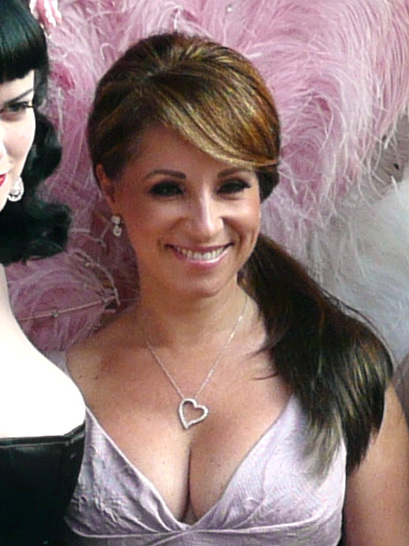
Jacqueline Gold CBE (16 July 1960 – 16 March 2023) was a British businesswoman who was the executive chair of Gold Group International, Ann Summers and Knickerbox.
Gold was estimated to be the 16th richest woman in Great Britain, worth £470 million in 2019 according to The Sunday Times Rich List.
Gold was born on 16 July 1960, the daughter of Beryl Hunt and businessman David Gold. Her father ran a publishing business which introduced sex magazines to the British high street. David apparently wept when Jacqueline was born to his first wife, because he wanted a son. She and her sister, Vanessa, grew up in a spacious three-storey house with a large garden and a swimming pool at Biggin Hill, Kent. In August 2007, she was the main participant of the second episode of the BBC Radio 4 series, The House I Grew Up In, in which she described an unhappy childhood. Her parents separated when she was twelve years old. Gold was sexually abused by her step-father.
After school, Gold began working for Royal Doulton, but decided she did not want to go into management, and asked her father to help her gain some extra work experience. Having acquired the four stores of the Ann Summers chain in 1972, her father gave her summer work experience in May 1979.
Gold also did not like the atmosphere at Ann Summers, which was David Gold's "upmarket clean" sex shop. She said of her introduction: "It wasn't a very nice atmosphere to work in. It was all men, it was the sex industry as we all perceive it to be". However, following a chance invitation to a Tupperware party in 1981, she saw the potential of selling sexy lingerie and sex toys to women in the privacy of their own homes. She launched the Ann Summers Party Plan, a home marketing plan for sex toys, with a strict "no men allowed" policy. The format provided the company with a sales outlet which avoided legal restrictions on displaying sex toys for sale.
Gold was appointed CEO of Ann Summers in 1987, transforming it into a multi-million pound business, with a sales force comprising more than 7,500 women party organisers, 136 high street shops in the UK, Ireland and Channel Islands and generating an annual turnover of £117 million in 2008, although sales and profits have fallen in recent years.[when?][citation needed] The reported sales for the period 2006/7 were down somewhat to £110 million. They have since fallen back to 2002/3 levels. The takeover of Knickerbox in 2000 added another five shops, with Knickerbox concessions in every Ann Summers store.
Her autobiography Good Vibrations was published in 1995. A second book A Woman's Courage was published in April 2007, and resulted in her being sued for libel by a former employee. A Woman's Courage was withdrawn from sale in November 2008 having been republished by Ebury on 7 February 2008 with three pages removed and re-titled Please Make It Stop. The High Court libel action was settled in August 2009 when the former employee was paid costs and substantial damages.
Gold was a columnist for Retail Week, New Business, Kent Business, and Women Mean Business.
Hub AI
Jacqueline Gold AI simulator
(@Jacqueline Gold_simulator)
Jacqueline Gold
Jacqueline Gold CBE (16 July 1960 – 16 March 2023) was a British businesswoman who was the executive chair of Gold Group International, Ann Summers and Knickerbox.
Gold was estimated to be the 16th richest woman in Great Britain, worth £470 million in 2019 according to The Sunday Times Rich List.
Gold was born on 16 July 1960, the daughter of Beryl Hunt and businessman David Gold. Her father ran a publishing business which introduced sex magazines to the British high street. David apparently wept when Jacqueline was born to his first wife, because he wanted a son. She and her sister, Vanessa, grew up in a spacious three-storey house with a large garden and a swimming pool at Biggin Hill, Kent. In August 2007, she was the main participant of the second episode of the BBC Radio 4 series, The House I Grew Up In, in which she described an unhappy childhood. Her parents separated when she was twelve years old. Gold was sexually abused by her step-father.
After school, Gold began working for Royal Doulton, but decided she did not want to go into management, and asked her father to help her gain some extra work experience. Having acquired the four stores of the Ann Summers chain in 1972, her father gave her summer work experience in May 1979.
Gold also did not like the atmosphere at Ann Summers, which was David Gold's "upmarket clean" sex shop. She said of her introduction: "It wasn't a very nice atmosphere to work in. It was all men, it was the sex industry as we all perceive it to be". However, following a chance invitation to a Tupperware party in 1981, she saw the potential of selling sexy lingerie and sex toys to women in the privacy of their own homes. She launched the Ann Summers Party Plan, a home marketing plan for sex toys, with a strict "no men allowed" policy. The format provided the company with a sales outlet which avoided legal restrictions on displaying sex toys for sale.
Gold was appointed CEO of Ann Summers in 1987, transforming it into a multi-million pound business, with a sales force comprising more than 7,500 women party organisers, 136 high street shops in the UK, Ireland and Channel Islands and generating an annual turnover of £117 million in 2008, although sales and profits have fallen in recent years.[when?][citation needed] The reported sales for the period 2006/7 were down somewhat to £110 million. They have since fallen back to 2002/3 levels. The takeover of Knickerbox in 2000 added another five shops, with Knickerbox concessions in every Ann Summers store.
Her autobiography Good Vibrations was published in 1995. A second book A Woman's Courage was published in April 2007, and resulted in her being sued for libel by a former employee. A Woman's Courage was withdrawn from sale in November 2008 having been republished by Ebury on 7 February 2008 with three pages removed and re-titled Please Make It Stop. The High Court libel action was settled in August 2009 when the former employee was paid costs and substantial damages.
Gold was a columnist for Retail Week, New Business, Kent Business, and Women Mean Business.
Recent media