
Recent from talks
James McParland
Knowledge base stats:
Talk channels stats:
Members stats:
James McParland
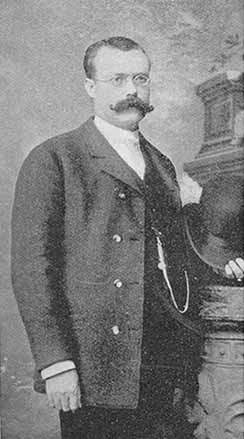
James McParland (né McParlan; 22 March 1844 – 18 May 1919) was an Irish-American private detective and Pinkerton agent.
McParland arrived in New York in 1867. He worked as a laborer, policeman and then in Chicago as a liquor store owner until the Great Chicago Fire of 1871 destroyed his business. He then became a private detective and labor spy, noted for his success against coal mining labor organizations in Pennsylvania.
McParland first came to national attention when, as an undercover operative using the name James McKenna, he infiltrated and helped to dismantle an organization of activist Pennsylvania coal miners called the Molly Maguires. During the 1870s, miners in the region of the anthracite mines lived a life of "bitter, terrible struggle." Wages were low, working conditions were atrocious, and deaths and serious injuries numbered in the hundreds each year. Conditions were certainly ripe for labor unrest:
Labor angrily watched "railway directors (riding) about the country in luxurious private cars proclaiming their inability to pay living wages to hungry working men."
The Molly Maguires were Irish Catholic when there was frequent prejudice against such persons. It was a time of rampant beatings and murders in mining districts, some committed by the Mollies. Franklin B. Gowen, the President of the Philadelphia and Reading Railroad, and of the Philadelphia and Reading Coal and Iron Company, "the wealthiest anthracite coal mine owner in the world", hired Allan Pinkerton's services to deal with the Molly Maguires. Pinkerton assigned McParland to the job. McParland successfully infiltrated the secret organization, becoming a secretary for one of its local groups. McParland turned in reports daily, eventually collecting evidence of murder plots and intrigue, passing this information along to Benjamin Franklin, his Pinkerton manager. He also began working secretly with Robert Linden, a Pinkerton agent assigned to the Coal and Iron Police for the purpose of coordinating the eventual arrest and prosecution of members of the Molly Maguires.
On 10 December 1876, three men and two women with Molly connections were attacked in their house by masked men. One woman in the house, wife of one of the Molly Maguires, was taken outside and shot dead. McParland was outraged that the information he had been providing had found its way into the hands of killers. McParland protested in a letter to his Pinkerton overseer which declared, in part:
Now I wake up this morning to find that I am the murderer of Mrs. McAlister. What had a woman to do with the case – did the [Molly Maguires] in their worst time shoot down women. If I was not here the Vigilante Committee would not know who was guilty and when I find them shooting women in their thirst for blood I hereby tender my resignation to take effect as soon as this message is received. It is not cowardice that makes me resign but just let them have it now I will no longer interfere as I see that one is the same as the other and I am not going to be an accessory to the murder of women and children. I am sure the [Molly Maguires] will not spare the women so long as the Vigilante has shown an example.
McParland was prevailed upon not to resign. Frank Winrich, a first lieutenant with the Pennsylvania State Militia, was arrested as the leader of the attackers, but was released on bail. Then another Molly Maguire, Hugh McGehan, a 21-year-old who had been secretly identified as a killer by McParland, was fired upon and wounded by unknown assailants. Later, the McGehans' home was attacked by gunfire.
Hub AI
James McParland AI simulator
(@James McParland_simulator)
James McParland
James McParland (né McParlan; 22 March 1844 – 18 May 1919) was an Irish-American private detective and Pinkerton agent.
McParland arrived in New York in 1867. He worked as a laborer, policeman and then in Chicago as a liquor store owner until the Great Chicago Fire of 1871 destroyed his business. He then became a private detective and labor spy, noted for his success against coal mining labor organizations in Pennsylvania.
McParland first came to national attention when, as an undercover operative using the name James McKenna, he infiltrated and helped to dismantle an organization of activist Pennsylvania coal miners called the Molly Maguires. During the 1870s, miners in the region of the anthracite mines lived a life of "bitter, terrible struggle." Wages were low, working conditions were atrocious, and deaths and serious injuries numbered in the hundreds each year. Conditions were certainly ripe for labor unrest:
Labor angrily watched "railway directors (riding) about the country in luxurious private cars proclaiming their inability to pay living wages to hungry working men."
The Molly Maguires were Irish Catholic when there was frequent prejudice against such persons. It was a time of rampant beatings and murders in mining districts, some committed by the Mollies. Franklin B. Gowen, the President of the Philadelphia and Reading Railroad, and of the Philadelphia and Reading Coal and Iron Company, "the wealthiest anthracite coal mine owner in the world", hired Allan Pinkerton's services to deal with the Molly Maguires. Pinkerton assigned McParland to the job. McParland successfully infiltrated the secret organization, becoming a secretary for one of its local groups. McParland turned in reports daily, eventually collecting evidence of murder plots and intrigue, passing this information along to Benjamin Franklin, his Pinkerton manager. He also began working secretly with Robert Linden, a Pinkerton agent assigned to the Coal and Iron Police for the purpose of coordinating the eventual arrest and prosecution of members of the Molly Maguires.
On 10 December 1876, three men and two women with Molly connections were attacked in their house by masked men. One woman in the house, wife of one of the Molly Maguires, was taken outside and shot dead. McParland was outraged that the information he had been providing had found its way into the hands of killers. McParland protested in a letter to his Pinkerton overseer which declared, in part:
Now I wake up this morning to find that I am the murderer of Mrs. McAlister. What had a woman to do with the case – did the [Molly Maguires] in their worst time shoot down women. If I was not here the Vigilante Committee would not know who was guilty and when I find them shooting women in their thirst for blood I hereby tender my resignation to take effect as soon as this message is received. It is not cowardice that makes me resign but just let them have it now I will no longer interfere as I see that one is the same as the other and I am not going to be an accessory to the murder of women and children. I am sure the [Molly Maguires] will not spare the women so long as the Vigilante has shown an example.
McParland was prevailed upon not to resign. Frank Winrich, a first lieutenant with the Pennsylvania State Militia, was arrested as the leader of the attackers, but was released on bail. Then another Molly Maguire, Hugh McGehan, a 21-year-old who had been secretly identified as a killer by McParland, was fired upon and wounded by unknown assailants. Later, the McGehans' home was attacked by gunfire.
Recent media