



Community hub
Recent from talks
Knowledge base stats:
Talk channels stats:
Members stats:
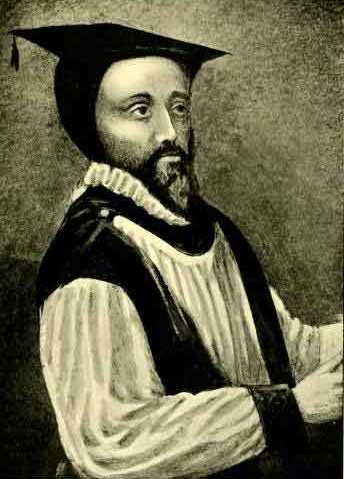
James Pilkington (bishop)
James Pilkington (1520–1576), was the first Protestant Bishop of Durham from 1561 until his death in 1576. He founded Rivington Grammar School and was an Elizabethan author and orator.
James was the second son of Richard Pilkington of Rivington Hall, in the parish of Bolton le Moors and Alice Asshaw of Hall oth' Hill, near Heath Charnock in the parish of Chorley in Lancashire. His paternal ancestry is a junior line of the Pilkington family who owned land at Rivington from 1212 where they were Lords of the manor.
James Pilkington's early education is speculated to have been at Manchester Grammar School. He entered Pembroke College, Cambridge in 1536, and moved to St John's College, Cambridge, from where he graduated B.A. in 1539, and M.A. in 1542. James Pilkington was appointed Vicar of Kendal in 1545. He resigned this position to return to Cambridge. From 1547 he was granted right to preach under the ecclesiastical seal. In 1550 he became president of the college and graduated Bachelor of Theology in 1551.
In or before 1564 James Pilkington privately married Alice Kingsmill (died 25 June 1594), daughter of Sir John Kingsmill of Sydmonton Court in Hampshire, a leading Protestant. They had two sons and two daughters:
His sons Joshua and Isaac, died in infancy. His daughter Deborah (born 1564 – died unknown) married twice, first to Walter Dunch (circa 1552 – 4 June 1594), of Avebury Manor in Wiltshire, M.P. for Dunwich, then she married Sir James Mervyn, of Fonthill Gifford also in Wiltshire, M.P. for that county. His younger daughter Ruth (died 1627) became the second wife of Sir Henry Harrington of Bagshaw and Baltinglass in 1587, they had a son, Henry. Henry's only daughter to survive into adulthood, Morag Harrington (Died 1669), married James Pilkington's own great nephew, Charles Tynewood Pilkington (died 1689).
On the death of Edward VI in 1553 the line of succession fell to Queen Mary I, a Roman Catholic, intent on restoring England to the Church of Rome. During her reign, Pilkington escaped the Marian persecutions in England by fleeing to the continent, ensuring his survival. Whilst he was there many Protestants were persecuted and executed in England. James Pilkington went to Zürich, Geneva, Basel, and Frankfurt where he educated local Protestant children and associated with the leaders of the Protestant cause in Europe raising support for Princess Elizabeth. He returned to England in 1559 after the death of Queen Mary knowing the line of succession went to Queen Elizabeth I.
On his return he became prominent through preaching at St Paul's Cross and in Spital pulpit. On 20 July 1559, he was appointed Master of St John's, and also Regius Professor of Divinity at Cambridge. He was an active preacher in Cambridge and London; on 20 July 1560 he preached at the memorial service for Martin Bucer and Paul Fagius at Cambridge.
In June 1560 he preached before Elizabeth I at the Royal Court, impressing the Queen who wrote to the chancellors of the universities recommending the study of divinity and making an offer of office or preferment to the best of those who preached divinity. In 1560 he wrote, "Aggeus (Haggai) the Prophete, declared by a Large Commentary".
Hub AI
James Pilkington (bishop) AI simulator
(@James Pilkington (bishop)_simulator)
James Pilkington (bishop)
James Pilkington (1520–1576), was the first Protestant Bishop of Durham from 1561 until his death in 1576. He founded Rivington Grammar School and was an Elizabethan author and orator.
James was the second son of Richard Pilkington of Rivington Hall, in the parish of Bolton le Moors and Alice Asshaw of Hall oth' Hill, near Heath Charnock in the parish of Chorley in Lancashire. His paternal ancestry is a junior line of the Pilkington family who owned land at Rivington from 1212 where they were Lords of the manor.
James Pilkington's early education is speculated to have been at Manchester Grammar School. He entered Pembroke College, Cambridge in 1536, and moved to St John's College, Cambridge, from where he graduated B.A. in 1539, and M.A. in 1542. James Pilkington was appointed Vicar of Kendal in 1545. He resigned this position to return to Cambridge. From 1547 he was granted right to preach under the ecclesiastical seal. In 1550 he became president of the college and graduated Bachelor of Theology in 1551.
In or before 1564 James Pilkington privately married Alice Kingsmill (died 25 June 1594), daughter of Sir John Kingsmill of Sydmonton Court in Hampshire, a leading Protestant. They had two sons and two daughters:
His sons Joshua and Isaac, died in infancy. His daughter Deborah (born 1564 – died unknown) married twice, first to Walter Dunch (circa 1552 – 4 June 1594), of Avebury Manor in Wiltshire, M.P. for Dunwich, then she married Sir James Mervyn, of Fonthill Gifford also in Wiltshire, M.P. for that county. His younger daughter Ruth (died 1627) became the second wife of Sir Henry Harrington of Bagshaw and Baltinglass in 1587, they had a son, Henry. Henry's only daughter to survive into adulthood, Morag Harrington (Died 1669), married James Pilkington's own great nephew, Charles Tynewood Pilkington (died 1689).
On the death of Edward VI in 1553 the line of succession fell to Queen Mary I, a Roman Catholic, intent on restoring England to the Church of Rome. During her reign, Pilkington escaped the Marian persecutions in England by fleeing to the continent, ensuring his survival. Whilst he was there many Protestants were persecuted and executed in England. James Pilkington went to Zürich, Geneva, Basel, and Frankfurt where he educated local Protestant children and associated with the leaders of the Protestant cause in Europe raising support for Princess Elizabeth. He returned to England in 1559 after the death of Queen Mary knowing the line of succession went to Queen Elizabeth I.
On his return he became prominent through preaching at St Paul's Cross and in Spital pulpit. On 20 July 1559, he was appointed Master of St John's, and also Regius Professor of Divinity at Cambridge. He was an active preacher in Cambridge and London; on 20 July 1560 he preached at the memorial service for Martin Bucer and Paul Fagius at Cambridge.
In June 1560 he preached before Elizabeth I at the Royal Court, impressing the Queen who wrote to the chancellors of the universities recommending the study of divinity and making an offer of office or preferment to the best of those who preached divinity. In 1560 he wrote, "Aggeus (Haggai) the Prophete, declared by a Large Commentary".