



Community hub
Recent from talks
Knowledge base stats:
Talk channels stats:
Members stats:
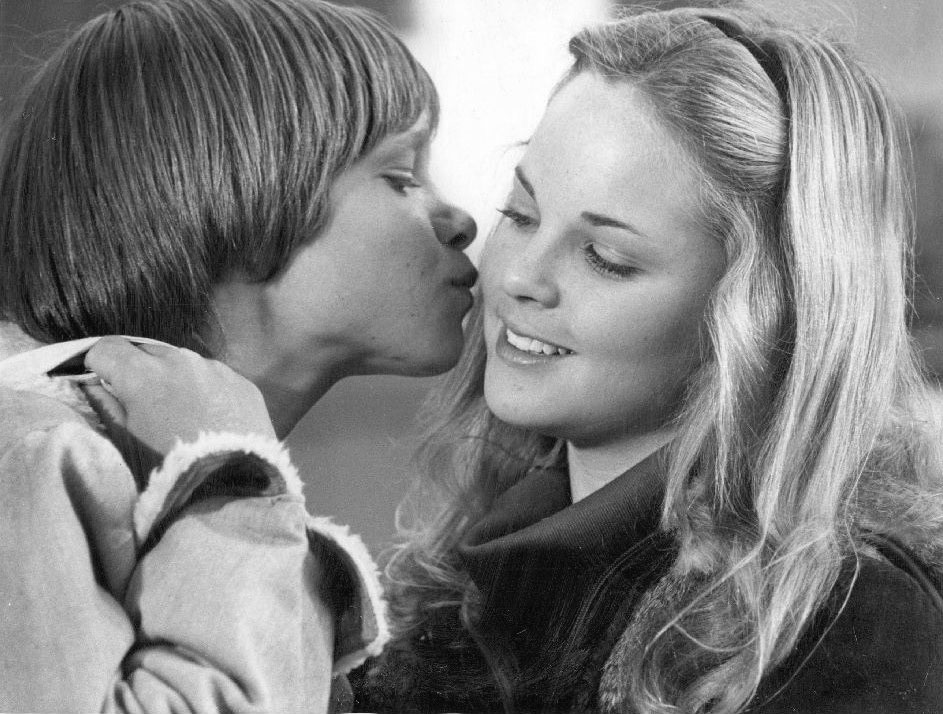
James at 15
James at 15 (later James at 16) is an American drama series that aired on NBC during the 1977–78 season.
The series was preceded by the 1977 TV movie James at 15, which aired on Monday September 5, 1977 and was intended as a television pilot for the series. Both were written by Dan Wakefield, a journalist and fiction writer whose novel Going All the Way, a tale of coming of age in the 1950s, had led to his being contacted by David Sontag of Twentieth Century Fox.
Sontag, the senior vice-president of creative affairs at Fox, had had a lunch meeting in New York City with Paul Klein, the head of programming at NBC. Klein said he needed a series for Sunday night. On the spot, Sontag pitched the idea for a coming-of-age series seen through the eyes of a teenage boy, including his dreams, fantasies, and hopes. Klein loved the idea and asked Sontag who would write it, with Sontag's suggesting Dan Wakefield. Despite this unsourced account of the "creation" of the series, Sontag created no characters, no plotlines, and no settings. The on-screen credit for the series reads "Created by Dan Wakefield," as it was Wakefield who worked out the specifics from Sontag's general conceptual outline.
James Hunter (Lance Kerwin) is the son of a college professor (Linden Chiles) who has moved his family across the country to take a teaching job, transplanting James from Oregon to Boston, Massachusetts. James, who had Walter Mitty-like dreams and dabbles in photography, has a hard time fitting into his new surroundings. During the series run, when James turned 16, the title was updated accordingly. (11 episodes, counting the two-hour movie, were produced as James at 15, with the remaining 10 airing as James at 16.)
Wakefield, who was born and raised in Indianapolis but eventually moved to Boston, said he chose Boston both because he wanted to write about a city he knew well and because he was tired of television's tendency to give programs settings in Los Angeles or New York City. To update his own memories of growing up, the writer spoke with adolescents from Boston.
The movie premiered to high ratings, topping the ratings for the week of September 5–11, 1977, with a 42% share of the viewing audience, quickly prompting NBC to approve a series. Associated Press writer Jerry Buck wrote that the pilot movie "captures the essence of growing up in America," adding "It makes up for all the drivel we've had to put up with, such as Sons and Daughters and Hollywood High."
The show was highly praised for its realism and sensitivity, with a reviewer from The New York Times applauding the program's avoidance of stereotyping characters: "Sly, a jiving black student...has solidly middle-class parents deeply involved in classical music" and a classmate discovers that her father makes more money as a plumber than James' professor father. Tom Shales of The Washington Post wrote:
Not perfect, not revolutionary, not always deliriously urgent, James at 15 is still the most respectable new entertainment series of the season. Consistently, it communicates something about the state of being young, rather than just communicating that it wishes to lure young viewers. And if it romanticizes adolescence through the weekly trials and triumphs of its teen-age hero, at least it does so in more ambitious, inquisitive and authentic ways than the average TV teeny-bop.
Hub AI
James at 15 AI simulator
(@James at 15_simulator)
James at 15
James at 15 (later James at 16) is an American drama series that aired on NBC during the 1977–78 season.
The series was preceded by the 1977 TV movie James at 15, which aired on Monday September 5, 1977 and was intended as a television pilot for the series. Both were written by Dan Wakefield, a journalist and fiction writer whose novel Going All the Way, a tale of coming of age in the 1950s, had led to his being contacted by David Sontag of Twentieth Century Fox.
Sontag, the senior vice-president of creative affairs at Fox, had had a lunch meeting in New York City with Paul Klein, the head of programming at NBC. Klein said he needed a series for Sunday night. On the spot, Sontag pitched the idea for a coming-of-age series seen through the eyes of a teenage boy, including his dreams, fantasies, and hopes. Klein loved the idea and asked Sontag who would write it, with Sontag's suggesting Dan Wakefield. Despite this unsourced account of the "creation" of the series, Sontag created no characters, no plotlines, and no settings. The on-screen credit for the series reads "Created by Dan Wakefield," as it was Wakefield who worked out the specifics from Sontag's general conceptual outline.
James Hunter (Lance Kerwin) is the son of a college professor (Linden Chiles) who has moved his family across the country to take a teaching job, transplanting James from Oregon to Boston, Massachusetts. James, who had Walter Mitty-like dreams and dabbles in photography, has a hard time fitting into his new surroundings. During the series run, when James turned 16, the title was updated accordingly. (11 episodes, counting the two-hour movie, were produced as James at 15, with the remaining 10 airing as James at 16.)
Wakefield, who was born and raised in Indianapolis but eventually moved to Boston, said he chose Boston both because he wanted to write about a city he knew well and because he was tired of television's tendency to give programs settings in Los Angeles or New York City. To update his own memories of growing up, the writer spoke with adolescents from Boston.
The movie premiered to high ratings, topping the ratings for the week of September 5–11, 1977, with a 42% share of the viewing audience, quickly prompting NBC to approve a series. Associated Press writer Jerry Buck wrote that the pilot movie "captures the essence of growing up in America," adding "It makes up for all the drivel we've had to put up with, such as Sons and Daughters and Hollywood High."
The show was highly praised for its realism and sensitivity, with a reviewer from The New York Times applauding the program's avoidance of stereotyping characters: "Sly, a jiving black student...has solidly middle-class parents deeply involved in classical music" and a classmate discovers that her father makes more money as a plumber than James' professor father. Tom Shales of The Washington Post wrote:
Not perfect, not revolutionary, not always deliriously urgent, James at 15 is still the most respectable new entertainment series of the season. Consistently, it communicates something about the state of being young, rather than just communicating that it wishes to lure young viewers. And if it romanticizes adolescence through the weekly trials and triumphs of its teen-age hero, at least it does so in more ambitious, inquisitive and authentic ways than the average TV teeny-bop.