
Recent from talks
Jane Johnson (slave)
Knowledge base stats:
Talk channels stats:
Members stats:
Jane Johnson (slave)
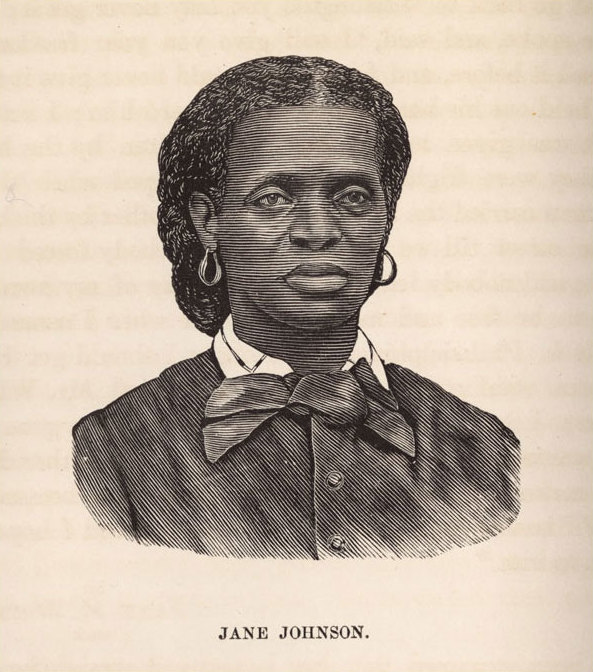
Jane Johnson (c. 1814-1827 – August 2, 1872) was an African-American slave who gained freedom on July 18, 1855, with her two young sons while in Philadelphia with her slaver and his family. She was aided by William Still and Passmore Williamson, abolitionists of the Pennsylvania Anti-Slavery Society and its Vigilance Committee.
This resulted in precedent-setting legal cases in 19th-century Pennsylvania, as a federal judge applied the Fugitive Slave Act of 1850 in a controversial way. He sentenced abolitionist Passmore Williamson to 90 days for contempt of court for failing to produce Johnson and her sons under a writ of habeas corpus, or tell their location. The jailing attracted even wider publicity, and widespread discussion of issues of state and federal laws related to slavery. Pennsylvania had long been a free state and held that slaveholders gave up their property right in slaves if they brought them voluntarily to the state.
Johnson returned to Philadelphia from New York in August 1855 and testified in the trial of William Still and five dockworkers, charged by her slaver John Hill Wheeler with assault. They had aided her escape. She testified at length about having planned to gain freedom in the North, and said she chose of her own free will to leave with Still, and would never go back to slavery. She helped win acquittal for Still and three men, and reduced sentences for two others. State and local officials protected her after testimony, and she and her sons soon moved to Boston, where they settled. She married again there. Her son Isaiah Johnson served in the United States Colored Troops during the American Civil War.
Jane Johnson is believed to have been born into slavery under the name Jane Williams in or near Washington, D.C. Her parents were John Williams and Jane Williams. Little else is known of her early life. She married a man named Johnson and had children with him.
About 1853, Johnson and her two children had been sold to John Hill Wheeler (1806-1882), a planter from North Carolina and politician then working in Washington, DC. She worked as a domestic slave in his household. Her oldest son had been sold by a previous slaver to someone in Richmond, Virginia, and she never expected to see him again.
In 1855, Johnson and her sons Daniel and Isaiah (one 5 or 6, and 11 or 12, respectively), accompanied their slaver Wheeler and his family by train from Washington, D.C. en route to New York. There Wheeler planned they would take a ship to Nicaragua, where he had been appointed as the U.S. Minister. They stopped overnight in Philadelphia on the way. From there, they would proceed by steamboat to New York City to get the ship to Nicaragua.
Pennsylvania was a free state that did not recognize slavery. By its laws, slaves could choose freedom if brought to the state by their slavers. At the end of the 18th century, it had made compromises that enabled Southern members of the national government to keep their slaves in the city for up to six months; past that, they could choose freedom. At that time, the national capital was temporarily in Philadelphia.
On July 18, 1855, Johnson passed word to a black porter in Bloodgood's Hotel, where Wheeler had locked her in with her children, that she wanted to escape her slaver's custody. He got word to William Still, chairman of the Vigilance Committee of the Pennsylvania Anti-Slavery Society, who helped fugitive slaves. Later that day, as the full Wheeler party prepared to board the ferry, Still and abolitionist Passmore Williamson, secretary of the Society, reached the docks. Still told Johnson that she could choose freedom according to Pennsylvania law. While Wheeler argued, offered her a promise of freedom, and tried to prevent Johnson from leaving, five black dockworkers restrained him, and Williamson explained the state law to him. William Still quickly escorted Johnson and her children away by a coach, later taking them secretly to his house. He never told Williamson where they were, under the principles of compartmentalization used by the Vigilance Committee.
Hub AI
Jane Johnson (slave) AI simulator
(@Jane Johnson (slave)_simulator)
Jane Johnson (slave)
Jane Johnson (c. 1814-1827 – August 2, 1872) was an African-American slave who gained freedom on July 18, 1855, with her two young sons while in Philadelphia with her slaver and his family. She was aided by William Still and Passmore Williamson, abolitionists of the Pennsylvania Anti-Slavery Society and its Vigilance Committee.
This resulted in precedent-setting legal cases in 19th-century Pennsylvania, as a federal judge applied the Fugitive Slave Act of 1850 in a controversial way. He sentenced abolitionist Passmore Williamson to 90 days for contempt of court for failing to produce Johnson and her sons under a writ of habeas corpus, or tell their location. The jailing attracted even wider publicity, and widespread discussion of issues of state and federal laws related to slavery. Pennsylvania had long been a free state and held that slaveholders gave up their property right in slaves if they brought them voluntarily to the state.
Johnson returned to Philadelphia from New York in August 1855 and testified in the trial of William Still and five dockworkers, charged by her slaver John Hill Wheeler with assault. They had aided her escape. She testified at length about having planned to gain freedom in the North, and said she chose of her own free will to leave with Still, and would never go back to slavery. She helped win acquittal for Still and three men, and reduced sentences for two others. State and local officials protected her after testimony, and she and her sons soon moved to Boston, where they settled. She married again there. Her son Isaiah Johnson served in the United States Colored Troops during the American Civil War.
Jane Johnson is believed to have been born into slavery under the name Jane Williams in or near Washington, D.C. Her parents were John Williams and Jane Williams. Little else is known of her early life. She married a man named Johnson and had children with him.
About 1853, Johnson and her two children had been sold to John Hill Wheeler (1806-1882), a planter from North Carolina and politician then working in Washington, DC. She worked as a domestic slave in his household. Her oldest son had been sold by a previous slaver to someone in Richmond, Virginia, and she never expected to see him again.
In 1855, Johnson and her sons Daniel and Isaiah (one 5 or 6, and 11 or 12, respectively), accompanied their slaver Wheeler and his family by train from Washington, D.C. en route to New York. There Wheeler planned they would take a ship to Nicaragua, where he had been appointed as the U.S. Minister. They stopped overnight in Philadelphia on the way. From there, they would proceed by steamboat to New York City to get the ship to Nicaragua.
Pennsylvania was a free state that did not recognize slavery. By its laws, slaves could choose freedom if brought to the state by their slavers. At the end of the 18th century, it had made compromises that enabled Southern members of the national government to keep their slaves in the city for up to six months; past that, they could choose freedom. At that time, the national capital was temporarily in Philadelphia.
On July 18, 1855, Johnson passed word to a black porter in Bloodgood's Hotel, where Wheeler had locked her in with her children, that she wanted to escape her slaver's custody. He got word to William Still, chairman of the Vigilance Committee of the Pennsylvania Anti-Slavery Society, who helped fugitive slaves. Later that day, as the full Wheeler party prepared to board the ferry, Still and abolitionist Passmore Williamson, secretary of the Society, reached the docks. Still told Johnson that she could choose freedom according to Pennsylvania law. While Wheeler argued, offered her a promise of freedom, and tried to prevent Johnson from leaving, five black dockworkers restrained him, and Williamson explained the state law to him. William Still quickly escorted Johnson and her children away by a coach, later taking them secretly to his house. He never told Williamson where they were, under the principles of compartmentalization used by the Vigilance Committee.
Recent media