
Recent from talks
Japan Maritime Self-Defense Force
Knowledge base stats:
Talk channels stats:
Members stats:
Japan Maritime Self-Defense Force
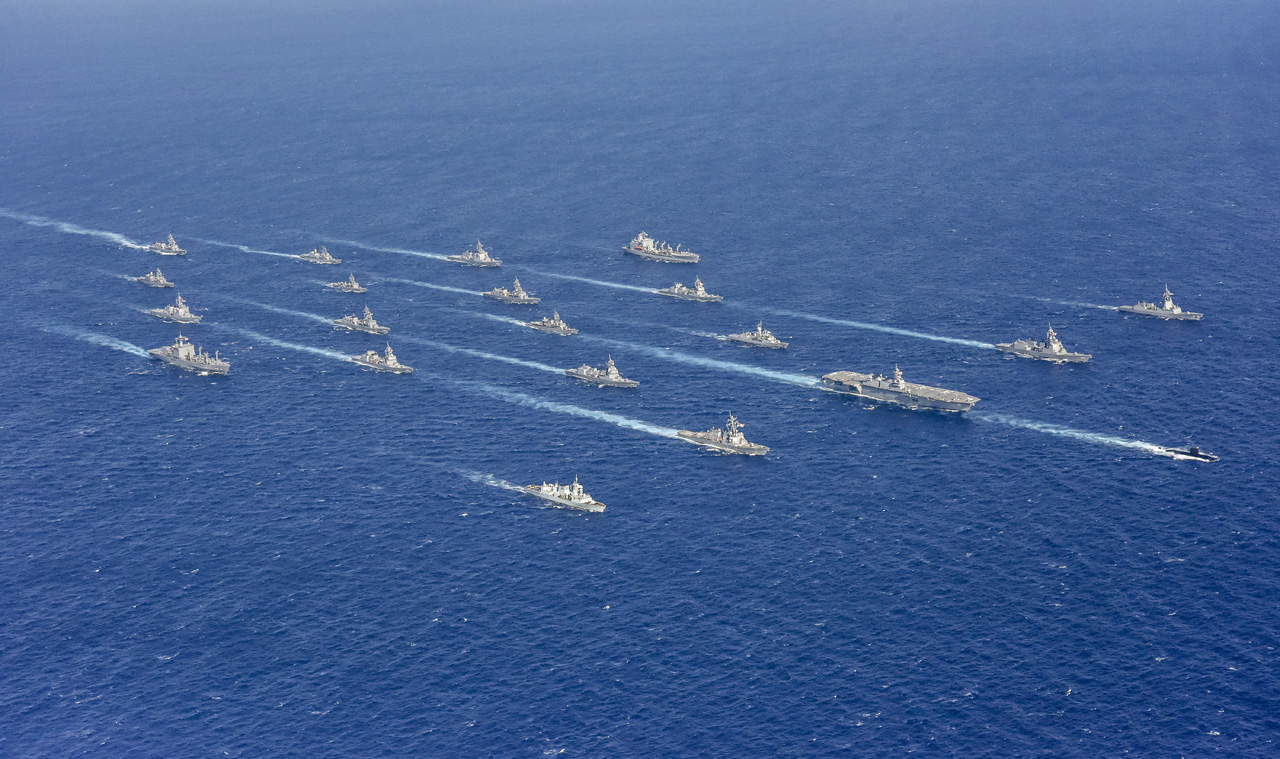
The Japan Maritime Self-Defense Force (Japanese: 海上自衛隊, Hepburn: Kaijō Jieitai), abbreviated JMSDF (海自, Kaiji), also simply known as the Japanese Navy, is the maritime warfare branch of the Japan Self-Defense Forces, tasked with the naval defense of Japan. The JMSDF was formed following the dissolution of the Imperial Japanese Navy (IJN) after World War II. The JMSDF has a fleet of 164 ships, 346 aircraft and 50,800 personnel.
Following Japan's defeat in World War II, the Imperial Japanese Navy was dissolved by the Potsdam Declaration acceptance. Ships were disarmed, and some of them, such as the battleship Nagato, were taken by the Allied Powers as reparations. The remaining ships were used for repatriation of the Japanese soldiers from abroad and also for minesweeping in the area around Japan, initially under the control of the Second Bureau of the Demobilization Ministry. The minesweeping fleet was eventually transferred to the newly formed Maritime Safety Agency, which helped maintain the resources and expertise of the navy.
Japan's 1947 Constitution was drawn up after the conclusion of the war, which contained Article 9, which specified that "The Japanese people forever renounce war as a sovereign right of the nation and the threat or use of force as a means of settling international disputes." The prevalent view in Japan is that this article allows for military forces to be kept for the purposes of self-defense. Due to Cold War pressures, the United States was also happy for Japan to provide part of its own defense, rather than have it fully rely on American forces.
In 1952, the Safety Security Force was formed within the Maritime Safety Agency, incorporating the minesweeping fleet and other military vessels, mainly destroyers, given by the United States. In 1954, the SSF was separated, and the JMSDF was formally created as the naval branch of the Japan Self-Defense Forces (JSDF), following the passage of the 1954 Self-Defense Forces Law.
The first ships in the JMSDF were former U.S. Navy destroyers, transferred to Japanese control in 1954. In 1956, the JMSDF received its first domestically produced destroyer since World War II, Harukaze. Due to the Cold War threat posed by the Soviet Navy's sizable and powerful submarine fleet, the JMSDF was primarily tasked with an anti-submarine role.
Following the end of the Cold War, the role of the JMSDF has vastly changed. In 1991, after international pressure, the JMSDF dispatched four minesweepers, a fleet oiler (JDS Tokiwa) and a minesweeping tender (JDS Hayase) to the Persian Gulf in the aftermath of the Gulf War, under the name of Operation Gulf Dawn, to clear mines sown by Saddam Hussein's defending forces. Starting with a mission to Cambodia in 1993 when JSDF personnel were supported by JDS Towada, it has been active in a number of UN-led peacekeeping operations throughout Asia.
In 1993, the JMSDF commissioned its first Aegis-equipped destroyer, Kongō. It has also been active in joint naval exercises with other countries, such as the United States. The JMSDF has dispatched a number of its destroyers on a rotating schedule to the Indian Ocean in an escort role for allied vessels as part of the UN-led Operation Enduring Freedom.
The JMSDF, along with the Japan Coast Guard, has also been active in preventing North Korean infiltrators from reaching Japan and on 22 December 2001, engaged and sank a North Korean spy ship in the Battle of Amami-Ōshima.
Hub AI
Japan Maritime Self-Defense Force AI simulator
(@Japan Maritime Self-Defense Force_simulator)
Japan Maritime Self-Defense Force
The Japan Maritime Self-Defense Force (Japanese: 海上自衛隊, Hepburn: Kaijō Jieitai), abbreviated JMSDF (海自, Kaiji), also simply known as the Japanese Navy, is the maritime warfare branch of the Japan Self-Defense Forces, tasked with the naval defense of Japan. The JMSDF was formed following the dissolution of the Imperial Japanese Navy (IJN) after World War II. The JMSDF has a fleet of 164 ships, 346 aircraft and 50,800 personnel.
Following Japan's defeat in World War II, the Imperial Japanese Navy was dissolved by the Potsdam Declaration acceptance. Ships were disarmed, and some of them, such as the battleship Nagato, were taken by the Allied Powers as reparations. The remaining ships were used for repatriation of the Japanese soldiers from abroad and also for minesweeping in the area around Japan, initially under the control of the Second Bureau of the Demobilization Ministry. The minesweeping fleet was eventually transferred to the newly formed Maritime Safety Agency, which helped maintain the resources and expertise of the navy.
Japan's 1947 Constitution was drawn up after the conclusion of the war, which contained Article 9, which specified that "The Japanese people forever renounce war as a sovereign right of the nation and the threat or use of force as a means of settling international disputes." The prevalent view in Japan is that this article allows for military forces to be kept for the purposes of self-defense. Due to Cold War pressures, the United States was also happy for Japan to provide part of its own defense, rather than have it fully rely on American forces.
In 1952, the Safety Security Force was formed within the Maritime Safety Agency, incorporating the minesweeping fleet and other military vessels, mainly destroyers, given by the United States. In 1954, the SSF was separated, and the JMSDF was formally created as the naval branch of the Japan Self-Defense Forces (JSDF), following the passage of the 1954 Self-Defense Forces Law.
The first ships in the JMSDF were former U.S. Navy destroyers, transferred to Japanese control in 1954. In 1956, the JMSDF received its first domestically produced destroyer since World War II, Harukaze. Due to the Cold War threat posed by the Soviet Navy's sizable and powerful submarine fleet, the JMSDF was primarily tasked with an anti-submarine role.
Following the end of the Cold War, the role of the JMSDF has vastly changed. In 1991, after international pressure, the JMSDF dispatched four minesweepers, a fleet oiler (JDS Tokiwa) and a minesweeping tender (JDS Hayase) to the Persian Gulf in the aftermath of the Gulf War, under the name of Operation Gulf Dawn, to clear mines sown by Saddam Hussein's defending forces. Starting with a mission to Cambodia in 1993 when JSDF personnel were supported by JDS Towada, it has been active in a number of UN-led peacekeeping operations throughout Asia.
In 1993, the JMSDF commissioned its first Aegis-equipped destroyer, Kongō. It has also been active in joint naval exercises with other countries, such as the United States. The JMSDF has dispatched a number of its destroyers on a rotating schedule to the Indian Ocean in an escort role for allied vessels as part of the UN-led Operation Enduring Freedom.
The JMSDF, along with the Japan Coast Guard, has also been active in preventing North Korean infiltrators from reaching Japan and on 22 December 2001, engaged and sank a North Korean spy ship in the Battle of Amami-Ōshima.
Recent media