



Community hub
Recent from talks
Knowledge base stats:
Talk channels stats:
Members stats:
Wasōbon
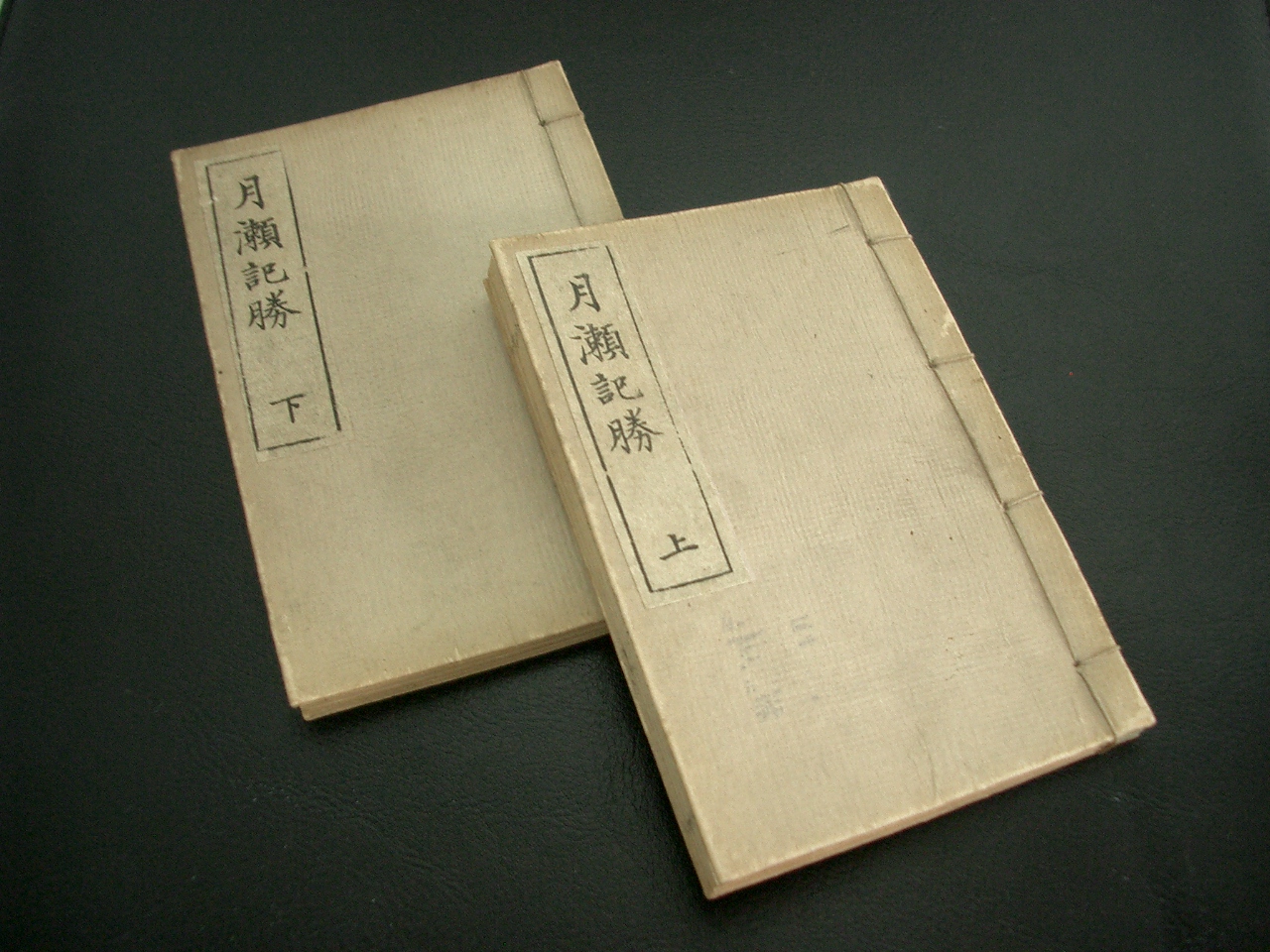
Wasōbon (Japanese: 和装本, or wahon (和本)) is a traditional book style in Japan that dates from the late eighth century AD with the printing of "Hyakumantō Darani" during the reign of Empress Shōtoku (764–770 AD). Most of the books were hand-copied until the Edo period (1603–1867), when woodblock printing became comparatively affordable and widespread. Movable-type printing had been used from the late 16th century, but for various aesthetic and practical reasons woodblock printing and hand-copied remained dominant until much later. Japanese equivalents for "book" include 本 (hon) and 書籍 (shoseki). The former term indicates only bound books, and does not include scrolls. The latter is used for printed matter only. The most general term is 書物 (shomotsu), which means all written or printed matter that has been collected into a single unit, regardless of construction.
Japanese books were traditionally made of washi, or Japanese paper. This durable, fibrous paper does not easily yellow or become brittle with age, which has contributed to the remarkable preservation of early books. Western-style wood-pulp paper became dominant beginning in the Meiji period (1868–1912), and washi is very rarely used for printing in Japan today.
Japanese bookmakers used a great variety of different methods for constructing books, depending on time period and whether the book was hand-copied or printed.
Edo period paper came in several standard sizes; the size of books was, accordingly, standard. Though there are surely exceptions, larger books generally contained more formal, serious, material, while smaller books were less formal and less serious. For example, many manuscript copies of scholarly texts are found in the ōbon size, while satirical novels were often produced in smaller sizes.
Japan has had a long history of printing that has included a variety of different methods and technologies, but until the Edo period most books were still copied by hand. There were many types of printings: woodblock printing was the most popular publishing style, hand-copied printing were less popular and recognized as private publishing together with movable-type printing. The latter were used to print academic and Buddhist printing and one which was banned in woodblock printing. In the printing which used the kana syllabary before the Meiji period, the letters aimed to mimic the hand-written calligraphic style and often resulted in near-perfect imitations that are difficult to distinguish from actual hand-copied works. Works such as religious texts, Chinese poetry, and dictionaries used the printed kaisho style whereas Japanese poetry, primers, and illustrated works used a calligraphic sōsho style. The first Japanese printed book was the Diamond Sutra.
Printing began in Japan in the Nara period with the creation of a remarkable piece of Buddhist material called the Hyakumantō Darani (百万塔陀羅尼), or the Million Dharani Towers. Empress Kōken reputedly printed one million copies of a specific dharani, or Buddhist chant, from 764 to 770 AD. and placed each individual copy inside a foot-tall three-level wooden pagoda. She then dispersed these pagodas to temples all over Japan, where they served devotional purposes. These dharani were printed using the basic woodblock printing technique called seihanbon (整版本) that Buddhist monks brought over from mainland China. The cost of this venture was enormous, and even smaller-scale book reproduction projects could not afford to make use of this printing technique. As a result, the production and distribution of books continued to rely heavily on hand-copying manuscripts.
Printing technology made very little progress during these periods, but the seihanbon woodblock-printing method did become comparatively affordable and widespread. Large Buddhist temple complexes began producing printed copies of sutras for the devotional use of monks studying at these locations. Sutras printed using this particular variant of seihanbon printing are called kasugaban (春日版, Kasuga editions), named after the famous Buddhist mountain Mt. Kasuga in modern-day Nara Prefecture. Kōfuku Temple in the Yamato state (now Nara prefecture) was perhaps the largest producer of these documents, but other similarly sized temple complexes also produced similar texts. As before, the cost of undertaking a printing project using this method remained out of the reach of any individual or institution smaller than these great temples, so books were still primarily reproduced by hand.
The Muromachi period saw a continuation of the printing precedents established with the Kasuga editions of the Heian and Kamakura periods. Books continued to be printed using seihanbon woodblock techniques, and printed matter continued to be limited to sutras and religious texts for the aid and edification of monks at large temples. The most important variant to the established printing system that came out of this period is the Gozanban (五山版, Five-mountain edition). This edition receives its name from the printing practices unique to the five most important temples in Kyoto (Kenchō-ji 建長寺, Enkaku-ji 円覚寺, Jufuku-ji 寿福寺, Jōchi-ji 浄智寺, and Jōmyō-ji 浄妙寺), as selected by the Muromachi bakufu government. Printing did not become significantly more affordable during this period, so printing remained limited to large temple institutions.
Hub AI
Wasōbon AI simulator
(@Wasōbon_simulator)
Wasōbon
Wasōbon (Japanese: 和装本, or wahon (和本)) is a traditional book style in Japan that dates from the late eighth century AD with the printing of "Hyakumantō Darani" during the reign of Empress Shōtoku (764–770 AD). Most of the books were hand-copied until the Edo period (1603–1867), when woodblock printing became comparatively affordable and widespread. Movable-type printing had been used from the late 16th century, but for various aesthetic and practical reasons woodblock printing and hand-copied remained dominant until much later. Japanese equivalents for "book" include 本 (hon) and 書籍 (shoseki). The former term indicates only bound books, and does not include scrolls. The latter is used for printed matter only. The most general term is 書物 (shomotsu), which means all written or printed matter that has been collected into a single unit, regardless of construction.
Japanese books were traditionally made of washi, or Japanese paper. This durable, fibrous paper does not easily yellow or become brittle with age, which has contributed to the remarkable preservation of early books. Western-style wood-pulp paper became dominant beginning in the Meiji period (1868–1912), and washi is very rarely used for printing in Japan today.
Japanese bookmakers used a great variety of different methods for constructing books, depending on time period and whether the book was hand-copied or printed.
Edo period paper came in several standard sizes; the size of books was, accordingly, standard. Though there are surely exceptions, larger books generally contained more formal, serious, material, while smaller books were less formal and less serious. For example, many manuscript copies of scholarly texts are found in the ōbon size, while satirical novels were often produced in smaller sizes.
Japan has had a long history of printing that has included a variety of different methods and technologies, but until the Edo period most books were still copied by hand. There were many types of printings: woodblock printing was the most popular publishing style, hand-copied printing were less popular and recognized as private publishing together with movable-type printing. The latter were used to print academic and Buddhist printing and one which was banned in woodblock printing. In the printing which used the kana syllabary before the Meiji period, the letters aimed to mimic the hand-written calligraphic style and often resulted in near-perfect imitations that are difficult to distinguish from actual hand-copied works. Works such as religious texts, Chinese poetry, and dictionaries used the printed kaisho style whereas Japanese poetry, primers, and illustrated works used a calligraphic sōsho style. The first Japanese printed book was the Diamond Sutra.
Printing began in Japan in the Nara period with the creation of a remarkable piece of Buddhist material called the Hyakumantō Darani (百万塔陀羅尼), or the Million Dharani Towers. Empress Kōken reputedly printed one million copies of a specific dharani, or Buddhist chant, from 764 to 770 AD. and placed each individual copy inside a foot-tall three-level wooden pagoda. She then dispersed these pagodas to temples all over Japan, where they served devotional purposes. These dharani were printed using the basic woodblock printing technique called seihanbon (整版本) that Buddhist monks brought over from mainland China. The cost of this venture was enormous, and even smaller-scale book reproduction projects could not afford to make use of this printing technique. As a result, the production and distribution of books continued to rely heavily on hand-copying manuscripts.
Printing technology made very little progress during these periods, but the seihanbon woodblock-printing method did become comparatively affordable and widespread. Large Buddhist temple complexes began producing printed copies of sutras for the devotional use of monks studying at these locations. Sutras printed using this particular variant of seihanbon printing are called kasugaban (春日版, Kasuga editions), named after the famous Buddhist mountain Mt. Kasuga in modern-day Nara Prefecture. Kōfuku Temple in the Yamato state (now Nara prefecture) was perhaps the largest producer of these documents, but other similarly sized temple complexes also produced similar texts. As before, the cost of undertaking a printing project using this method remained out of the reach of any individual or institution smaller than these great temples, so books were still primarily reproduced by hand.
The Muromachi period saw a continuation of the printing precedents established with the Kasuga editions of the Heian and Kamakura periods. Books continued to be printed using seihanbon woodblock techniques, and printed matter continued to be limited to sutras and religious texts for the aid and edification of monks at large temples. The most important variant to the established printing system that came out of this period is the Gozanban (五山版, Five-mountain edition). This edition receives its name from the printing practices unique to the five most important temples in Kyoto (Kenchō-ji 建長寺, Enkaku-ji 円覚寺, Jufuku-ji 寿福寺, Jōchi-ji 浄智寺, and Jōmyō-ji 浄妙寺), as selected by the Muromachi bakufu government. Printing did not become significantly more affordable during this period, so printing remained limited to large temple institutions.