
Recent from talks
Jascha Heifetz
Knowledge base stats:
Talk channels stats:
Members stats:
Jascha Heifetz
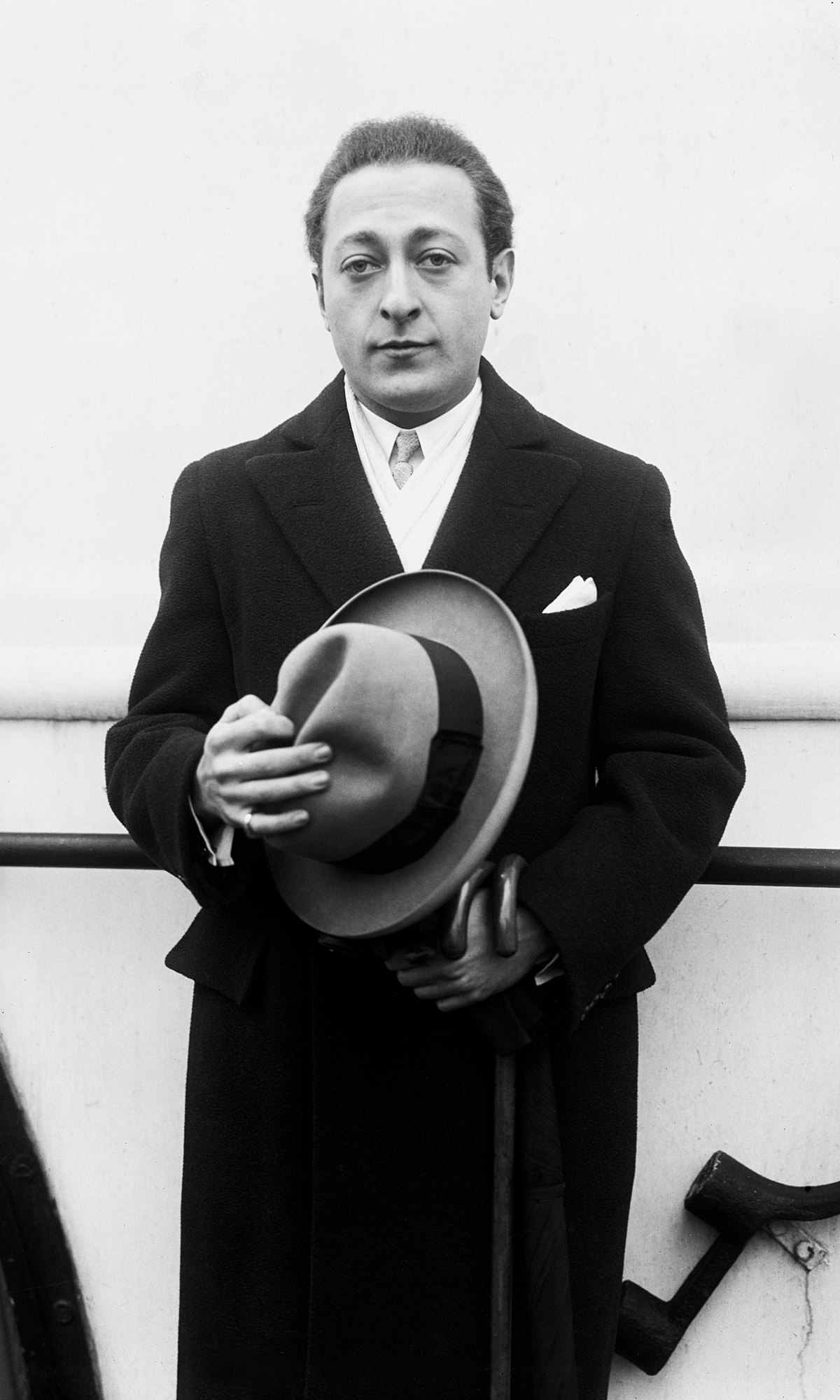
Jascha Heifetz (/ˈhaɪfɪts/; February 2 [O.S. January 20] 1901 – December 10, 1987) was a Russian-American violinist, widely regarded as one of the greatest violinists of all time. Born in Vilnius, he was soon recognized as a child prodigy and was trained in the Russian classical violin style in St. Petersburg. Accompanying his parents to escape the violence of the Russian Revolution, he moved to the United States as a teenager, where his Carnegie Hall debut was rapturously received. Fritz Kreisler, another leading violinist of the twentieth century, said after hearing Heifetz's debut, "We might as well take our fiddles and break them across our knees."
By the age of 18, Heifetz was the highest-paid violinist in the world. He had a long and successful concert career, including wartime service with the United Service Organizations (USO). After an injury to his right (bowing) arm in 1972, he switched his focus to teaching.
Heifetz was born into a Lithuanian-Jewish family in Vilnius (which was then part of the Russian Empire, and is currently the capital of Lithuania).
His father, Reuven Heifetz, was a local violin teacher and served as the concertmaster of the Vilnius Theatre Orchestra for one season before the theatre closed down. While Jascha was an infant, his father did a series of tests, observing how his son responded to his violin playing. This convinced him that Jascha had great potential, and before Jascha was two years old, his father bought him a small violin, and taught him bowing and simple fingering.
In 1906, at the age of five, Heifetz entered the local music school in Vilna where he studied with Ilya Malkin. Recognized as a child prodigy, he made his public debut at seven, in Kovno (now Kaunas, Lithuania) playing the Mendelssohn Violin Concerto. In 1910, he entered the violin class of Ionnes Nalbandian at the Saint Petersburg Conservatory and later studied under the renowned violin teacher, Leopold Auer, for six years.
He played in Germany and Scandinavia, and met Fritz Kreisler for the first time in a Berlin private house, in a "private press matinee on May 20, 1912. The home was that of Arthur Abell, the pre-eminent Berlin music critic for the American magazine, Musical Courier. Among other noted violinists in attendance was Fritz Kreisler. After the 12-year-old Heifetz performed the Mendelssohn violin concerto, Abell reported that Kreisler said to all present, 'We may as well break our fiddles across our knees.'"
Heifetz visited much of Europe while still in his teens. In April 1911, he performed in an outdoor concert in St. Petersburg before 25,000 spectators; there was such a reaction that police officers needed to protect the young violinist after the concert. In 1914, he performed with the Berlin Philharmonic conducted by Arthur Nikisch. The conductor said he had never heard such an excellent violinist.
To avoid the Russian Revolution, Heifetz and his family left Russia in 1917, traveling by rail to the Russian far east and then by ship to the United States, arriving in San Francisco. On October 27, 1917, Heifetz played for the first time in the United States, at Carnegie Hall in New York City, and became an immediate sensation. Fellow violinist Mischa Elman in the audience asked "Do you think it's hot in here?", whereupon the pianist Leopold Godowsky, in the next seat, replied, "Not for pianists."
Hub AI
Jascha Heifetz AI simulator
(@Jascha Heifetz_simulator)
Jascha Heifetz
Jascha Heifetz (/ˈhaɪfɪts/; February 2 [O.S. January 20] 1901 – December 10, 1987) was a Russian-American violinist, widely regarded as one of the greatest violinists of all time. Born in Vilnius, he was soon recognized as a child prodigy and was trained in the Russian classical violin style in St. Petersburg. Accompanying his parents to escape the violence of the Russian Revolution, he moved to the United States as a teenager, where his Carnegie Hall debut was rapturously received. Fritz Kreisler, another leading violinist of the twentieth century, said after hearing Heifetz's debut, "We might as well take our fiddles and break them across our knees."
By the age of 18, Heifetz was the highest-paid violinist in the world. He had a long and successful concert career, including wartime service with the United Service Organizations (USO). After an injury to his right (bowing) arm in 1972, he switched his focus to teaching.
Heifetz was born into a Lithuanian-Jewish family in Vilnius (which was then part of the Russian Empire, and is currently the capital of Lithuania).
His father, Reuven Heifetz, was a local violin teacher and served as the concertmaster of the Vilnius Theatre Orchestra for one season before the theatre closed down. While Jascha was an infant, his father did a series of tests, observing how his son responded to his violin playing. This convinced him that Jascha had great potential, and before Jascha was two years old, his father bought him a small violin, and taught him bowing and simple fingering.
In 1906, at the age of five, Heifetz entered the local music school in Vilna where he studied with Ilya Malkin. Recognized as a child prodigy, he made his public debut at seven, in Kovno (now Kaunas, Lithuania) playing the Mendelssohn Violin Concerto. In 1910, he entered the violin class of Ionnes Nalbandian at the Saint Petersburg Conservatory and later studied under the renowned violin teacher, Leopold Auer, for six years.
He played in Germany and Scandinavia, and met Fritz Kreisler for the first time in a Berlin private house, in a "private press matinee on May 20, 1912. The home was that of Arthur Abell, the pre-eminent Berlin music critic for the American magazine, Musical Courier. Among other noted violinists in attendance was Fritz Kreisler. After the 12-year-old Heifetz performed the Mendelssohn violin concerto, Abell reported that Kreisler said to all present, 'We may as well break our fiddles across our knees.'"
Heifetz visited much of Europe while still in his teens. In April 1911, he performed in an outdoor concert in St. Petersburg before 25,000 spectators; there was such a reaction that police officers needed to protect the young violinist after the concert. In 1914, he performed with the Berlin Philharmonic conducted by Arthur Nikisch. The conductor said he had never heard such an excellent violinist.
To avoid the Russian Revolution, Heifetz and his family left Russia in 1917, traveling by rail to the Russian far east and then by ship to the United States, arriving in San Francisco. On October 27, 1917, Heifetz played for the first time in the United States, at Carnegie Hall in New York City, and became an immediate sensation. Fellow violinist Mischa Elman in the audience asked "Do you think it's hot in here?", whereupon the pianist Leopold Godowsky, in the next seat, replied, "Not for pianists."
Recent media