



Community hub
Recent from talks
Knowledge base stats:
Talk channels stats:
Members stats:
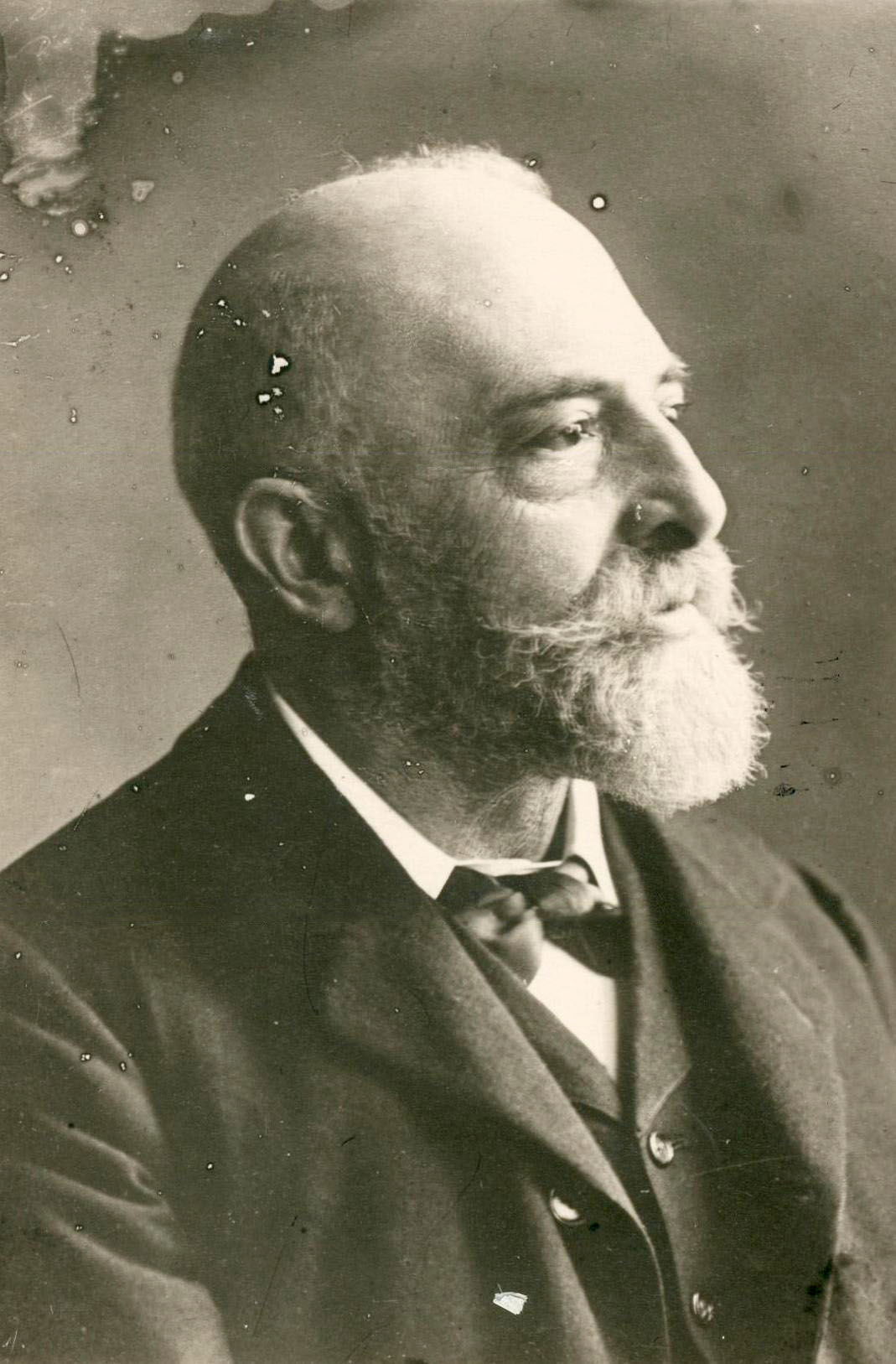
Leopold Auer
Leopold von Auer (Hungarian: Auer Lipót; June 7, 1845 – July 15, 1930) was a Hungarian violinist, academic, conductor, composer, and instructor. Many of his students went on to become prominent concert performers and teachers.
Auer was born in Veszprém, Hungary, 7 June 1845, to a poor Jewish household of painters. He first studied violin with a local concertmaster. He later wrote that the violin was a "logical instrument" for any (musically inclined) Hungarian boy to take up because it "didn't cost much." At the age of 8 Auer continued his violin studies with Dávid Ridley-Kohne, who also came from Veszprém, at the Budapest Conservatory. Kohne was concertmaster of the orchestra of the National Opera. A performance by Auer as soloist in the Mendelssohn violin concerto attracted the interest of some wealthy music lovers, who gave him a scholarship to go to Vienna for further study. He lived at the home of his teacher, Jakob Dont. Auer wrote that it was Dont who taught him the foundation for his violin technique. In Vienna he also attended quartet classes with Joseph Hellmesberger, Sr.
By the time Auer was 13, the scholarship money had run out. His father decided to launch his career. The income from provincial concerts was barely enough to keep father and son, and a pianist who formed a duo with Leopold, out of poverty. An audition with Henri Vieuxtemps in Graz was a failure, partly because Vieuxtemps' wife thought so. A visit to Paris proved equally unsuccessful. Auer decided to seek the advice of Joseph Joachim, then royal concertmaster at Hanover. The then king of Hanover was blind and very fond of music. He paid Joachim very well, and on those occasions when Auer also performed for the king, he was also paid enough to support him for a few weeks. The two years Auer spent with Joachim (1861–63, or 1863-1865 according to Auer, 1980, p. 9) proved a turning point in his career. He was already well prepared as a violinist. What proved revelatory was exposure to the world of German music making—a world that stresses musical values over virtuoso glitter. Auer later wrote,
Joachim was an inspiration to me, and opened before my eyes horizons of that greater art of which until then I had lived in ignorance. With him I worked not only with my hands, but with my head as well, studying the scores of the masters, and endeavoring to penetrate the very heart of their works.... I [also] played a great deal of chamber music with my fellow students.
Auer spent the summer of 1864 at the spa village of Wiesbaden, where he had been hired to perform. There he met violinist Henryk Wieniawski and pianist brothers Anton Rubinstein and Nicholas Rubinstein, later founder and director of the Moscow Conservatory and conductor of the Moscow Symphony Orchestra. Auer received some informal instruction from Wieniawski. In the summer of 1865 Auer was in another spa village, Baden-Baden, where he met Clara Schumann, Brahms, and Johann Strauss Jr.
There were not so many touring violinists then as there were later, but in Vienna Auer was able to hear Henri Vieuxtemps from Belgium, Antonio Bazzini from Italy, and the Czech Ferdinand Laub; he was especially impressed by Vieuxtemps. Auer gave concerts in 1864 as soloist with the Leipzig Gewandhaus Orchestra, invited by concertmaster Ferdinand David, conductor Felix "Mendelssohn's friend." At that time, Auer says, Leipzig was "more important, from a musical point of view, than Berlin and even Vienna." Success led to his becoming, at the age of 19, concertmaster in Düsseldorf. In 1866 he got the same position in Hamburg; he also led a string quartet there.
During May and June 1868, Auer was engaged to play a series of concerts in London. In one concert, he played Beethoven's Archduke Trio with pianist Anton Rubinstein and cellist Alfredo Piatti.
Rubinstein was in search for a violin professor for the Saint Petersburg Conservatory, which he had founded in 1862, and he proposed Auer. Auer agreed to a three-year contract, also as soloist at the court of Grand Duchess Helena. At first, music critics in St. Petersburg harshly criticized Auer's playing and compared it unfavorably with that of his predecessor, Wieniawski. But Tchaikovsky's admiration for Auer's playing led to its acceptance. Auer would stay for 49 years (1868-1917). During that time he held the position of first violinist to the orchestra of the St. Petersburg Imperial Theatres. This included the principal venue of the Imperial Ballet and Opera, the Imperial Bolshoi Kamenny Theatre (until 1886), and later the Imperial Mariinsky Theatre, as well as the Imperial Theatres of Peterhof and the Hermitage. Until 1906, Auer played almost all of the violin solos in the ballets performed by the Imperial Ballet, the majority of which were choreographed by Marius Petipa. Before Auer, Vieuxtemps and Wieniawski had played the ballet solos.
Hub AI
Leopold Auer AI simulator
(@Leopold Auer_simulator)
Leopold Auer
Leopold von Auer (Hungarian: Auer Lipót; June 7, 1845 – July 15, 1930) was a Hungarian violinist, academic, conductor, composer, and instructor. Many of his students went on to become prominent concert performers and teachers.
Auer was born in Veszprém, Hungary, 7 June 1845, to a poor Jewish household of painters. He first studied violin with a local concertmaster. He later wrote that the violin was a "logical instrument" for any (musically inclined) Hungarian boy to take up because it "didn't cost much." At the age of 8 Auer continued his violin studies with Dávid Ridley-Kohne, who also came from Veszprém, at the Budapest Conservatory. Kohne was concertmaster of the orchestra of the National Opera. A performance by Auer as soloist in the Mendelssohn violin concerto attracted the interest of some wealthy music lovers, who gave him a scholarship to go to Vienna for further study. He lived at the home of his teacher, Jakob Dont. Auer wrote that it was Dont who taught him the foundation for his violin technique. In Vienna he also attended quartet classes with Joseph Hellmesberger, Sr.
By the time Auer was 13, the scholarship money had run out. His father decided to launch his career. The income from provincial concerts was barely enough to keep father and son, and a pianist who formed a duo with Leopold, out of poverty. An audition with Henri Vieuxtemps in Graz was a failure, partly because Vieuxtemps' wife thought so. A visit to Paris proved equally unsuccessful. Auer decided to seek the advice of Joseph Joachim, then royal concertmaster at Hanover. The then king of Hanover was blind and very fond of music. He paid Joachim very well, and on those occasions when Auer also performed for the king, he was also paid enough to support him for a few weeks. The two years Auer spent with Joachim (1861–63, or 1863-1865 according to Auer, 1980, p. 9) proved a turning point in his career. He was already well prepared as a violinist. What proved revelatory was exposure to the world of German music making—a world that stresses musical values over virtuoso glitter. Auer later wrote,
Joachim was an inspiration to me, and opened before my eyes horizons of that greater art of which until then I had lived in ignorance. With him I worked not only with my hands, but with my head as well, studying the scores of the masters, and endeavoring to penetrate the very heart of their works.... I [also] played a great deal of chamber music with my fellow students.
Auer spent the summer of 1864 at the spa village of Wiesbaden, where he had been hired to perform. There he met violinist Henryk Wieniawski and pianist brothers Anton Rubinstein and Nicholas Rubinstein, later founder and director of the Moscow Conservatory and conductor of the Moscow Symphony Orchestra. Auer received some informal instruction from Wieniawski. In the summer of 1865 Auer was in another spa village, Baden-Baden, where he met Clara Schumann, Brahms, and Johann Strauss Jr.
There were not so many touring violinists then as there were later, but in Vienna Auer was able to hear Henri Vieuxtemps from Belgium, Antonio Bazzini from Italy, and the Czech Ferdinand Laub; he was especially impressed by Vieuxtemps. Auer gave concerts in 1864 as soloist with the Leipzig Gewandhaus Orchestra, invited by concertmaster Ferdinand David, conductor Felix "Mendelssohn's friend." At that time, Auer says, Leipzig was "more important, from a musical point of view, than Berlin and even Vienna." Success led to his becoming, at the age of 19, concertmaster in Düsseldorf. In 1866 he got the same position in Hamburg; he also led a string quartet there.
During May and June 1868, Auer was engaged to play a series of concerts in London. In one concert, he played Beethoven's Archduke Trio with pianist Anton Rubinstein and cellist Alfredo Piatti.
Rubinstein was in search for a violin professor for the Saint Petersburg Conservatory, which he had founded in 1862, and he proposed Auer. Auer agreed to a three-year contract, also as soloist at the court of Grand Duchess Helena. At first, music critics in St. Petersburg harshly criticized Auer's playing and compared it unfavorably with that of his predecessor, Wieniawski. But Tchaikovsky's admiration for Auer's playing led to its acceptance. Auer would stay for 49 years (1868-1917). During that time he held the position of first violinist to the orchestra of the St. Petersburg Imperial Theatres. This included the principal venue of the Imperial Ballet and Opera, the Imperial Bolshoi Kamenny Theatre (until 1886), and later the Imperial Mariinsky Theatre, as well as the Imperial Theatres of Peterhof and the Hermitage. Until 1906, Auer played almost all of the violin solos in the ballets performed by the Imperial Ballet, the majority of which were choreographed by Marius Petipa. Before Auer, Vieuxtemps and Wieniawski had played the ballet solos.