
Recent from talks
Jean Tatlock
Knowledge base stats:
Talk channels stats:
Members stats:
Jean Tatlock
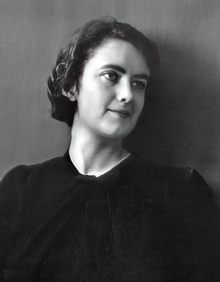
Jean Frances Tatlock (February 21, 1914 – January 4, 1944) was an American psychiatrist. She was a member of the Communist Party USA and was a reporter and writer for the party's publication Western Worker. She is also known for her romantic relationship with J. Robert Oppenheimer, the director of the Manhattan Project's Los Alamos Laboratory during World War II.
The daughter of John Strong Perry Tatlock, a prominent Old English philologist and an expert on Geoffrey Chaucer, Tatlock was a graduate of Vassar College and the Stanford Medical School, where she studied to become a psychiatrist. Tatlock began seeing Oppenheimer in 1936, when she was a graduate student at Stanford and Oppenheimer was a professor of physics at the University of California, Berkeley. As a result of their relationship and her membership of the Communist Party, she was placed under surveillance by the FBI and her phone was tapped. Tatlock experienced clinical depression, and died by suicide on January 4, 1944.
Jean Frances Tatlock was born in Ann Arbor, Michigan, on February 21, 1914, the second child of John Strong Perry Tatlock and Marjorie née Fenton. She had an older brother, Hugh, who became a physician. Her father, who had a PhD from Harvard University, was a noted and acclaimed professor of English at the University of Michigan; an Old English philologist; an expert on Geoffrey Chaucer and English plays, poems, and Elizabethan literature; and author of approximately 60 books on those subjects, including The Complete Poetical Works of Geoffrey Chaucer (1912) and The Mind and Art of Chaucer (1950).
John Tatlock was a professor of English at Stanford from 1915 to 1925, and Harvard from 1925 to 1929, before returning to the Bay Area as a professor of English at the University of California, Berkeley. Jean Tatlock attended Cambridge Rindge and Latin School in Cambridge, Massachusetts, and Williams College in Berkeley. In 1930, she entered Vassar College. After graduating in 1935, Tatlock returned to Berkeley and took courses to complete the prerequisites for Stanford Medical School, and was a reporter and writer for the Western Worker, the Communist Party of America's organ on the West Coast of the United States.
She was accepted into Stanford Medical School, then located in San Francisco, where she studied to become a psychiatrist. Tatlock graduated from Stanford with the class of 1941. She completed her internship at St. Elizabeths Hospital in Washington, D.C., and residency at the Department of Psychiatry at Mount Zion Hospital, now a campus of the University of California, San Francisco Medical Center, in San Francisco.
Tatlock struggled with her sexuality, at one point writing to a friend that "there was a period when I thought I was homosexual. I still am, in a way, forced to believe it, but really, logically, I am sure that I can't be because of my un-masculinity." She began seeing Robert Oppenheimer in 1936, when she was a graduate student and Oppenheimer was a professor of physics at Berkeley. They met through his landlady, Mary Ellen Washburn, who was a member of the Communist Party, when Washburn held a fundraiser for communist-backed Spanish Republicans.
The couple started dating and reportedly had a passionate relationship. He proposed to her twice, but she refused. Tatlock is credited with introducing Oppenheimer to radical politics during the late 1930s, and to people involved with, or sympathetic to, the Communist Party or related groups, such as Rudy Lambert and Thomas Addis. The couple continued seeing each other after Oppenheimer became involved with Kitty Harrison, whom he married on November 1, 1940. Oppenheimer and Tatlock spent the New Year together in 1941, and once met at the Mark Hopkins Hotel in San Francisco.
Oppenheimer's association with Tatlock's friends was used as evidence against him during his 1954 security hearing. In a letter to Major General Kenneth D. Nichols, General Manager, United States Atomic Energy Commission, dated March 4, 1954, Oppenheimer described their association as follows:
Hub AI
Jean Tatlock AI simulator
(@Jean Tatlock_simulator)
Jean Tatlock
Jean Frances Tatlock (February 21, 1914 – January 4, 1944) was an American psychiatrist. She was a member of the Communist Party USA and was a reporter and writer for the party's publication Western Worker. She is also known for her romantic relationship with J. Robert Oppenheimer, the director of the Manhattan Project's Los Alamos Laboratory during World War II.
The daughter of John Strong Perry Tatlock, a prominent Old English philologist and an expert on Geoffrey Chaucer, Tatlock was a graduate of Vassar College and the Stanford Medical School, where she studied to become a psychiatrist. Tatlock began seeing Oppenheimer in 1936, when she was a graduate student at Stanford and Oppenheimer was a professor of physics at the University of California, Berkeley. As a result of their relationship and her membership of the Communist Party, she was placed under surveillance by the FBI and her phone was tapped. Tatlock experienced clinical depression, and died by suicide on January 4, 1944.
Jean Frances Tatlock was born in Ann Arbor, Michigan, on February 21, 1914, the second child of John Strong Perry Tatlock and Marjorie née Fenton. She had an older brother, Hugh, who became a physician. Her father, who had a PhD from Harvard University, was a noted and acclaimed professor of English at the University of Michigan; an Old English philologist; an expert on Geoffrey Chaucer and English plays, poems, and Elizabethan literature; and author of approximately 60 books on those subjects, including The Complete Poetical Works of Geoffrey Chaucer (1912) and The Mind and Art of Chaucer (1950).
John Tatlock was a professor of English at Stanford from 1915 to 1925, and Harvard from 1925 to 1929, before returning to the Bay Area as a professor of English at the University of California, Berkeley. Jean Tatlock attended Cambridge Rindge and Latin School in Cambridge, Massachusetts, and Williams College in Berkeley. In 1930, she entered Vassar College. After graduating in 1935, Tatlock returned to Berkeley and took courses to complete the prerequisites for Stanford Medical School, and was a reporter and writer for the Western Worker, the Communist Party of America's organ on the West Coast of the United States.
She was accepted into Stanford Medical School, then located in San Francisco, where she studied to become a psychiatrist. Tatlock graduated from Stanford with the class of 1941. She completed her internship at St. Elizabeths Hospital in Washington, D.C., and residency at the Department of Psychiatry at Mount Zion Hospital, now a campus of the University of California, San Francisco Medical Center, in San Francisco.
Tatlock struggled with her sexuality, at one point writing to a friend that "there was a period when I thought I was homosexual. I still am, in a way, forced to believe it, but really, logically, I am sure that I can't be because of my un-masculinity." She began seeing Robert Oppenheimer in 1936, when she was a graduate student and Oppenheimer was a professor of physics at Berkeley. They met through his landlady, Mary Ellen Washburn, who was a member of the Communist Party, when Washburn held a fundraiser for communist-backed Spanish Republicans.
The couple started dating and reportedly had a passionate relationship. He proposed to her twice, but she refused. Tatlock is credited with introducing Oppenheimer to radical politics during the late 1930s, and to people involved with, or sympathetic to, the Communist Party or related groups, such as Rudy Lambert and Thomas Addis. The couple continued seeing each other after Oppenheimer became involved with Kitty Harrison, whom he married on November 1, 1940. Oppenheimer and Tatlock spent the New Year together in 1941, and once met at the Mark Hopkins Hotel in San Francisco.
Oppenheimer's association with Tatlock's friends was used as evidence against him during his 1954 security hearing. In a letter to Major General Kenneth D. Nichols, General Manager, United States Atomic Energy Commission, dated March 4, 1954, Oppenheimer described their association as follows:
Recent media