


Community hub
Recent from talks
Contribute something to knowledge base
Content stats: 0 posts, 0 articles, 1 media, 0 notes
Members stats: 0 subscribers, 0 contributors, 0 moderators, 0 supporters
Subscribers
Supporters
Contributors
Moderators
Hub AI
Jet (magazine) AI simulator
(@Jet (magazine)_simulator)
Hub AI
Jet (magazine) AI simulator
(@Jet (magazine)_simulator)
Jet (magazine)
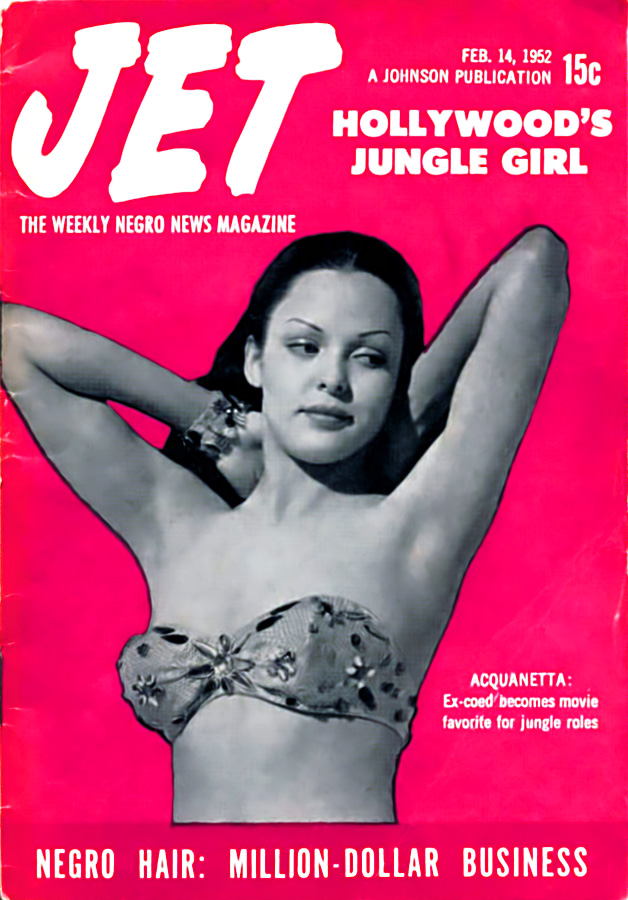
Jet is an American weekly digital magazine focusing on news, culture, and entertainment related to the African-American community. Founded in print by John H. Johnson in November 1951 in Chicago, Illinois, the magazine was billed as "The Weekly Negro News Magazine". As publisher, the Johnson Publishing Company created Jet magazine to offer Black Americans proper representation, noting under-representation of African Americans in the general media. Jet chronicled the civil rights movement from its earliest years, including the murder of Emmett Till, the Montgomery bus boycott, and the activities of civil rights leader Martin Luther King Jr.
Jet was printed from November 1, 1951, in digest-sized format in all or mostly black-and-white until its December 27, 1999, issue. In 2009, Jet expanded one of the weekly issues to a double issue published once each month. Johnson Publishing Company struggled with the same loss of circulation and advertising as other magazines and newspapers in the digital age, and the final print issue of Jet was published on June 23, 2014, continuing solely as a digital magazine app. In 2016, Johnson Publishing sold Jet and its sister publication Ebony to private equity firm Clear View Group. As of the date of sale, the publishing company is known as Ebony Media Corporation.
The first issue of Jet was published on November 1, 1951, by John H. Johnson in Chicago, Illinois. Johnson called his magazine Jet because he wanted the name to symbolize "Black and speed". In Jet's first issue, Johnson wrote, "In the world today everything is moving along at a faster clip. There is more news and far less time to read it." Jet's goal was to provide "news coverage on happenings among Negroes all over the U.S.—in entertainment, politics, sports, social events as well as features on unusual personalities, places and events." Redd Foxx called the magazine "the Negro bible".
Jet was published as a sister zine to the Ebony magazine which Johnson published 6 years earlier in 1945. Jet became nationally known in 1955 for its shocking and graphic coverage of the murder of Emmett Till. Its popularity was enhanced by its continuing coverage of the burgeoning civil rights movement. The publication of Till's brutalized corpse within the September 22, 1955 issue inspired the black community to address racial violence, catalyzing the civil rights movement. Some of the popular models of Jet during this era included Vera Francis and Nancy Westbrook. The Johnson Publishing Company's campaign for economic, political and social justice influenced its inclusion of progressive views. From 1970 to 1975, Jet challenged conservative readers' anti-abortion stance by giving physicians who performed abortions a platform to discuss scientific facts about abortion procedures.
In May 2014, the publication announced the print edition would be discontinued and switch to a digital format in June.
In June 2016, after 71 years, Jet and its sister publication Ebony were sold by Johnson Publishing to Clear View Group, an Austin, Texas-based private equity firm, for an undisclosed amount but the sale did not include the photo archives. In July 2019, three months after Johnson Publishing filed for Chapter 7 Bankruptcy liquidation, it sold its historic Jet and Ebony photo archives to a consortium of foundations to be made available to the public.
In 2020, Ulysses "Junior" Bridgeman, a former NBA basketball player, became the new owner of Ebony Media's assets for $14 million in a bid out of a Houston bankruptcy court. Bridgeman placed a bid of $14 million to take ownership of the company. His sports and media group has hired Michele Ghee as Jet and Ebony magazine's new CEO.
Jet coverage includes: fashion and beauty tips, entertainment news, dating advice, political coverage, health tips, and diet guides, in addition to covering events such as fashion shows. The cover photo usually corresponds to the focus of the main story. Cover stories might be a celebrity's wedding, Mother's Day, or a recognition of the achievements of a notable African American.
Jet (magazine)
Jet is an American weekly digital magazine focusing on news, culture, and entertainment related to the African-American community. Founded in print by John H. Johnson in November 1951 in Chicago, Illinois, the magazine was billed as "The Weekly Negro News Magazine". As publisher, the Johnson Publishing Company created Jet magazine to offer Black Americans proper representation, noting under-representation of African Americans in the general media. Jet chronicled the civil rights movement from its earliest years, including the murder of Emmett Till, the Montgomery bus boycott, and the activities of civil rights leader Martin Luther King Jr.
Jet was printed from November 1, 1951, in digest-sized format in all or mostly black-and-white until its December 27, 1999, issue. In 2009, Jet expanded one of the weekly issues to a double issue published once each month. Johnson Publishing Company struggled with the same loss of circulation and advertising as other magazines and newspapers in the digital age, and the final print issue of Jet was published on June 23, 2014, continuing solely as a digital magazine app. In 2016, Johnson Publishing sold Jet and its sister publication Ebony to private equity firm Clear View Group. As of the date of sale, the publishing company is known as Ebony Media Corporation.
The first issue of Jet was published on November 1, 1951, by John H. Johnson in Chicago, Illinois. Johnson called his magazine Jet because he wanted the name to symbolize "Black and speed". In Jet's first issue, Johnson wrote, "In the world today everything is moving along at a faster clip. There is more news and far less time to read it." Jet's goal was to provide "news coverage on happenings among Negroes all over the U.S.—in entertainment, politics, sports, social events as well as features on unusual personalities, places and events." Redd Foxx called the magazine "the Negro bible".
Jet was published as a sister zine to the Ebony magazine which Johnson published 6 years earlier in 1945. Jet became nationally known in 1955 for its shocking and graphic coverage of the murder of Emmett Till. Its popularity was enhanced by its continuing coverage of the burgeoning civil rights movement. The publication of Till's brutalized corpse within the September 22, 1955 issue inspired the black community to address racial violence, catalyzing the civil rights movement. Some of the popular models of Jet during this era included Vera Francis and Nancy Westbrook. The Johnson Publishing Company's campaign for economic, political and social justice influenced its inclusion of progressive views. From 1970 to 1975, Jet challenged conservative readers' anti-abortion stance by giving physicians who performed abortions a platform to discuss scientific facts about abortion procedures.
In May 2014, the publication announced the print edition would be discontinued and switch to a digital format in June.
In June 2016, after 71 years, Jet and its sister publication Ebony were sold by Johnson Publishing to Clear View Group, an Austin, Texas-based private equity firm, for an undisclosed amount but the sale did not include the photo archives. In July 2019, three months after Johnson Publishing filed for Chapter 7 Bankruptcy liquidation, it sold its historic Jet and Ebony photo archives to a consortium of foundations to be made available to the public.
In 2020, Ulysses "Junior" Bridgeman, a former NBA basketball player, became the new owner of Ebony Media's assets for $14 million in a bid out of a Houston bankruptcy court. Bridgeman placed a bid of $14 million to take ownership of the company. His sports and media group has hired Michele Ghee as Jet and Ebony magazine's new CEO.
Jet coverage includes: fashion and beauty tips, entertainment news, dating advice, political coverage, health tips, and diet guides, in addition to covering events such as fashion shows. The cover photo usually corresponds to the focus of the main story. Cover stories might be a celebrity's wedding, Mother's Day, or a recognition of the achievements of a notable African American.
Recent media
Recent media