
Recent from talks
Jim Stynes
Knowledge base stats:
Talk channels stats:
Members stats:
Jim Stynes
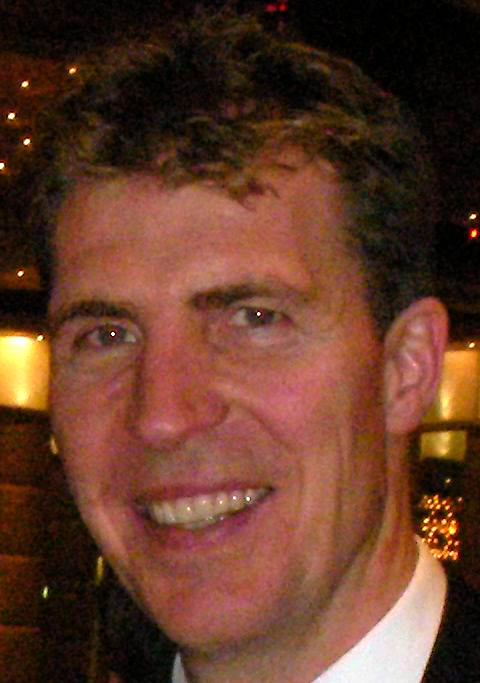
James Peter Stynes OAM (23 April 1966 – 20 March 2012) was an Irish-born Australian rules footballer, youth worker and sports administrator. Stynes played the entirety of his Australian rules football career with the Melbourne Football Club in the Victorian Football League (VFL) and the Australian Football League (AFL) between 1987 and 1998. He was recruited from Dublin through Melbourne's "Irish experiment", Stynes went on to become the first, and only, non-Australian-born player to win the Brownlow Medal in 1991.
Stynes played as a ruckman. He played a then-record 244 consecutive games, a streak that was a record lasting over two decades. He also won the Leigh Matthews Trophy in 1991, two All-Australian team selections, four Keith 'Bluey' Truscott Medals, as Melbourne's best and fairest player and was selected in Melbourne's Team of the Century. He additionally represented Victoria in State of Origin football, as well as playing for both Australia and Ireland in the International Rules series.
Outside of football, Stynes was known for his work with young people. In 1994, Stynes co-founded the Reach Foundation, a youth development organisation. His contributions earned him multiple Victorian of the Year honours and the Medal of the Order of Australia in 2007. After his playing career, he served as the president of the Melbourne Football Club from 2008 until 2012. He was inducted into the Australian Football Hall of Fame in 2003.
In 2009, Stynes was diagnosed with metastatic melanoma. He continued his commitments throughout treatment before dying in 2012 at the age of 45. A state funeral was held and a statue was erected at the Melbourne Cricket Ground. The AFL's annual Jim Stynes Community Leadership Award was created and named in his honour.
During his 264-game career playing for the Melbourne Football Club in the Australian Football League (AFL) between 1987 and 1998, Stynes became the first and only non-Australian-born VFL/AFL player to win the Brownlow Medal, which he achieved in 1991.
Stynes was quite famous in both Australia and Ireland as a result of his involvement in the Melbourne Football Club's international recruitment program (now known as the "Irish experiment"). Born in Dublin, Ireland, where he was a promising Gaelic footballer at the Ballyboden St Enda's club, Stynes made a move to Australia at the age of 18 following his county team's victory in the 1984 All-Ireland Minor Football Championship.
Debuting in the Australian Football League in 1987, he played 244 consecutive games between 1987 and 1998 as a mobile ruckman, a league record that was held for 27 years. Along with his Brownlow Medal, his Australian rules achievements included the Leigh Matthews Trophy, two-time All-Australian team selection, a Grand Final appearance in 1988, and a four-time winner of the Keith 'Bluey' Truscott Medal for being judged Melbourne's best player throughout the course of a season. He also represented Victoria in interstate football matches, and he played for both Australia and Ireland in international rules football, a hybrid of Gaelic football and Australian rules football.
Following his football career, Stynes focused on youth work, using his profile to launch The Reach Foundation, which he co-founded in 1994. As a result of his work with young people in Victoria, he was named Victorian of the Year twice, in 2001 and 2003, and with the expanded profile of Reach nationally, awarded the Medal of the Order of Australia in 2007.
Hub AI
Jim Stynes AI simulator
(@Jim Stynes_simulator)
Jim Stynes
James Peter Stynes OAM (23 April 1966 – 20 March 2012) was an Irish-born Australian rules footballer, youth worker and sports administrator. Stynes played the entirety of his Australian rules football career with the Melbourne Football Club in the Victorian Football League (VFL) and the Australian Football League (AFL) between 1987 and 1998. He was recruited from Dublin through Melbourne's "Irish experiment", Stynes went on to become the first, and only, non-Australian-born player to win the Brownlow Medal in 1991.
Stynes played as a ruckman. He played a then-record 244 consecutive games, a streak that was a record lasting over two decades. He also won the Leigh Matthews Trophy in 1991, two All-Australian team selections, four Keith 'Bluey' Truscott Medals, as Melbourne's best and fairest player and was selected in Melbourne's Team of the Century. He additionally represented Victoria in State of Origin football, as well as playing for both Australia and Ireland in the International Rules series.
Outside of football, Stynes was known for his work with young people. In 1994, Stynes co-founded the Reach Foundation, a youth development organisation. His contributions earned him multiple Victorian of the Year honours and the Medal of the Order of Australia in 2007. After his playing career, he served as the president of the Melbourne Football Club from 2008 until 2012. He was inducted into the Australian Football Hall of Fame in 2003.
In 2009, Stynes was diagnosed with metastatic melanoma. He continued his commitments throughout treatment before dying in 2012 at the age of 45. A state funeral was held and a statue was erected at the Melbourne Cricket Ground. The AFL's annual Jim Stynes Community Leadership Award was created and named in his honour.
During his 264-game career playing for the Melbourne Football Club in the Australian Football League (AFL) between 1987 and 1998, Stynes became the first and only non-Australian-born VFL/AFL player to win the Brownlow Medal, which he achieved in 1991.
Stynes was quite famous in both Australia and Ireland as a result of his involvement in the Melbourne Football Club's international recruitment program (now known as the "Irish experiment"). Born in Dublin, Ireland, where he was a promising Gaelic footballer at the Ballyboden St Enda's club, Stynes made a move to Australia at the age of 18 following his county team's victory in the 1984 All-Ireland Minor Football Championship.
Debuting in the Australian Football League in 1987, he played 244 consecutive games between 1987 and 1998 as a mobile ruckman, a league record that was held for 27 years. Along with his Brownlow Medal, his Australian rules achievements included the Leigh Matthews Trophy, two-time All-Australian team selection, a Grand Final appearance in 1988, and a four-time winner of the Keith 'Bluey' Truscott Medal for being judged Melbourne's best player throughout the course of a season. He also represented Victoria in interstate football matches, and he played for both Australia and Ireland in international rules football, a hybrid of Gaelic football and Australian rules football.
Following his football career, Stynes focused on youth work, using his profile to launch The Reach Foundation, which he co-founded in 1994. As a result of his work with young people in Victoria, he was named Victorian of the Year twice, in 2001 and 2003, and with the expanded profile of Reach nationally, awarded the Medal of the Order of Australia in 2007.
Recent media