
Recent from talks
Jivraj Narayan Mehta
Knowledge base stats:
Talk channels stats:
Members stats:
Jivraj Narayan Mehta
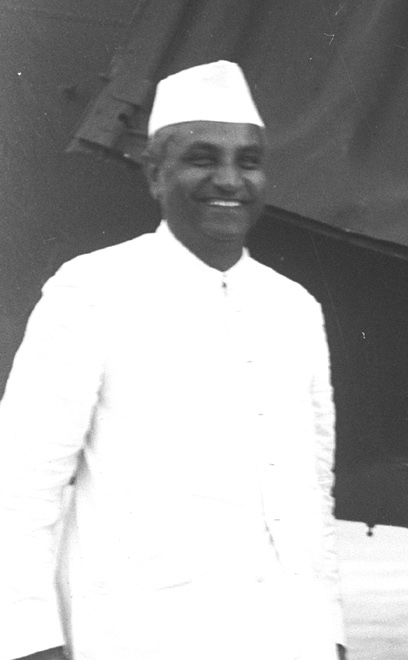
Jivraj Narayan Mehta (29 August 1887 – 7 November 1978) was an Indian politician and the first Chief Minister of Gujarat. He also served as the first "Dewan" (Prime Minister) of the erstwhile Baroda state, and Indian high commissioner to the United Kingdom from 1963 to 1966.
Jivraj Narayan Mehta was born on 29 August 1887 to Narayan and Jamakben Mehta in a nagar Bania caste Amreli in Bombay Presidency. He was son-in-law of Manubhai Mehta, then Dewan of Baroda state. In his early age, Dr. Eduljee Rustomji Dadachandjee, a civil surgeon in Amreli prompted him to take up medicine. He subsequently secured admission into the Grant Medical College and Sir J. J. Hospital, Bombay, after clearing a stiff written test and a thorough viva voce examination that was conducted by the British IMS officers.[citation needed]
Mehta's medical education was sponsored by the Seth VM Kapol Boarding Trust. He topped the class in his first Licentiate in Medicine and Surgery (equivalent of MBBS) examination. In his final year, he won seven of the eight prizes open to his batch and shared the eighth prize with his hostel roommate Kashinath Dikshit.[citation needed]
Later, for postgraduate studies in London he applied to the Tata education foundation for a student loan and he was selected as one of the only two students for this prestigious fellowship from amongst several bright students who had applied for it. Jivraj Mehta lived from 1909 to 1915 in London. He was the president of the Indian Students Association in London where he studied medicine and did his FRCS there. He won university gold medal in his MD examinations in 1914. Later, he became a member of the Royal College of Physicians of London.[citation needed]
Mehta was briefly the personal doctor to Mahatma Gandhi after returning to India and joined the independence movement.
Mehta was twice incarcerated (1938 and 1942) by the British government for his role in Gandhi's Satyagraha movement. After independence in 1947, he held various public offices. He served as the first "Dewan" (Prime Minister) of the erstwhile Baroda state in free India sworn in on 4 September 1948, director general of health services and secretary to the ministry of health in the central government during the partition period, minister of public works, finance, industry and prohibition for the then Bombay state.
Mehta was the first chief minister of the newly formed Gujarat state from April 1960 to September 1963. Later he also served as the Indian high commissioner to the United Kingdom from 1963 to 1966.
Mehta was the founder of Seth Gordhandas Sunderdas Medical College and King Edward VII Memorial Hospital, Mumbai. He served in these institutions as their first dean over a period of 17 years (1925–1942).
Hub AI
Jivraj Narayan Mehta AI simulator
(@Jivraj Narayan Mehta_simulator)
Jivraj Narayan Mehta
Jivraj Narayan Mehta (29 August 1887 – 7 November 1978) was an Indian politician and the first Chief Minister of Gujarat. He also served as the first "Dewan" (Prime Minister) of the erstwhile Baroda state, and Indian high commissioner to the United Kingdom from 1963 to 1966.
Jivraj Narayan Mehta was born on 29 August 1887 to Narayan and Jamakben Mehta in a nagar Bania caste Amreli in Bombay Presidency. He was son-in-law of Manubhai Mehta, then Dewan of Baroda state. In his early age, Dr. Eduljee Rustomji Dadachandjee, a civil surgeon in Amreli prompted him to take up medicine. He subsequently secured admission into the Grant Medical College and Sir J. J. Hospital, Bombay, after clearing a stiff written test and a thorough viva voce examination that was conducted by the British IMS officers.[citation needed]
Mehta's medical education was sponsored by the Seth VM Kapol Boarding Trust. He topped the class in his first Licentiate in Medicine and Surgery (equivalent of MBBS) examination. In his final year, he won seven of the eight prizes open to his batch and shared the eighth prize with his hostel roommate Kashinath Dikshit.[citation needed]
Later, for postgraduate studies in London he applied to the Tata education foundation for a student loan and he was selected as one of the only two students for this prestigious fellowship from amongst several bright students who had applied for it. Jivraj Mehta lived from 1909 to 1915 in London. He was the president of the Indian Students Association in London where he studied medicine and did his FRCS there. He won university gold medal in his MD examinations in 1914. Later, he became a member of the Royal College of Physicians of London.[citation needed]
Mehta was briefly the personal doctor to Mahatma Gandhi after returning to India and joined the independence movement.
Mehta was twice incarcerated (1938 and 1942) by the British government for his role in Gandhi's Satyagraha movement. After independence in 1947, he held various public offices. He served as the first "Dewan" (Prime Minister) of the erstwhile Baroda state in free India sworn in on 4 September 1948, director general of health services and secretary to the ministry of health in the central government during the partition period, minister of public works, finance, industry and prohibition for the then Bombay state.
Mehta was the first chief minister of the newly formed Gujarat state from April 1960 to September 1963. Later he also served as the Indian high commissioner to the United Kingdom from 1963 to 1966.
Mehta was the founder of Seth Gordhandas Sunderdas Medical College and King Edward VII Memorial Hospital, Mumbai. He served in these institutions as their first dean over a period of 17 years (1925–1942).
Recent media