


Community hub
Recent from talks
Contribute something to knowledge base
Content stats: 0 posts, 0 articles, 1 media, 0 notes
Members stats: 0 subscribers, 0 contributors, 0 moderators, 0 supporters
Subscribers
Supporters
Contributors
Moderators
Hub AI
Joe Cook (actor) AI simulator
(@Joe Cook (actor)_simulator)
Hub AI
Joe Cook (actor) AI simulator
(@Joe Cook (actor)_simulator)
Joe Cook (actor)
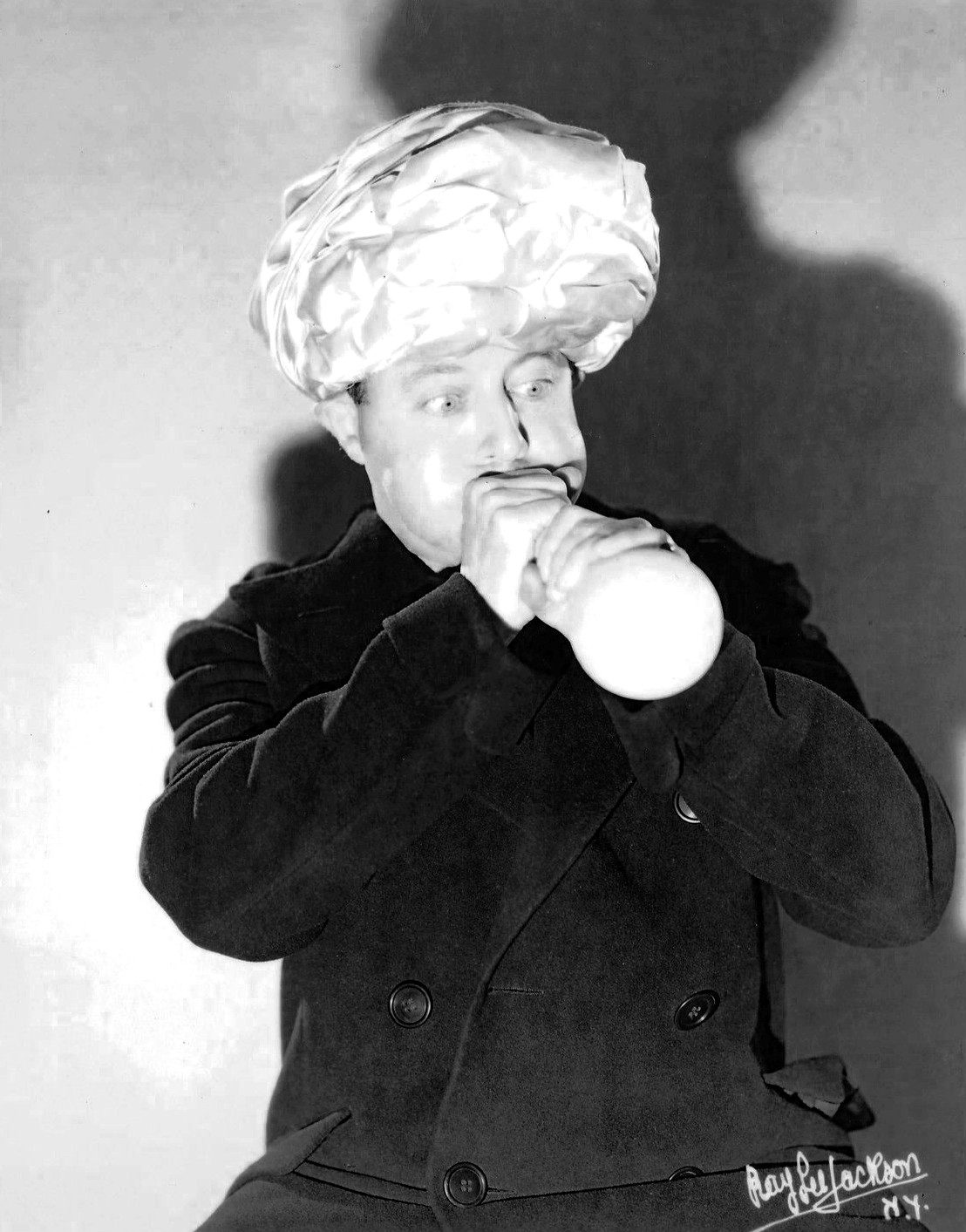
Joe Cook (born Joseph Lopez; March 29, 1890 – May 15, 1959) was an American vaudeville performer whose career peaked in the 1920s and 1930s. Cook headlined at New York's Palace Theatre. After appearing on Broadway, he broke into radio.
Joseph Lopez was born in Evansville, Indiana, in 1890. At age three, he and his six-year-old brother Leo were orphaned, when their father died rescuing a drowning boy and their mother died two months later. The brothers were adopted by a distant relative, Mrs. Anna Cook. They lived in the back of their grocery store at the corner of Fourth and Oak in Evansville.
Cook joined a circus in 1906, which propelled him to vaudeville, Broadway, and Hollywood. He and his brother Leo were billed as "Joe Cook and Brother". They were in vaudeville together from about 1909 to 1916.
Joe mastered many skills of the circus. As a magazine columnist reported: "Engagements in small-time vaudeville, amusement parks, and tent shows followed rapidly. He never had a layoff. And he emerged as one of the biggest one-man shows on the vaudeville stage. Everyone yielded to the breathless spell of his very human antics. He could quietly, unsmilingly go through an incredible act of wire-walking, juggling, fiddling, or master yarn-spinning and bring down the house."
He combined his nonsensical comedy storytelling, complex inventions to perform absurdly simple or useless tasks, and playing piano, violin, and ukulele. The broad variety of his act led to his nickname – "One Man Vaudeville". New York Times critic Brooks Atkinson once wrote, "Next to Leonardo da Vinci, Joe Cook is the most versatile man known to recorded times." In 1930, noted columnist Walter Winchell wrote that "Joe Cook is certainly one of the musical theatre's three geniuses. I can't at the moment think of the other two."
Joe Cook had enjoyed a very successful career in vaudeville (with three years in blackface) when his brother Leo died. Cook was desolate, and withdrew from show business and his professional friends and colleagues. He remained at his lakeside home in New Jersey with his wife, the former Helen Reynolds, and children. Showman Earl Carroll coaxed him out of retirement with a generous offer to star on Broadway in the Earl Carroll Vanities of 1923.
Cook often teamed with stooge and future restaurateur Dave Chasen, in such shows as Rain or Shine, Fine and Dandy—the first hit completely scored by a woman (Kay Swift)—and Hold Your Horses. Corey Ford, the co-author of the last-named musical, wrote: "When I first saw Joe Cook in 1923, he was co-starring in Earl Carroll's Vanities with Peggy Hopkins Joyce, whom he used to refer to as 'that somewhat different virgin making her professional debut'. I sat on the balcony and marveled at the bland deadpan expression, the slightly curved mouth, the easy flow of nonsense patter as he walked a tightrope or juggled Indian clubs while explaining to the audience why he would not imitate four Hawaiians." Cook's "Four Hawaiians" routine was his most famous; Joe explained that he was actually imitating only two Hawaiians. He "could imitate four Hawaiians but did not wish to do so because that would put all the performers who could only imitate two Hawaiians out of work". Cook appeared on stage with a ukulele in hand:
I will give an imitation of four Hawaiians. This is one [whistles]; this is another [plays ukulele], and this is the third [marks time with his foot]. I could imitate four Hawaiians just as easily, but I will tell you the reason why I don't do it. You see, I bought a horse for $50 and it turned out to be a running horse. I was offered $15,000 for him, and I took it. I built a house for the $15,000, and when it was finished, a neighbor offered me $100,000 for it. He said my house stood right where he wanted to dig a well. So I took the $100,000 to accommodate him. I invested $100,000 on peanuts, and that year, there was a peanut famine, so I sold the peanuts for $350,000. Now, why should a man with $350,000 bother to imitate four Hawaiians?"
Joe Cook (actor)
Joe Cook (born Joseph Lopez; March 29, 1890 – May 15, 1959) was an American vaudeville performer whose career peaked in the 1920s and 1930s. Cook headlined at New York's Palace Theatre. After appearing on Broadway, he broke into radio.
Joseph Lopez was born in Evansville, Indiana, in 1890. At age three, he and his six-year-old brother Leo were orphaned, when their father died rescuing a drowning boy and their mother died two months later. The brothers were adopted by a distant relative, Mrs. Anna Cook. They lived in the back of their grocery store at the corner of Fourth and Oak in Evansville.
Cook joined a circus in 1906, which propelled him to vaudeville, Broadway, and Hollywood. He and his brother Leo were billed as "Joe Cook and Brother". They were in vaudeville together from about 1909 to 1916.
Joe mastered many skills of the circus. As a magazine columnist reported: "Engagements in small-time vaudeville, amusement parks, and tent shows followed rapidly. He never had a layoff. And he emerged as one of the biggest one-man shows on the vaudeville stage. Everyone yielded to the breathless spell of his very human antics. He could quietly, unsmilingly go through an incredible act of wire-walking, juggling, fiddling, or master yarn-spinning and bring down the house."
He combined his nonsensical comedy storytelling, complex inventions to perform absurdly simple or useless tasks, and playing piano, violin, and ukulele. The broad variety of his act led to his nickname – "One Man Vaudeville". New York Times critic Brooks Atkinson once wrote, "Next to Leonardo da Vinci, Joe Cook is the most versatile man known to recorded times." In 1930, noted columnist Walter Winchell wrote that "Joe Cook is certainly one of the musical theatre's three geniuses. I can't at the moment think of the other two."
Joe Cook had enjoyed a very successful career in vaudeville (with three years in blackface) when his brother Leo died. Cook was desolate, and withdrew from show business and his professional friends and colleagues. He remained at his lakeside home in New Jersey with his wife, the former Helen Reynolds, and children. Showman Earl Carroll coaxed him out of retirement with a generous offer to star on Broadway in the Earl Carroll Vanities of 1923.
Cook often teamed with stooge and future restaurateur Dave Chasen, in such shows as Rain or Shine, Fine and Dandy—the first hit completely scored by a woman (Kay Swift)—and Hold Your Horses. Corey Ford, the co-author of the last-named musical, wrote: "When I first saw Joe Cook in 1923, he was co-starring in Earl Carroll's Vanities with Peggy Hopkins Joyce, whom he used to refer to as 'that somewhat different virgin making her professional debut'. I sat on the balcony and marveled at the bland deadpan expression, the slightly curved mouth, the easy flow of nonsense patter as he walked a tightrope or juggled Indian clubs while explaining to the audience why he would not imitate four Hawaiians." Cook's "Four Hawaiians" routine was his most famous; Joe explained that he was actually imitating only two Hawaiians. He "could imitate four Hawaiians but did not wish to do so because that would put all the performers who could only imitate two Hawaiians out of work". Cook appeared on stage with a ukulele in hand:
I will give an imitation of four Hawaiians. This is one [whistles]; this is another [plays ukulele], and this is the third [marks time with his foot]. I could imitate four Hawaiians just as easily, but I will tell you the reason why I don't do it. You see, I bought a horse for $50 and it turned out to be a running horse. I was offered $15,000 for him, and I took it. I built a house for the $15,000, and when it was finished, a neighbor offered me $100,000 for it. He said my house stood right where he wanted to dig a well. So I took the $100,000 to accommodate him. I invested $100,000 on peanuts, and that year, there was a peanut famine, so I sold the peanuts for $350,000. Now, why should a man with $350,000 bother to imitate four Hawaiians?"
Recent media
Recent media