


Community hub
Recent from talks
Contribute something to knowledge base
Content stats: 0 posts, 0 articles, 1 media, 0 notes
Members stats: 0 subscribers, 0 contributors, 0 moderators, 0 supporters
Subscribers
Supporters
Contributors
Moderators
Hub AI
Joe D'Amato AI simulator
(@Joe D'Amato_simulator)
Hub AI
Joe D'Amato AI simulator
(@Joe D'Amato_simulator)
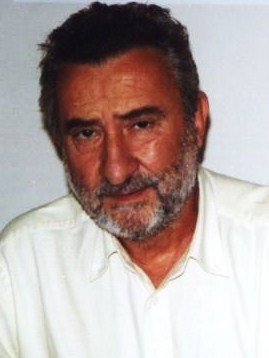
Joe D'Amato
Aristide Massaccesi (15 December 1936 – 23 January 1999), known professionally as Joe D'Amato, was an Italian film director, producer, cinematographer, and screenwriter who worked in many genres (westerns, decamerotici, peplum, war films, swashbuckler, comedy, fantasy, postapocalyptic film, and erotic thriller) but is best known for his horror, erotic and adult films.
D'Amato worked in the 1950s as electric and set photographer, in the 1960s as camera operator, and from 1969 onwards as cinematographer. Starting in 1972, he directed and co-directed around 200 films under numerous pseudonyms, regularly acting as cinematographer as well.[citation needed] Starting in the early 1980s, D'Amato produced many of his own and other directors' genre films through the companies he founded or co-founded, the best known being Filmirage. From 1979 to 1982 and from 1993 to 1999, D'Amato also produced and directed about 120 adult films.
Among his best known erotic films are his five entries into the Black Emanuelle series of films starring Laura Gemser (1976–1978) and his horror/pornography crossover films Erotic Nights of the Living Dead and Porno Holocaust (both shot in Santo Domingo in 1979). In the horror genre, he is above all remembered for his films Beyond the Darkness (1979) and Antropophagus (1980), which have gained cult status, as well as Absurd (1981).
Joe D'Amato was born on 15 December 1936 in Rome, Italy. His father was Renato Massaccesi, who after an incident on a ship had been declared a war invalid and had started to work at the Istituto Luce in Rome first as electrician, fixing power generators left by the United States army at Cinecittà, and then as chief photographic technician. In 1950, at the age of 14, D'Amato joined his father at work together with his brothers Carlo and Fernando (called Nando). Being the most enterprising of the three sons, D'Amato took on the task of delivering the movie cameras his father sold. D'Amato also assisted in the dubbing of Italian film productions and designed title and end credits with Eugenio Bava, cutting the letters out by hand. In 1952, D'Amato worked as a still photographer on the set of The Golden Coach, later as electric. In the 1960s, D'Amato eventually moved on to work as a camera operator on numerous films including Mario Bava's Hercules in the Haunted World.
In 1969, Piero Livi's Pelle di bandito and Silvio Amadio's No Man's Island (Italian: L'Isola delle Svedesi) were D'Amato's first films as cinematographer. In the next few years, D'Amato continued to work as cinematographer on Italian productions such as Umberto Lenzi's A Quiet Place to Kill, Massimo Dallamano's What Have You Done to Solange? and some of Demofilo Fidani's low-budget Spaghetti Westerns.
D'Amato took on the role of director for the first time in 1972. He started out with a number of small western films (Go Away! Trinity Has Arrived in Eldorado and A Bounty Killer in Trinity) and decamerotici (More Sexy Canterbury Tales and Novelle licenziose di vergini vogliose) which he partly directed, partly co-directed before going on to direct the gothic horror film Death Smiles on a Murderer (1973) and the war film Heroes in Hell (1974), both starring Klaus Kinski. D'Amato briefly relinquished directing and reverted to cinematography in films such as Luigi Batzella's The Devil's Wedding Night, Steve Carver's The Arena and five films directed by Alberto De Martino: Crime Boss, The Killer Is on the Phone, Counselor at Crime, The Antichrist, and – two years later – Strange Shadows in an Empty Room. When D'Amato was in Canada shooting a sleigh ride sequence for Lucio Fulci's Challenge to White Fang, the film's producer Ermanno Donati asked him to stay and direct the adventure film Red Coats for him, in which D'Amato used the pseudonym "Joe D'Amato" for the first time. It turned a good profit, and D'Amato later considered it his best film in this period.
D'Amato's next film, Emanuelle's Revenge (1975), which he co-directed with Bruno Mattei (who remains uncredited because D'Amato was a "rising name"), was one of several films at the time with titles that alluded to the successful French erotic film Emmanuelle (1974). In retrospect, it was a kind of turning point in D'Amato's career, being his first pornographic film – though still softcore.
In his next film, the commedia sexy Voto di castità (1976), scripted by George Eastman), D'Amato met Laura Gemser, who would star in many of his films. In the 1980s and early 1990s, she would also regularly work as a costume designer for his productions. In this first film, she only played the small part of a French maid, but it was during the shoot that D'Amato got the idea to use her as star in his next film.
Joe D'Amato
Aristide Massaccesi (15 December 1936 – 23 January 1999), known professionally as Joe D'Amato, was an Italian film director, producer, cinematographer, and screenwriter who worked in many genres (westerns, decamerotici, peplum, war films, swashbuckler, comedy, fantasy, postapocalyptic film, and erotic thriller) but is best known for his horror, erotic and adult films.
D'Amato worked in the 1950s as electric and set photographer, in the 1960s as camera operator, and from 1969 onwards as cinematographer. Starting in 1972, he directed and co-directed around 200 films under numerous pseudonyms, regularly acting as cinematographer as well.[citation needed] Starting in the early 1980s, D'Amato produced many of his own and other directors' genre films through the companies he founded or co-founded, the best known being Filmirage. From 1979 to 1982 and from 1993 to 1999, D'Amato also produced and directed about 120 adult films.
Among his best known erotic films are his five entries into the Black Emanuelle series of films starring Laura Gemser (1976–1978) and his horror/pornography crossover films Erotic Nights of the Living Dead and Porno Holocaust (both shot in Santo Domingo in 1979). In the horror genre, he is above all remembered for his films Beyond the Darkness (1979) and Antropophagus (1980), which have gained cult status, as well as Absurd (1981).
Joe D'Amato was born on 15 December 1936 in Rome, Italy. His father was Renato Massaccesi, who after an incident on a ship had been declared a war invalid and had started to work at the Istituto Luce in Rome first as electrician, fixing power generators left by the United States army at Cinecittà, and then as chief photographic technician. In 1950, at the age of 14, D'Amato joined his father at work together with his brothers Carlo and Fernando (called Nando). Being the most enterprising of the three sons, D'Amato took on the task of delivering the movie cameras his father sold. D'Amato also assisted in the dubbing of Italian film productions and designed title and end credits with Eugenio Bava, cutting the letters out by hand. In 1952, D'Amato worked as a still photographer on the set of The Golden Coach, later as electric. In the 1960s, D'Amato eventually moved on to work as a camera operator on numerous films including Mario Bava's Hercules in the Haunted World.
In 1969, Piero Livi's Pelle di bandito and Silvio Amadio's No Man's Island (Italian: L'Isola delle Svedesi) were D'Amato's first films as cinematographer. In the next few years, D'Amato continued to work as cinematographer on Italian productions such as Umberto Lenzi's A Quiet Place to Kill, Massimo Dallamano's What Have You Done to Solange? and some of Demofilo Fidani's low-budget Spaghetti Westerns.
D'Amato took on the role of director for the first time in 1972. He started out with a number of small western films (Go Away! Trinity Has Arrived in Eldorado and A Bounty Killer in Trinity) and decamerotici (More Sexy Canterbury Tales and Novelle licenziose di vergini vogliose) which he partly directed, partly co-directed before going on to direct the gothic horror film Death Smiles on a Murderer (1973) and the war film Heroes in Hell (1974), both starring Klaus Kinski. D'Amato briefly relinquished directing and reverted to cinematography in films such as Luigi Batzella's The Devil's Wedding Night, Steve Carver's The Arena and five films directed by Alberto De Martino: Crime Boss, The Killer Is on the Phone, Counselor at Crime, The Antichrist, and – two years later – Strange Shadows in an Empty Room. When D'Amato was in Canada shooting a sleigh ride sequence for Lucio Fulci's Challenge to White Fang, the film's producer Ermanno Donati asked him to stay and direct the adventure film Red Coats for him, in which D'Amato used the pseudonym "Joe D'Amato" for the first time. It turned a good profit, and D'Amato later considered it his best film in this period.
D'Amato's next film, Emanuelle's Revenge (1975), which he co-directed with Bruno Mattei (who remains uncredited because D'Amato was a "rising name"), was one of several films at the time with titles that alluded to the successful French erotic film Emmanuelle (1974). In retrospect, it was a kind of turning point in D'Amato's career, being his first pornographic film – though still softcore.
In his next film, the commedia sexy Voto di castità (1976), scripted by George Eastman), D'Amato met Laura Gemser, who would star in many of his films. In the 1980s and early 1990s, she would also regularly work as a costume designer for his productions. In this first film, she only played the small part of a French maid, but it was during the shoot that D'Amato got the idea to use her as star in his next film.
Recent media
Recent media