


Community hub
Recent from talks
Contribute something to knowledge base
Content stats: 0 posts, 0 articles, 1 media, 0 notes
Members stats: 0 subscribers, 0 contributors, 0 moderators, 0 supporters
Subscribers
Supporters
Contributors
Moderators
Lucio Fulci
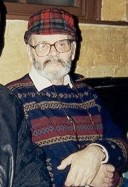
Lucio Fulci (Italian: [ˈluːtʃo ˈfultʃi]; 17 June 1927 – 13 March 1996) was an Italian film director, screenwriter, and actor. Although he worked in a wide array of genres through a career spanning nearly five decades, including comedies and spaghetti Westerns, he garnered an international cult following for his giallo and horror films.
His most notable films include the Gates of Hell trilogy—City of the Living Dead (1980), The Beyond (1981), and The House by the Cemetery (1981)—as well as Massacre Time (1966), One on Top of the Other (1969), Beatrice Cenci (1969), A Lizard in a Woman's Skin (1971), Don't Torture a Duckling (1972), White Fang (1973), Four of the Apocalypse (1975), Sette note in nero (1977), Zombi 2 (1979), Contraband (1980), The New York Ripper (1982), Murder Rock (1984), and A Cat in the Brain (1990). Although a number of films over the years were said to have been "co-produced" by Fulci, he was just allowing them to use his name to promote the films (with the exception of City of the Living Dead, which he did actively attempt to obtain some funding for).
Owing to his brand of expressive visuals and unconventional storytelling, Lucio Fulci has been called "The Poet of the Macabre" by genre critics and scholars, originally a reference to Edgar Allan Poe, whose work he freely adapted in The Black Cat (1981). The high level of graphic violence in many of his films, especially Zombi 2, The Beyond, Contraband and The New York Ripper, has also earned him the nickname "The Godfather of Gore", which he shares with Herschell Gordon Lewis.
Lucio Fulci was born in Trastevere, Rome, on 17 June 1927. His mother Lucia was from a poor but reputable Sicilian, politically anti-fascist family from Messina, Sicily. She had earlier eloped to Rome with a cousin of hers, who she later left to raise their child (Lucio) alone. Lucio was raised Roman Catholic by his mother and a female housekeeper. He attended the Naval College in Venice, and near the end of World War II, completed his studies back in Rome at the Giulio Cesare State Classical School. He was interested in art, music, film, football, and had a love for sailing.
His mother encouraged him to be a lawyer, but he wound up going to medical school instead. After studying medicine for a time, he dropped out before completing his training, deciding there was more money to be made in the filmmaking industry[page needed] He worked initially as an art critic, writing for Gazzetta delle Arti and Il Messaggero, and also joined the critical art group il Gruppo Arte Sociale. In the Fulci Talks interview filmed in Rome, Fulci mentions having in his youth met Truman Capote in Italy, who he said was reading books and spoke good Italian.
His interest in the arts led him to apply to the film school in Rome named Centro Sperimentale where he apprenticed, after which he worked first as a director of documentaries, then an assistant director of motion pictures, then a screenwriter working mainly in the Italian comedy field in the early 1950s. The famed Italian director Steno took Fulci under his wing and allowed him to assist in the making of a number of comedies starring Totò.[page needed] He also directed a number of comedies starring the actors Franco and Ciccio.
Fulci moved into directing giallo thrillers with Una sull'altra (1969), A Lizard in a Woman's Skin (1971) and Sette note in nero (The Psychic, 1977), as well as Spaghetti Westerns such as Four of the Apocalypse (1975) and Silver Saddle (1978), all of which were commercially successful and controversial in their depictions of graphic violence. Some of the special effects in A Lizard in a Woman's Skin involving mutilated dogs in a vivisection room were so realistic that Fulci was charged with animal cruelty; the charges were dropped when he produced the artificial canine puppets that were utilized in the film (created by special effects maestro Carlo Rambaldi).
His first film to gain significant notoriety in his native country, Don't Torture a Duckling (1972), combined scathing social commentary with the director's trademark graphic violence. Fulci had a Catholic upbringing and always referred to himself as a Catholic. Despite this, some of his movies (Beatrice Cenci, Don't Torture a Duckling, City of the Living Dead, etc.) have been viewed as having very anti-Catholic sentiment.
Lucio Fulci
Lucio Fulci (Italian: [ˈluːtʃo ˈfultʃi]; 17 June 1927 – 13 March 1996) was an Italian film director, screenwriter, and actor. Although he worked in a wide array of genres through a career spanning nearly five decades, including comedies and spaghetti Westerns, he garnered an international cult following for his giallo and horror films.
His most notable films include the Gates of Hell trilogy—City of the Living Dead (1980), The Beyond (1981), and The House by the Cemetery (1981)—as well as Massacre Time (1966), One on Top of the Other (1969), Beatrice Cenci (1969), A Lizard in a Woman's Skin (1971), Don't Torture a Duckling (1972), White Fang (1973), Four of the Apocalypse (1975), Sette note in nero (1977), Zombi 2 (1979), Contraband (1980), The New York Ripper (1982), Murder Rock (1984), and A Cat in the Brain (1990). Although a number of films over the years were said to have been "co-produced" by Fulci, he was just allowing them to use his name to promote the films (with the exception of City of the Living Dead, which he did actively attempt to obtain some funding for).
Owing to his brand of expressive visuals and unconventional storytelling, Lucio Fulci has been called "The Poet of the Macabre" by genre critics and scholars, originally a reference to Edgar Allan Poe, whose work he freely adapted in The Black Cat (1981). The high level of graphic violence in many of his films, especially Zombi 2, The Beyond, Contraband and The New York Ripper, has also earned him the nickname "The Godfather of Gore", which he shares with Herschell Gordon Lewis.
Lucio Fulci was born in Trastevere, Rome, on 17 June 1927. His mother Lucia was from a poor but reputable Sicilian, politically anti-fascist family from Messina, Sicily. She had earlier eloped to Rome with a cousin of hers, who she later left to raise their child (Lucio) alone. Lucio was raised Roman Catholic by his mother and a female housekeeper. He attended the Naval College in Venice, and near the end of World War II, completed his studies back in Rome at the Giulio Cesare State Classical School. He was interested in art, music, film, football, and had a love for sailing.
His mother encouraged him to be a lawyer, but he wound up going to medical school instead. After studying medicine for a time, he dropped out before completing his training, deciding there was more money to be made in the filmmaking industry[page needed] He worked initially as an art critic, writing for Gazzetta delle Arti and Il Messaggero, and also joined the critical art group il Gruppo Arte Sociale. In the Fulci Talks interview filmed in Rome, Fulci mentions having in his youth met Truman Capote in Italy, who he said was reading books and spoke good Italian.
His interest in the arts led him to apply to the film school in Rome named Centro Sperimentale where he apprenticed, after which he worked first as a director of documentaries, then an assistant director of motion pictures, then a screenwriter working mainly in the Italian comedy field in the early 1950s. The famed Italian director Steno took Fulci under his wing and allowed him to assist in the making of a number of comedies starring Totò.[page needed] He also directed a number of comedies starring the actors Franco and Ciccio.
Fulci moved into directing giallo thrillers with Una sull'altra (1969), A Lizard in a Woman's Skin (1971) and Sette note in nero (The Psychic, 1977), as well as Spaghetti Westerns such as Four of the Apocalypse (1975) and Silver Saddle (1978), all of which were commercially successful and controversial in their depictions of graphic violence. Some of the special effects in A Lizard in a Woman's Skin involving mutilated dogs in a vivisection room were so realistic that Fulci was charged with animal cruelty; the charges were dropped when he produced the artificial canine puppets that were utilized in the film (created by special effects maestro Carlo Rambaldi).
His first film to gain significant notoriety in his native country, Don't Torture a Duckling (1972), combined scathing social commentary with the director's trademark graphic violence. Fulci had a Catholic upbringing and always referred to himself as a Catholic. Despite this, some of his movies (Beatrice Cenci, Don't Torture a Duckling, City of the Living Dead, etc.) have been viewed as having very anti-Catholic sentiment.
Recent media
Recent media