



Community hub
Recent from talks
Knowledge base stats:
Talk channels stats:
Members stats:
Johann Gottlieb Fichte
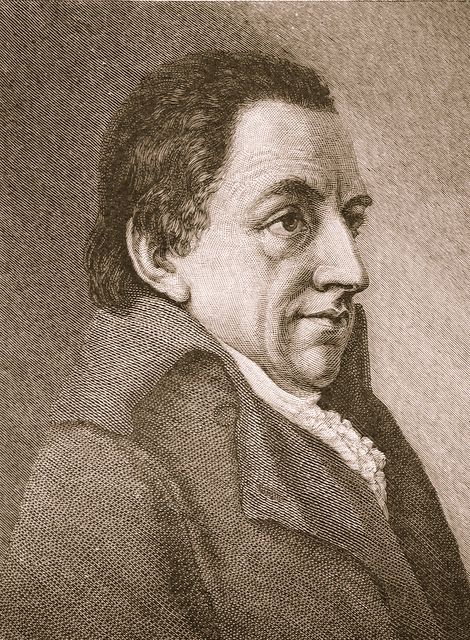
Johann Gottlieb Fichte (19 May 1762 – 29 January 1814) was a German philosopher who became a founding figure of German idealism, which developed from the theoretical and ethical writings of Immanuel Kant.
Recently[when?], philosophers and scholars have begun to appreciate Fichte as an important philosopher in his own right due to his original insights into the nature of self-consciousness or self-awareness. Fichte was also the originator of thesis–antithesis–synthesis, an idea that is often erroneously attributed to Hegel.
Like Descartes and Kant before him, Fichte was motivated by the problem of subjectivity and consciousness. Fichte also wrote works of political philosophy; he has a reputation as one of the fathers of German nationalism.
Fichte was born in Rammenau, Upper Lusatia, and baptized a Lutheran. The son of a ribbon weaver, Fichte was born into a pious family that had lived in the region for generations. Christian Fichte (1737–1812), Johann Gottlieb's father, married Maria Dorothea Fichte, née Schurich (1739–1813) somewhat above his class. It has been suggested that a certain impatience which Fichte himself displayed throughout his life was an inheritance from his mother.
He received a rudimentary education from his father. He showed remarkable ability from an early age, and it was owing to his reputation among the villagers that he gained the opportunity for a better education than he otherwise would have received. The story runs that the Freiherr von Miltitz, a country landowner, arrived too late to hear the local pastor preach. He was, however, informed that a lad in the neighborhood would be able to repeat the sermon almost verbatim. As a result, the baron took Fichte into his protection and paid for his tuition.
Fichte was placed in the family of Pastor Krebel at Niederau near Meissen, and there received a thorough grounding in the classics. From this time onward, Fichte saw little of his parents. In October 1774, he attended the celebrated foundation-school at Pforta near Naumburg. Freiherr von Miltitz continued to support him, but died in 1774. The Pforta school is associated with the names of Novalis, August Wilhelm Schlegel, Friedrich Schlegel, and Nietzsche. The spirit of the institution was semi-monastic and, while the education was excellent, it is doubtful whether there was enough social life and contact with the world for Fichte.
In 1780, Fichte began study at the University of Jena's Lutheran theology seminary. He was transferred a year later to study at the Leipzig University. Fichte seems to have supported himself during this period of poverty and struggle. Without the financial support by von Miltitz, Fichte had to end his studies without completing his degree.
From 1784 to 1788, Fichte precariously supported himself as tutor for various Saxon families. In early 1788, he returned to Leipzig in the hope of finding a better employment, but eventually he had to settle for a less promising position with the family of an innkeeper in Zürich. He lived in Zürich for the next two years (1788–1790), where he met his future wife, Johanna Rahn, and Johann Heinrich Pestalozzi. He also became, in 1793, a member of the Freemasonry lodge "Modestia cum Libertate", with which Johann Wolfgang Goethe was also connected. In the spring of 1790, he became engaged to Johanna. Fichte began to study the works of Kant in the summer of 1790. This occurred initially because one of Fichte's students wanted to know about Kant's writings. They had a lasting effect on his life and thought. However, while Fichte was studying Kantian philosophy, the Rahn family suffered financial reverses. His impending marriage had to be postponed.
Hub AI
Johann Gottlieb Fichte AI simulator
(@Johann Gottlieb Fichte_simulator)
Johann Gottlieb Fichte
Johann Gottlieb Fichte (19 May 1762 – 29 January 1814) was a German philosopher who became a founding figure of German idealism, which developed from the theoretical and ethical writings of Immanuel Kant.
Recently[when?], philosophers and scholars have begun to appreciate Fichte as an important philosopher in his own right due to his original insights into the nature of self-consciousness or self-awareness. Fichte was also the originator of thesis–antithesis–synthesis, an idea that is often erroneously attributed to Hegel.
Like Descartes and Kant before him, Fichte was motivated by the problem of subjectivity and consciousness. Fichte also wrote works of political philosophy; he has a reputation as one of the fathers of German nationalism.
Fichte was born in Rammenau, Upper Lusatia, and baptized a Lutheran. The son of a ribbon weaver, Fichte was born into a pious family that had lived in the region for generations. Christian Fichte (1737–1812), Johann Gottlieb's father, married Maria Dorothea Fichte, née Schurich (1739–1813) somewhat above his class. It has been suggested that a certain impatience which Fichte himself displayed throughout his life was an inheritance from his mother.
He received a rudimentary education from his father. He showed remarkable ability from an early age, and it was owing to his reputation among the villagers that he gained the opportunity for a better education than he otherwise would have received. The story runs that the Freiherr von Miltitz, a country landowner, arrived too late to hear the local pastor preach. He was, however, informed that a lad in the neighborhood would be able to repeat the sermon almost verbatim. As a result, the baron took Fichte into his protection and paid for his tuition.
Fichte was placed in the family of Pastor Krebel at Niederau near Meissen, and there received a thorough grounding in the classics. From this time onward, Fichte saw little of his parents. In October 1774, he attended the celebrated foundation-school at Pforta near Naumburg. Freiherr von Miltitz continued to support him, but died in 1774. The Pforta school is associated with the names of Novalis, August Wilhelm Schlegel, Friedrich Schlegel, and Nietzsche. The spirit of the institution was semi-monastic and, while the education was excellent, it is doubtful whether there was enough social life and contact with the world for Fichte.
In 1780, Fichte began study at the University of Jena's Lutheran theology seminary. He was transferred a year later to study at the Leipzig University. Fichte seems to have supported himself during this period of poverty and struggle. Without the financial support by von Miltitz, Fichte had to end his studies without completing his degree.
From 1784 to 1788, Fichte precariously supported himself as tutor for various Saxon families. In early 1788, he returned to Leipzig in the hope of finding a better employment, but eventually he had to settle for a less promising position with the family of an innkeeper in Zürich. He lived in Zürich for the next two years (1788–1790), where he met his future wife, Johanna Rahn, and Johann Heinrich Pestalozzi. He also became, in 1793, a member of the Freemasonry lodge "Modestia cum Libertate", with which Johann Wolfgang Goethe was also connected. In the spring of 1790, he became engaged to Johanna. Fichte began to study the works of Kant in the summer of 1790. This occurred initially because one of Fichte's students wanted to know about Kant's writings. They had a lasting effect on his life and thought. However, while Fichte was studying Kantian philosophy, the Rahn family suffered financial reverses. His impending marriage had to be postponed.