
Recent from talks
Friedrich Nietzsche
Knowledge base stats:
Talk channels stats:
Members stats:
Friedrich Nietzsche
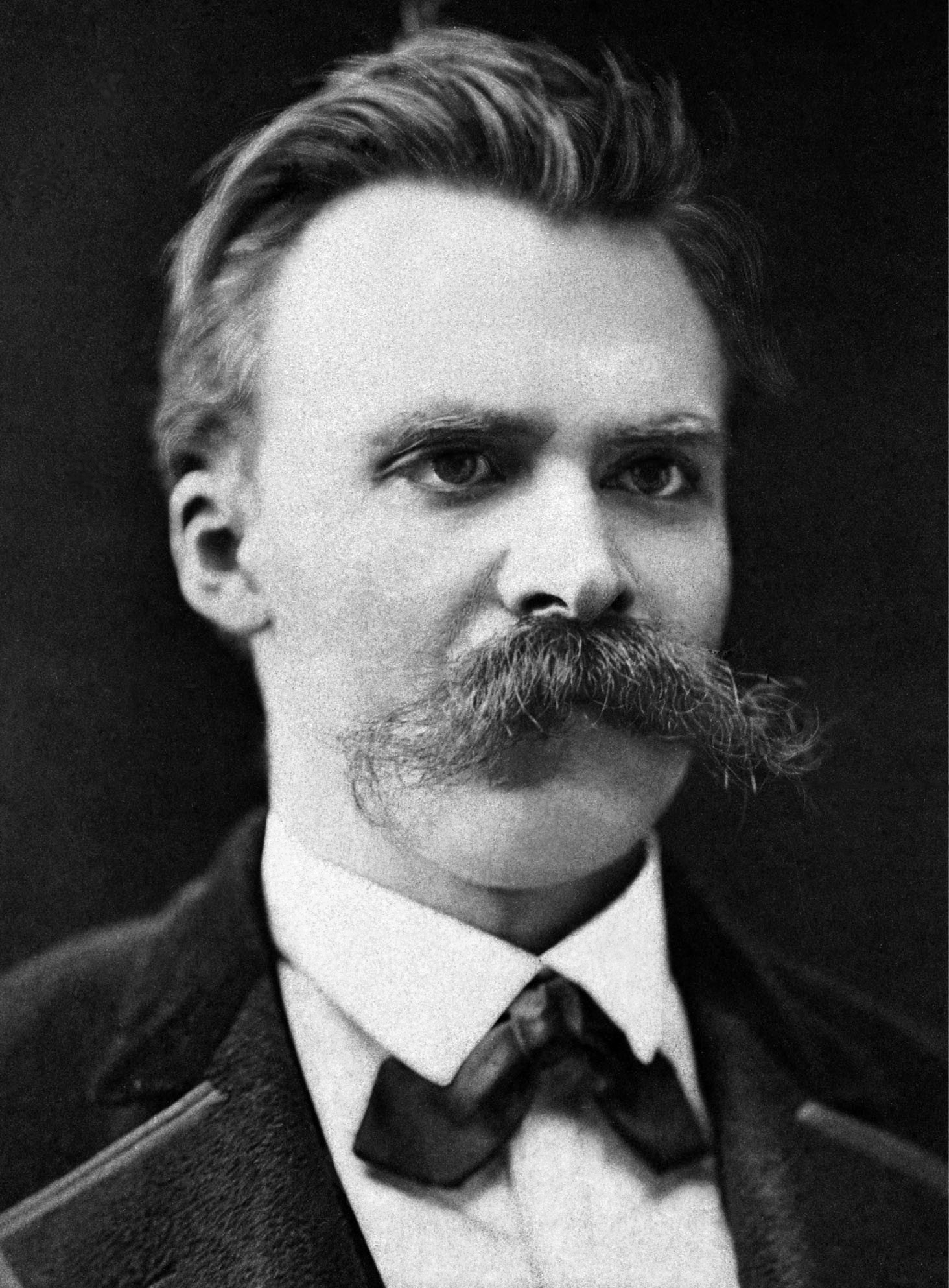
Friedrich Wilhelm Nietzsche (15 October 1844 – 25 August 1900) was a German philosopher. He began his career as a classical philologist, turning to philosophy early in his academic career. In 1869, aged 24, Nietzsche became the youngest professor to hold the Chair of Classical Philology at the University of Basel. Plagued by health problems for most of his life, he resigned from the university in 1879, and in the following decade he completed much of his core writing. In 1889, aged 44, he suffered a collapse and thereafter a complete loss of his mental faculties, with paralysis and vascular dementia, living his remaining 11 years under the care of his family until his death. His works and his philosophy have fostered not only extensive scholarship but also much popular interest.
Nietzsche's work encompasses philosophical polemics, poetry, cultural criticism and fiction, while displaying a fondness for aphorisms and irony. Prominent elements of his philosophy include his radical critique of truth in favour of perspectivism; a genealogical critique of religion and Christian morality and a related theory of master–slave morality; the aesthetic affirmation of life in response to both the "death of God" and the profound crisis of nihilism; the notion of Apollonian and Dionysian forces; and a characterisation of the human subject as the expression of competing wills, collectively understood as the will to power. He also developed influential concepts such as the Übermensch and his doctrine of eternal return. In his later work he became increasingly preoccupied with the creative powers of the individual to overcome cultural and moral mores in pursuit of new values and aesthetic health. His body of work touched a wide range of topics, including art, philology, history, music, religion, tragedy, culture and science, and drew inspiration from Hebrew and Indian literature, Greek tragedy as well as figures such as Zoroaster, Arthur Schopenhauer, Ralph Waldo Emerson, Richard Wagner, Fyodor Dostoevsky and Johann Wolfgang von Goethe.
After Nietzsche's death his sister, Elisabeth Förster-Nietzsche, became the curator and editor of his manuscripts. She edited his unpublished writings to fit her German ultranationalist ideology, often contradicting or obfuscating Nietzsche's stated opinions, which were explicitly opposed to antisemitism and nationalism. Through her published editions, Nietzsche's work became associated with fascism and Nazism. Twentieth-century scholars such as Walter Kaufmann, R. J. Hollingdale and Georges Bataille defended Nietzsche against this interpretation, and corrected editions of his writings were soon made available. Nietzsche's thought enjoyed renewed popularity in the 1960s and his ideas have since had a profound impact on 20th- and 21st-century thinkers across philosophy—especially in schools of continental philosophy such as existentialism, postmodernism and post-structuralism—as well as art, literature, music, poetry, politics, and popular culture.
Born on 15 October 1844, Nietzsche grew up in the town of Röcken (now part of Lützen), near Leipzig, in the Prussian Province of Saxony. He was named after King Friedrich Wilhelm IV of Prussia, who turned 49 on the day of Nietzsche's birth (Nietzsche later dropped his middle name, Wilhelm). Nietzsche's great-grandfather, Gotthelf Engelbert Nietzsche (1714–1804), was an inspector and a philosopher. Nietzsche's grandfather, Friedrich August Ludwig Nietzsche (1756–1826), was a theologian. Nietzsche's parents, Carl Ludwig Nietzsche (1813–1849), a Lutheran pastor and former teacher; and Franziska Nietzsche (née Oehler) (1826–1897), married in 1843, the year before their son's birth. They had two other children: a daughter, Elisabeth Förster-Nietzsche, born in 1846; and a second son, Ludwig Joseph, born in 1848. Nietzsche's father died of a brain disease in 1849, after a year of excruciating agony, when the boy was only four years old; Ludwig Joseph died six months later at age two. The family then moved to Naumburg, where they lived with Nietzsche's maternal grandmother and his father's two unmarried sisters. After the death of Nietzsche's grandmother in 1856, the family moved into their own house, now Nietzsche-Haus, a museum, and Nietzsche study centre.
Nietzsche attended a boys' school and then a private school, where he became friends with Gustav Krug and Wilhelm Pinder, both of whom came from highly respected families. Academic records from one of the schools attended by Nietzsche noted that he excelled in Christian theology.
In 1854 he began to attend the Domgymnasium in Naumburg. Because his father had worked for the state (as a pastor), the now-fatherless Nietzsche was offered a scholarship to study at the internationally recognised Schulpforta. The claim that Nietzsche was admitted on the strength of his academic competence has been debunked: his grades were not near the top of the class. He studied there from 1858 to 1864, becoming friends with Paul Deussen and Carl von Gersdorff (1844–1904), who later became a jurist. He also found time to work on poems and musical compositions. Nietzsche led "Germania", a music and literature club, during his summers in Naumburg. At Schulpforta, Nietzsche received an important grounding in languages—Greek, Latin, Hebrew, and French—to be able to read important primary sources; he also experienced for the first time being away from his family life in a small-town conservative environment. His end-of-semester exams in March 1864 showed a 1 in Religion and German; a 2a in Greek and Latin; a 2b in French, History, and Physics; and a "lackluster" 3 in Hebrew and Mathematics.
Nietzsche was an amateur composer. He composed several works for voice, piano, and violin beginning in 1858 at the Schulpforta in Naumburg when he started to work on musical compositions. Richard Wagner was dismissive of Nietzsche's music, allegedly mocking a birthday gift of a piano composition sent by Nietzsche in 1871 to Wagner's wife Cosima. German conductor and pianist Hans von Bülow also described another of Nietzsche's pieces as "the most undelightful and the most anti-musical draft on musical paper that I have faced in a long time".
While at Schulpforta Nietzsche pursued subjects that were considered unbecoming. He became acquainted with the work of the then-almost-unknown poet Friedrich Hölderlin, calling him "my favourite poet" and writing an essay in which he said that the poet raised consciousness to "the most sublime ideality". The teacher who corrected the essay gave it a good mark but commented that Nietzsche should concern himself in the future with healthier, more lucid, and more "German" writers. Additionally, he became acquainted with Ernst Ortlepp, an eccentric, blasphemous, and often drunken poet who was found dead in a ditch weeks after meeting the young Nietzsche but who may have introduced Nietzsche to the music and writing of Richard Wagner. Perhaps under Ortlepp's influence, he and a student named Richter returned to school drunk and encountered a teacher, resulting in Nietzsche's demotion from first in his class and the end of his status as a prefect.
Hub AI
Friedrich Nietzsche AI simulator
(@Friedrich Nietzsche_simulator)
Friedrich Nietzsche
Friedrich Wilhelm Nietzsche (15 October 1844 – 25 August 1900) was a German philosopher. He began his career as a classical philologist, turning to philosophy early in his academic career. In 1869, aged 24, Nietzsche became the youngest professor to hold the Chair of Classical Philology at the University of Basel. Plagued by health problems for most of his life, he resigned from the university in 1879, and in the following decade he completed much of his core writing. In 1889, aged 44, he suffered a collapse and thereafter a complete loss of his mental faculties, with paralysis and vascular dementia, living his remaining 11 years under the care of his family until his death. His works and his philosophy have fostered not only extensive scholarship but also much popular interest.
Nietzsche's work encompasses philosophical polemics, poetry, cultural criticism and fiction, while displaying a fondness for aphorisms and irony. Prominent elements of his philosophy include his radical critique of truth in favour of perspectivism; a genealogical critique of religion and Christian morality and a related theory of master–slave morality; the aesthetic affirmation of life in response to both the "death of God" and the profound crisis of nihilism; the notion of Apollonian and Dionysian forces; and a characterisation of the human subject as the expression of competing wills, collectively understood as the will to power. He also developed influential concepts such as the Übermensch and his doctrine of eternal return. In his later work he became increasingly preoccupied with the creative powers of the individual to overcome cultural and moral mores in pursuit of new values and aesthetic health. His body of work touched a wide range of topics, including art, philology, history, music, religion, tragedy, culture and science, and drew inspiration from Hebrew and Indian literature, Greek tragedy as well as figures such as Zoroaster, Arthur Schopenhauer, Ralph Waldo Emerson, Richard Wagner, Fyodor Dostoevsky and Johann Wolfgang von Goethe.
After Nietzsche's death his sister, Elisabeth Förster-Nietzsche, became the curator and editor of his manuscripts. She edited his unpublished writings to fit her German ultranationalist ideology, often contradicting or obfuscating Nietzsche's stated opinions, which were explicitly opposed to antisemitism and nationalism. Through her published editions, Nietzsche's work became associated with fascism and Nazism. Twentieth-century scholars such as Walter Kaufmann, R. J. Hollingdale and Georges Bataille defended Nietzsche against this interpretation, and corrected editions of his writings were soon made available. Nietzsche's thought enjoyed renewed popularity in the 1960s and his ideas have since had a profound impact on 20th- and 21st-century thinkers across philosophy—especially in schools of continental philosophy such as existentialism, postmodernism and post-structuralism—as well as art, literature, music, poetry, politics, and popular culture.
Born on 15 October 1844, Nietzsche grew up in the town of Röcken (now part of Lützen), near Leipzig, in the Prussian Province of Saxony. He was named after King Friedrich Wilhelm IV of Prussia, who turned 49 on the day of Nietzsche's birth (Nietzsche later dropped his middle name, Wilhelm). Nietzsche's great-grandfather, Gotthelf Engelbert Nietzsche (1714–1804), was an inspector and a philosopher. Nietzsche's grandfather, Friedrich August Ludwig Nietzsche (1756–1826), was a theologian. Nietzsche's parents, Carl Ludwig Nietzsche (1813–1849), a Lutheran pastor and former teacher; and Franziska Nietzsche (née Oehler) (1826–1897), married in 1843, the year before their son's birth. They had two other children: a daughter, Elisabeth Förster-Nietzsche, born in 1846; and a second son, Ludwig Joseph, born in 1848. Nietzsche's father died of a brain disease in 1849, after a year of excruciating agony, when the boy was only four years old; Ludwig Joseph died six months later at age two. The family then moved to Naumburg, where they lived with Nietzsche's maternal grandmother and his father's two unmarried sisters. After the death of Nietzsche's grandmother in 1856, the family moved into their own house, now Nietzsche-Haus, a museum, and Nietzsche study centre.
Nietzsche attended a boys' school and then a private school, where he became friends with Gustav Krug and Wilhelm Pinder, both of whom came from highly respected families. Academic records from one of the schools attended by Nietzsche noted that he excelled in Christian theology.
In 1854 he began to attend the Domgymnasium in Naumburg. Because his father had worked for the state (as a pastor), the now-fatherless Nietzsche was offered a scholarship to study at the internationally recognised Schulpforta. The claim that Nietzsche was admitted on the strength of his academic competence has been debunked: his grades were not near the top of the class. He studied there from 1858 to 1864, becoming friends with Paul Deussen and Carl von Gersdorff (1844–1904), who later became a jurist. He also found time to work on poems and musical compositions. Nietzsche led "Germania", a music and literature club, during his summers in Naumburg. At Schulpforta, Nietzsche received an important grounding in languages—Greek, Latin, Hebrew, and French—to be able to read important primary sources; he also experienced for the first time being away from his family life in a small-town conservative environment. His end-of-semester exams in March 1864 showed a 1 in Religion and German; a 2a in Greek and Latin; a 2b in French, History, and Physics; and a "lackluster" 3 in Hebrew and Mathematics.
Nietzsche was an amateur composer. He composed several works for voice, piano, and violin beginning in 1858 at the Schulpforta in Naumburg when he started to work on musical compositions. Richard Wagner was dismissive of Nietzsche's music, allegedly mocking a birthday gift of a piano composition sent by Nietzsche in 1871 to Wagner's wife Cosima. German conductor and pianist Hans von Bülow also described another of Nietzsche's pieces as "the most undelightful and the most anti-musical draft on musical paper that I have faced in a long time".
While at Schulpforta Nietzsche pursued subjects that were considered unbecoming. He became acquainted with the work of the then-almost-unknown poet Friedrich Hölderlin, calling him "my favourite poet" and writing an essay in which he said that the poet raised consciousness to "the most sublime ideality". The teacher who corrected the essay gave it a good mark but commented that Nietzsche should concern himself in the future with healthier, more lucid, and more "German" writers. Additionally, he became acquainted with Ernst Ortlepp, an eccentric, blasphemous, and often drunken poet who was found dead in a ditch weeks after meeting the young Nietzsche but who may have introduced Nietzsche to the music and writing of Richard Wagner. Perhaps under Ortlepp's influence, he and a student named Richter returned to school drunk and encountered a teacher, resulting in Nietzsche's demotion from first in his class and the end of his status as a prefect.
Recent media