
Recent from talks
Johannes Abraham Dimara
Knowledge base stats:
Talk channels stats:
Members stats:
Johannes Abraham Dimara
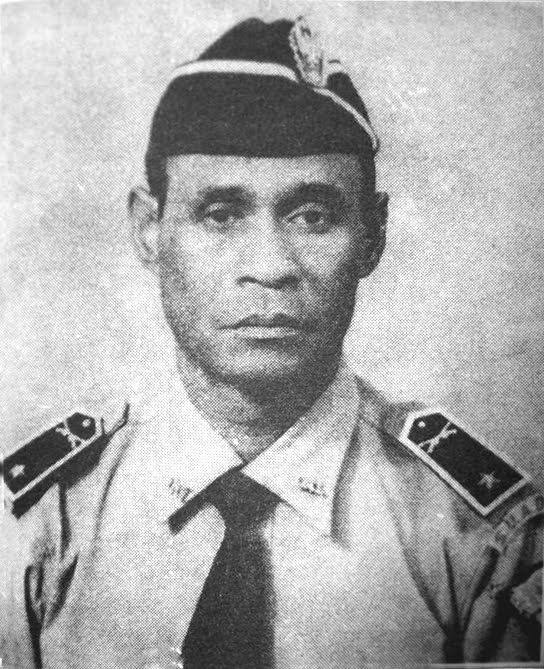
Major TNI Johannes Abraham Dimara (16 April 1916 – 20 October 2000) was an Indonesian National Hero from Papua.
He was born Arabei Dimara in Korem, North Biak, Biak Numfor on 16 April 1916 to a korano (village leader) Willem Dimara. He was schooled in a primary school of his village under Tuan Guru Simon Soselisa. At the age of 13 with approval from his family, he was adopted by Elias Mahubesi a colonial police leader from Ambon. He was then baptised with the name Johannes Abraham while still keeping his family name. He graduated from basic training at Ambon in 1935. He then entered the School of Agriculture at the Laha in 1940. He then entered the School of Education Gospel. After graduation, he became a gospel teacher in Leksuka district, Buru Island.
Japanese forces entered Buru in early 1942, after which they closed all school. Priests and headmasters who funds the school were imprisoned and the teachers became unemployed. He at 26 years old then met with leadership of Japanese administration in Buru, Ishido, and the leader of Japanese occupation forces, Watanabe. As they were searching for a papuan member to join Kempei-Ho or Hei Ho. (Auxiliary units to help supplement the main Kenpeitai forces). Afterward he undergone military training and became member of Hei Ho forces under Japanese occupation in Buru island.
At the end of the Second World War, Headquarter of Japanese forces in Ambon was isolated and its communication with the surrounding regions were cut. Information about the war and Indonesia independence proclamation only reached Ambon in Mei 1946, when ALRI expedition forces to Moluccas consisting two ships under Indonesian flag of KM Sindoro commanded by Ibrahim Saleh and first officer Yosaphat Sudarso and KM Semeru commanded by Moelyadi arrived 500 m of the coast of Namlea the main city in Buru island. Forces under Dimara met with them on the ship and suggest the ships to dock in Namelek. Local police forces were suspicious but were convinced by Dimara.
Dimara, Abdullah Kaban, Abdullah bin Talib, and Adam Patisahursiwa, a former district head of Namlea then headed to Kumbrasa to meet with Raja of Kumbrasa, Bahadin Besi and with Raja of Namlea to ask for support. Afterward they organised a meeting on 6 April 1946 with Anton Papilaya, a member of the expedition forces that managed to land. They then organized into two forces to attack Namlea from Kumbrasa under Dimara and Papilaya consisting of pemuda (youths), members of expeditionary forces that managed to land, former colonial police, and former Hei Ho.
On 8 April 1946, the citizens of Namlea were told to clean the street as Resident of Moluccas Van Ball will be visiting the town. Forces under Dimara and Papilaya consisting a total of about 300 people disguised as street cleaner, before eventually attacked police posts. One police was killed in the accident before they start to attack the district office. Similar to Hotel Yamato incident in Surabaya, they lower the Dutch flag and tore off the blue strip and rehoisted as the Red and White flag. The town was under control by Dimara and Papilaya forces for 5 days. On 12 April 1946, HMS Princes Irene arrived of the coast and sent small KNIL forces on a boat to land. After shooting incidents, where a KNIL member shot at civilian houses randomly and pemuda shot a KNIL member point black, the invading forces retreated to their own villages. Papilaya and Dimara split up and went into hiding.
Eventually Papilaya was captured and sent to Ambon, meanwhile Dimara was saved by a village leader and was given boat to go out of Buru. Afterward he alongside Abdullah Kaban dan Adam Patisahursiwa went to Sanama Island although promptly captured and were taken to Pohon Pale prison. In July 1946 in a military trial in Batu Gajah, Ambon under chief judge Van der Room, he was sentenced to 20 years in prison. Because of his long sentence he was sometime entrusted as foreman of his cell. He used an opportunity to fled prison alongside two men and headed to Seram. They were helped by Wakasihadan villagers to cross to Seram.
After continuously fleeing islands, he arrived in Manipa island and sleep in a house of Haji Musa. Although the police from Piru came to Haji Musa house, they managed to flee. Eventually he went back to Kumbrasa and lived quite freely in Raja Bahadiri Besi house as he was unrecognized. However, He surrendered himself to police in Hatahao village and put back in Pohon Pule prison. Although eventually he alongside 12 other was moved to Trunku Layang prison that housed over 3000 inmates. In here he became acquainted with Andi Bahtiar, Hasanuddin, Andi Arsad, Indonesian revolution leaders from South Sulawesi. In December 1949 he was freed from prison as Netherlands recognized Indonesian independence.
Hub AI
Johannes Abraham Dimara AI simulator
(@Johannes Abraham Dimara_simulator)
Johannes Abraham Dimara
Major TNI Johannes Abraham Dimara (16 April 1916 – 20 October 2000) was an Indonesian National Hero from Papua.
He was born Arabei Dimara in Korem, North Biak, Biak Numfor on 16 April 1916 to a korano (village leader) Willem Dimara. He was schooled in a primary school of his village under Tuan Guru Simon Soselisa. At the age of 13 with approval from his family, he was adopted by Elias Mahubesi a colonial police leader from Ambon. He was then baptised with the name Johannes Abraham while still keeping his family name. He graduated from basic training at Ambon in 1935. He then entered the School of Agriculture at the Laha in 1940. He then entered the School of Education Gospel. After graduation, he became a gospel teacher in Leksuka district, Buru Island.
Japanese forces entered Buru in early 1942, after which they closed all school. Priests and headmasters who funds the school were imprisoned and the teachers became unemployed. He at 26 years old then met with leadership of Japanese administration in Buru, Ishido, and the leader of Japanese occupation forces, Watanabe. As they were searching for a papuan member to join Kempei-Ho or Hei Ho. (Auxiliary units to help supplement the main Kenpeitai forces). Afterward he undergone military training and became member of Hei Ho forces under Japanese occupation in Buru island.
At the end of the Second World War, Headquarter of Japanese forces in Ambon was isolated and its communication with the surrounding regions were cut. Information about the war and Indonesia independence proclamation only reached Ambon in Mei 1946, when ALRI expedition forces to Moluccas consisting two ships under Indonesian flag of KM Sindoro commanded by Ibrahim Saleh and first officer Yosaphat Sudarso and KM Semeru commanded by Moelyadi arrived 500 m of the coast of Namlea the main city in Buru island. Forces under Dimara met with them on the ship and suggest the ships to dock in Namelek. Local police forces were suspicious but were convinced by Dimara.
Dimara, Abdullah Kaban, Abdullah bin Talib, and Adam Patisahursiwa, a former district head of Namlea then headed to Kumbrasa to meet with Raja of Kumbrasa, Bahadin Besi and with Raja of Namlea to ask for support. Afterward they organised a meeting on 6 April 1946 with Anton Papilaya, a member of the expedition forces that managed to land. They then organized into two forces to attack Namlea from Kumbrasa under Dimara and Papilaya consisting of pemuda (youths), members of expeditionary forces that managed to land, former colonial police, and former Hei Ho.
On 8 April 1946, the citizens of Namlea were told to clean the street as Resident of Moluccas Van Ball will be visiting the town. Forces under Dimara and Papilaya consisting a total of about 300 people disguised as street cleaner, before eventually attacked police posts. One police was killed in the accident before they start to attack the district office. Similar to Hotel Yamato incident in Surabaya, they lower the Dutch flag and tore off the blue strip and rehoisted as the Red and White flag. The town was under control by Dimara and Papilaya forces for 5 days. On 12 April 1946, HMS Princes Irene arrived of the coast and sent small KNIL forces on a boat to land. After shooting incidents, where a KNIL member shot at civilian houses randomly and pemuda shot a KNIL member point black, the invading forces retreated to their own villages. Papilaya and Dimara split up and went into hiding.
Eventually Papilaya was captured and sent to Ambon, meanwhile Dimara was saved by a village leader and was given boat to go out of Buru. Afterward he alongside Abdullah Kaban dan Adam Patisahursiwa went to Sanama Island although promptly captured and were taken to Pohon Pale prison. In July 1946 in a military trial in Batu Gajah, Ambon under chief judge Van der Room, he was sentenced to 20 years in prison. Because of his long sentence he was sometime entrusted as foreman of his cell. He used an opportunity to fled prison alongside two men and headed to Seram. They were helped by Wakasihadan villagers to cross to Seram.
After continuously fleeing islands, he arrived in Manipa island and sleep in a house of Haji Musa. Although the police from Piru came to Haji Musa house, they managed to flee. Eventually he went back to Kumbrasa and lived quite freely in Raja Bahadiri Besi house as he was unrecognized. However, He surrendered himself to police in Hatahao village and put back in Pohon Pule prison. Although eventually he alongside 12 other was moved to Trunku Layang prison that housed over 3000 inmates. In here he became acquainted with Andi Bahtiar, Hasanuddin, Andi Arsad, Indonesian revolution leaders from South Sulawesi. In December 1949 he was freed from prison as Netherlands recognized Indonesian independence.
Recent media