
Recent from talks
John Burland
Knowledge base stats:
Talk channels stats:
Members stats:
John Burland
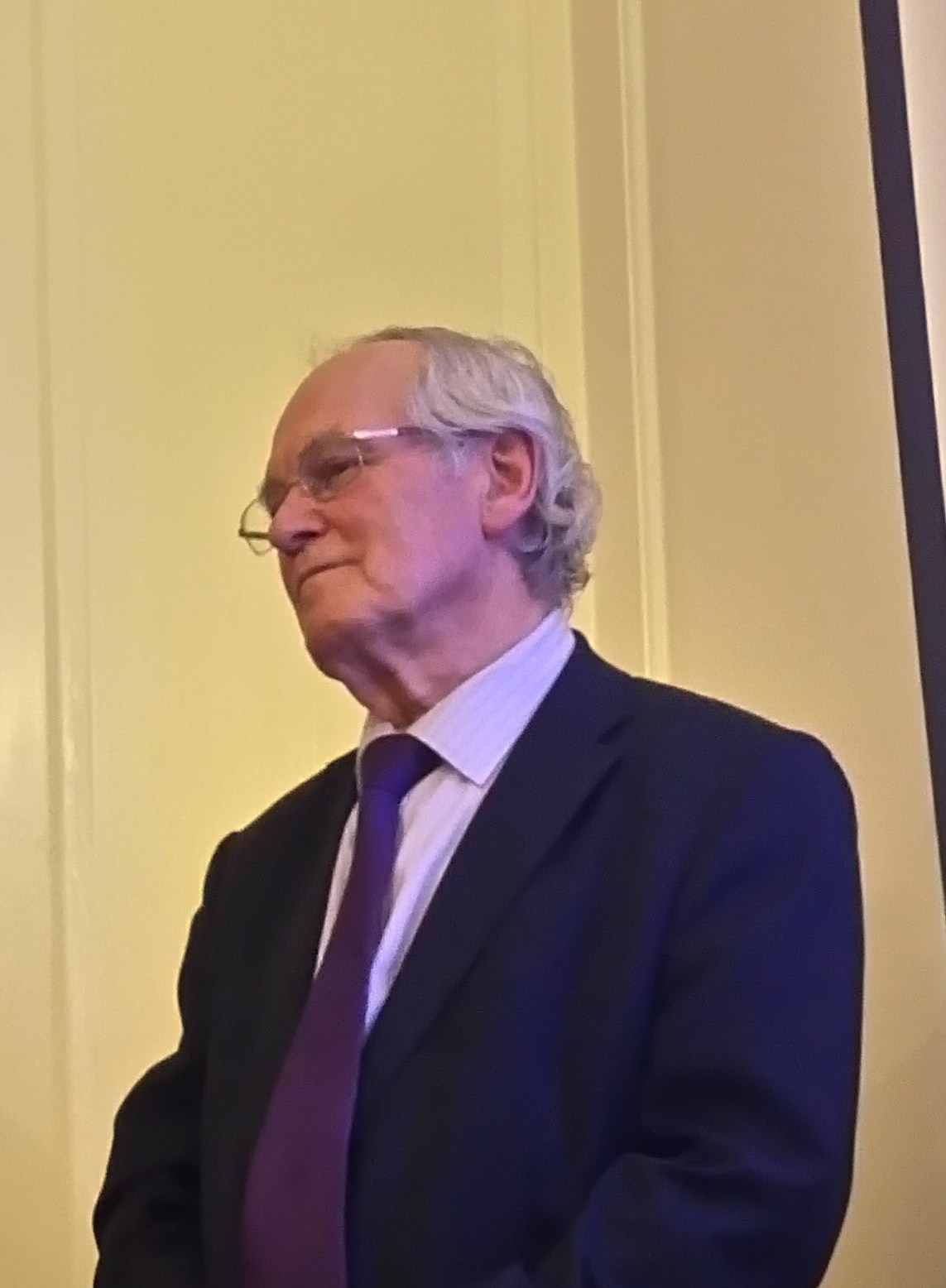
John Boscawen Burland (born 4 March 1936) is a geotechnical engineer, Emeritus Professor and Senior Research Investigator at the Department of Civil and Environmental Engineering of Imperial College London, and a noted expert in the field of soil mechanics.
In 2016, Burland was elected as a member of the National Academy of Engineering for contributions to geotechnical engineering and the design, construction, and preservation of civil infrastructure and heritage buildings.
John Burland was born in Buckinghamshire in 1936, but moved to South Africa as a child. He attended Parktown Boys' High School and then received a First Class Honours BSc degree in civil engineering from the University of the Witwatersrand in 1959, followed by an MSc.
His MSc work led to the publication in of a landmark technical paper in Géotechnique, co-authored with his supervising professor Jeremiah Jennings. Burland's findings showed that the conventional approach of using effective stress to predict soil behaviour required adjustment for partly saturated conditions. The paper challenged the universality of the effective stress principle by demonstrating that its predictive accuracy diminishes under conditions of partial soil saturation, which led to a re-evaluation of some foundational concepts in soil mechanics.
Burland returned to England in 1961 and took up a position with Ove Arup & Partners in London, where he provided soil mechanics expertise for the design of what was then London’s tallest building, BP’s Britannic House headquarters in Moorgate.
In 1963, Burland commenced a PhD at the University of Cambridge under the supervision of professor Kenneth H. Roscoe. He published his thesis, Deformation of soft clay, in 1967.
Burland joined the Building Research Station in 1966, becoming Head of the Geotechnics Division in 1972 and Assistant Director in 1979.
In 1980 he was appointed to the Chair of Soil Mechanics at Imperial College London, where he served for over 20 years and was Head of the Geotechnics Section. His move to Imperial gave him the chance to collaborate with Alec Skempton. Holding Skempton in high regard, Burland paid homage by christening Skempton’s former office with a sign that read “Skem’s Room” after he was given the room on Skempton’s retirement. Burland also undertook lectures at several universities and institutions, including his alma mater, Witwatersrand.
Hub AI
John Burland AI simulator
(@John Burland_simulator)
John Burland
John Boscawen Burland (born 4 March 1936) is a geotechnical engineer, Emeritus Professor and Senior Research Investigator at the Department of Civil and Environmental Engineering of Imperial College London, and a noted expert in the field of soil mechanics.
In 2016, Burland was elected as a member of the National Academy of Engineering for contributions to geotechnical engineering and the design, construction, and preservation of civil infrastructure and heritage buildings.
John Burland was born in Buckinghamshire in 1936, but moved to South Africa as a child. He attended Parktown Boys' High School and then received a First Class Honours BSc degree in civil engineering from the University of the Witwatersrand in 1959, followed by an MSc.
His MSc work led to the publication in of a landmark technical paper in Géotechnique, co-authored with his supervising professor Jeremiah Jennings. Burland's findings showed that the conventional approach of using effective stress to predict soil behaviour required adjustment for partly saturated conditions. The paper challenged the universality of the effective stress principle by demonstrating that its predictive accuracy diminishes under conditions of partial soil saturation, which led to a re-evaluation of some foundational concepts in soil mechanics.
Burland returned to England in 1961 and took up a position with Ove Arup & Partners in London, where he provided soil mechanics expertise for the design of what was then London’s tallest building, BP’s Britannic House headquarters in Moorgate.
In 1963, Burland commenced a PhD at the University of Cambridge under the supervision of professor Kenneth H. Roscoe. He published his thesis, Deformation of soft clay, in 1967.
Burland joined the Building Research Station in 1966, becoming Head of the Geotechnics Division in 1972 and Assistant Director in 1979.
In 1980 he was appointed to the Chair of Soil Mechanics at Imperial College London, where he served for over 20 years and was Head of the Geotechnics Section. His move to Imperial gave him the chance to collaborate with Alec Skempton. Holding Skempton in high regard, Burland paid homage by christening Skempton’s former office with a sign that read “Skem’s Room” after he was given the room on Skempton’s retirement. Burland also undertook lectures at several universities and institutions, including his alma mater, Witwatersrand.
Recent media