



Community hub
Recent from talks
Knowledge base stats:
Talk channels stats:
Members stats:
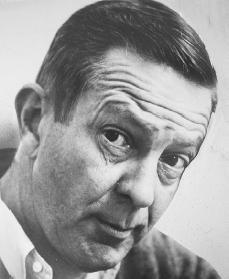
John Cheever
John William Cheever (May 27, 1912 – June 18, 1982) was an American short story writer and novelist. He is sometimes called "the Chekhov of the suburbs". His fiction is mostly set on the Upper East Side of Manhattan; the Westchester suburbs; old New England villages based on various South Shore towns around Quincy, Massachusetts, where he was born; and Italy, especially Rome. His short stories included "The Enormous Radio", "Goodbye, My Brother", "The Five-Forty-Eight", "The Country Husband", and "The Swimmer", and he also wrote five novels: The Wapshot Chronicle (National Book Award, 1958), The Wapshot Scandal (William Dean Howells Medal, 1965), Bullet Park (1969), Falconer (1977) and a novella, Oh What a Paradise It Seems (1982).
His main themes include the duality of human nature: sometimes dramatized as the disparity between a character's decorous social persona and inner corruption, and sometimes as a conflict between two characters (often brothers) who embody the salient aspects of both—light and dark, flesh and spirit. Many of his works also express a nostalgia for a vanishing way of life (as evoked by the mythical St. Botolphs in the Wapshot novels), characterized by abiding cultural traditions and a profound sense of community, as opposed to the alienating nomadism of modern suburbia.
A compilation of his short stories, The Stories of John Cheever, won the 1979 Pulitzer Prize for Fiction and a National Book Critics Circle Award, and its first paperback edition won a 1981 National Book Award.
On April 27, 1982, six weeks before his death, Cheever was awarded the National Medal for Literature by the American Academy of Arts and Letters. His work has been included in the Library of America.
John William Cheever was born in Quincy, Massachusetts, the second child of Frederick Lincoln Cheever and Mary Liley Cheever. His father was a prosperous shoe salesman, and Cheever spent much of his childhood in a large Victorian house, at 123 Winthrop Avenue, in the then-genteel suburb of Wollaston, Massachusetts. In the mid-1920s, however, as the New England shoe and textile industries began their long decline, Frederick Cheever lost most of his money and began to drink heavily. To pay the bills, Mary Cheever opened a gift shop in downtown Quincy—an "abysmal humiliation" for the family, as John saw it. In 1926, Cheever began attending Thayer Academy, a private day school, but he found the atmosphere stifling and performed poorly, and finally transferred to Quincy High in 1928. A year later, he won a short story contest sponsored by the Boston Herald and was invited back to Thayer as a "special student" on academic probation. His grades continued to be poor, however, and, in March 1930, he was either expelled for smoking or (more likely) departed of his own accord when the headmaster delivered an ultimatum to the effect that he must either apply himself or leave. The 18-year-old Cheever wrote a sardonic account of this experience, titled "Expelled", which was subsequently published in The New Republic.
Around this time, Cheever's older brother, Fred, forced to withdraw from Dartmouth in 1926 because of the family's financial crisis, re-entered Cheever's life "when the situation was most painful and critical", as Cheever later wrote. After the 1932 crash of Kreuger & Toll, in which Frederick Cheever had invested what was left of his money, the Cheever house on Winthrop Avenue was lost to foreclosure. The parents separated, while John and Fred took an apartment together on Beacon Hill, in Boston. In 1933, John wrote to Elizabeth Ames, the director of the Yaddo artist's colony in Saratoga Springs, New York: "The idea of leaving the city", he said, "has never been so distant or desirable." Ames denied his first application but offered him a place the following year, whereupon Cheever decided to sever his "ungainly attachment" to his brother. Cheever spent the summer of 1934 at Yaddo, which would serve as a second home for much of his life.[citation needed]
For the next few years, Cheever divided his time between Manhattan, Saratoga, Lake George (where he was caretaker of the Yaddo-owned Triuna Island), and Quincy, where he continued to visit his parents, who had reconciled and moved to an apartment at 60 Spear Street. Cheever drove from one place to another in a dilapidated Model A roadster, but had no permanent address. In 1935, Katharine White of The New Yorker bought Cheever's story "Buffalo" for $45—the first of many that Cheever would publish in the magazine. Maxim Lieber became his literary agent, 1935–1941. In 1938, he began work for the Federal Writers' Project in Washington, D.C., which he considered an embarrassing boondoggle. As an editor for the WPA Guide to New York City, Cheever was charged with (as he put it) "twisting into order the sentences written by some incredibly lazy bastards." He quit after less than a year and a few months later he met his future wife, Mary Winternitz, seven years his junior. She was a daughter of Milton Winternitz, dean of Yale Medical School, and granddaughter of Thomas A. Watson, an assistant to Alexander Graham Bell during the invention of the telephone. They married in 1941.
Cheever enlisted as an infantryman in the U.S. Army on May 7, 1942. He was later reassigned to the Signal Corps. His first collection of short stories, The Way Some People Live, was published in 1943 to mixed reviews. Cheever himself came to despise the book as "embarrassingly immature", and for the rest of his life destroyed every copy he could lay his hands on. However, the book may have saved his life after falling into the hands of Major Leonard Spigelgass, an MGM executive and officer in the Signal Corps, who was struck by Cheever's "childlike sense of wonder." Early that summer, Cheever was transferred to the former Paramount studio in Astoria, Queens, New York City, where he commuted via subway from his apartment in Chelsea, Manhattan, New York City. Meanwhile, most of his old infantry company was killed on a Normandy beach during the D-Day invasion. Cheever's daughter Susan was born on July 31, 1943.
Hub AI
John Cheever AI simulator
(@John Cheever_simulator)
John Cheever
John William Cheever (May 27, 1912 – June 18, 1982) was an American short story writer and novelist. He is sometimes called "the Chekhov of the suburbs". His fiction is mostly set on the Upper East Side of Manhattan; the Westchester suburbs; old New England villages based on various South Shore towns around Quincy, Massachusetts, where he was born; and Italy, especially Rome. His short stories included "The Enormous Radio", "Goodbye, My Brother", "The Five-Forty-Eight", "The Country Husband", and "The Swimmer", and he also wrote five novels: The Wapshot Chronicle (National Book Award, 1958), The Wapshot Scandal (William Dean Howells Medal, 1965), Bullet Park (1969), Falconer (1977) and a novella, Oh What a Paradise It Seems (1982).
His main themes include the duality of human nature: sometimes dramatized as the disparity between a character's decorous social persona and inner corruption, and sometimes as a conflict between two characters (often brothers) who embody the salient aspects of both—light and dark, flesh and spirit. Many of his works also express a nostalgia for a vanishing way of life (as evoked by the mythical St. Botolphs in the Wapshot novels), characterized by abiding cultural traditions and a profound sense of community, as opposed to the alienating nomadism of modern suburbia.
A compilation of his short stories, The Stories of John Cheever, won the 1979 Pulitzer Prize for Fiction and a National Book Critics Circle Award, and its first paperback edition won a 1981 National Book Award.
On April 27, 1982, six weeks before his death, Cheever was awarded the National Medal for Literature by the American Academy of Arts and Letters. His work has been included in the Library of America.
John William Cheever was born in Quincy, Massachusetts, the second child of Frederick Lincoln Cheever and Mary Liley Cheever. His father was a prosperous shoe salesman, and Cheever spent much of his childhood in a large Victorian house, at 123 Winthrop Avenue, in the then-genteel suburb of Wollaston, Massachusetts. In the mid-1920s, however, as the New England shoe and textile industries began their long decline, Frederick Cheever lost most of his money and began to drink heavily. To pay the bills, Mary Cheever opened a gift shop in downtown Quincy—an "abysmal humiliation" for the family, as John saw it. In 1926, Cheever began attending Thayer Academy, a private day school, but he found the atmosphere stifling and performed poorly, and finally transferred to Quincy High in 1928. A year later, he won a short story contest sponsored by the Boston Herald and was invited back to Thayer as a "special student" on academic probation. His grades continued to be poor, however, and, in March 1930, he was either expelled for smoking or (more likely) departed of his own accord when the headmaster delivered an ultimatum to the effect that he must either apply himself or leave. The 18-year-old Cheever wrote a sardonic account of this experience, titled "Expelled", which was subsequently published in The New Republic.
Around this time, Cheever's older brother, Fred, forced to withdraw from Dartmouth in 1926 because of the family's financial crisis, re-entered Cheever's life "when the situation was most painful and critical", as Cheever later wrote. After the 1932 crash of Kreuger & Toll, in which Frederick Cheever had invested what was left of his money, the Cheever house on Winthrop Avenue was lost to foreclosure. The parents separated, while John and Fred took an apartment together on Beacon Hill, in Boston. In 1933, John wrote to Elizabeth Ames, the director of the Yaddo artist's colony in Saratoga Springs, New York: "The idea of leaving the city", he said, "has never been so distant or desirable." Ames denied his first application but offered him a place the following year, whereupon Cheever decided to sever his "ungainly attachment" to his brother. Cheever spent the summer of 1934 at Yaddo, which would serve as a second home for much of his life.[citation needed]
For the next few years, Cheever divided his time between Manhattan, Saratoga, Lake George (where he was caretaker of the Yaddo-owned Triuna Island), and Quincy, where he continued to visit his parents, who had reconciled and moved to an apartment at 60 Spear Street. Cheever drove from one place to another in a dilapidated Model A roadster, but had no permanent address. In 1935, Katharine White of The New Yorker bought Cheever's story "Buffalo" for $45—the first of many that Cheever would publish in the magazine. Maxim Lieber became his literary agent, 1935–1941. In 1938, he began work for the Federal Writers' Project in Washington, D.C., which he considered an embarrassing boondoggle. As an editor for the WPA Guide to New York City, Cheever was charged with (as he put it) "twisting into order the sentences written by some incredibly lazy bastards." He quit after less than a year and a few months later he met his future wife, Mary Winternitz, seven years his junior. She was a daughter of Milton Winternitz, dean of Yale Medical School, and granddaughter of Thomas A. Watson, an assistant to Alexander Graham Bell during the invention of the telephone. They married in 1941.
Cheever enlisted as an infantryman in the U.S. Army on May 7, 1942. He was later reassigned to the Signal Corps. His first collection of short stories, The Way Some People Live, was published in 1943 to mixed reviews. Cheever himself came to despise the book as "embarrassingly immature", and for the rest of his life destroyed every copy he could lay his hands on. However, the book may have saved his life after falling into the hands of Major Leonard Spigelgass, an MGM executive and officer in the Signal Corps, who was struck by Cheever's "childlike sense of wonder." Early that summer, Cheever was transferred to the former Paramount studio in Astoria, Queens, New York City, where he commuted via subway from his apartment in Chelsea, Manhattan, New York City. Meanwhile, most of his old infantry company was killed on a Normandy beach during the D-Day invasion. Cheever's daughter Susan was born on July 31, 1943.