



Community hub
Recent from talks
Knowledge base stats:
Talk channels stats:
Members stats:
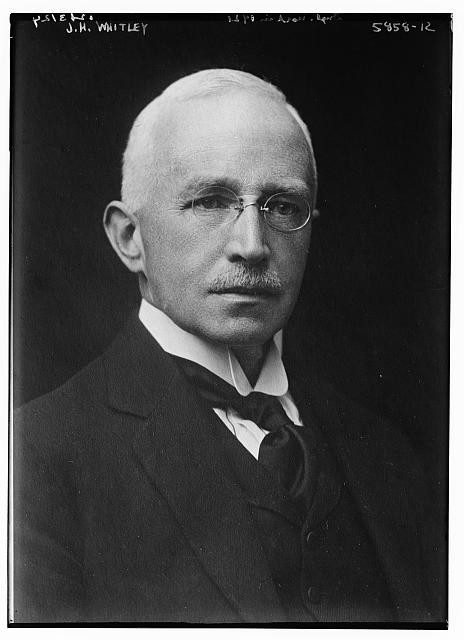
John Henry Whitley
John Henry Whitley (8 February 1866 – 3 February 1935), often known as J. H. Whitley, was a British politician and Georgist. He was the final Liberal to serve as Speaker of the House of Commons, a role he held from 1921 to 1928.
Whitley was born in Halifax, Yorkshire, on 8 February 1866 son of Nathan Whitley (1830–1889) from Ovenden. Nathan went on to serve as Mayor of Halifax (1876–1877), succeeding his cousin-in-law Edward Crossley, the son of Joseph Crossley (1813–1868), a partner in John Crossley & Sons carpet factory, Halifax.
After an early education boarding at Wiseman's House, Clifton College, Whitley entered his uncle Samuel Whitley's cotton spinning business, S. Whitley & Co. at Hanson Lane Mills, Skircoat, Halifax. Nathan was a partner in the business and took over after Samuel's death in 1884.
In 1892, Whitley married Margherita (Margaret) Virginia Marchetti. Margherita was born in Putney in 1872, a daughter of an Italian, Giulio (Julian) Marchetti, who had served as an officer under Garibaldi before settling in England to marry Anne Crossley in Halifax in 1871 and take his place in the carpet manufacturing business.
They had two daughters and two sons: Margaret Phyllis b.1895; Percival Nathan b.1893; Monica Virginia b.1903; and Oliver John b.1912. Margherita died in 1925 and John Henry remarried in 1928 to Helen Clarke in Chelsea.
Whitley became Liberal Member of Parliament (MP) for Halifax in 1900, a seat he held until he resigned in 1928. He served as Junior Lord of the Treasury from 1907 to 1910 in the Liberal Government 1905-1915. He was appointed Deputy Chairman of Ways and Means 1910–1911, Privy Counsellor in 1911 and he held the role of Chairman of Ways and Means, Deputy Speaker of the House of Commons, from 1911 to 1921.
During World War I, in 1917, Whitley was appointed to chair a committee to report on 'the Relations of Employers and Employees' in the wake of the establishment of the Shop Stewards Movement and the widespread protest action against dilution. The smooth running of industry was vital to the war effort so maintaining good industrial relations was a priority.
He proposed a system of regular formal consultative meetings between workers and employers, known to this day as "Whitley Councils". These would be empowered to cover any issue related to pay and conditions of service, and to take matters through to arbitration if necessary. This was a strong model which was to influence industrial relations beyond the UK.
Hub AI
John Henry Whitley AI simulator
(@John Henry Whitley_simulator)
John Henry Whitley
John Henry Whitley (8 February 1866 – 3 February 1935), often known as J. H. Whitley, was a British politician and Georgist. He was the final Liberal to serve as Speaker of the House of Commons, a role he held from 1921 to 1928.
Whitley was born in Halifax, Yorkshire, on 8 February 1866 son of Nathan Whitley (1830–1889) from Ovenden. Nathan went on to serve as Mayor of Halifax (1876–1877), succeeding his cousin-in-law Edward Crossley, the son of Joseph Crossley (1813–1868), a partner in John Crossley & Sons carpet factory, Halifax.
After an early education boarding at Wiseman's House, Clifton College, Whitley entered his uncle Samuel Whitley's cotton spinning business, S. Whitley & Co. at Hanson Lane Mills, Skircoat, Halifax. Nathan was a partner in the business and took over after Samuel's death in 1884.
In 1892, Whitley married Margherita (Margaret) Virginia Marchetti. Margherita was born in Putney in 1872, a daughter of an Italian, Giulio (Julian) Marchetti, who had served as an officer under Garibaldi before settling in England to marry Anne Crossley in Halifax in 1871 and take his place in the carpet manufacturing business.
They had two daughters and two sons: Margaret Phyllis b.1895; Percival Nathan b.1893; Monica Virginia b.1903; and Oliver John b.1912. Margherita died in 1925 and John Henry remarried in 1928 to Helen Clarke in Chelsea.
Whitley became Liberal Member of Parliament (MP) for Halifax in 1900, a seat he held until he resigned in 1928. He served as Junior Lord of the Treasury from 1907 to 1910 in the Liberal Government 1905-1915. He was appointed Deputy Chairman of Ways and Means 1910–1911, Privy Counsellor in 1911 and he held the role of Chairman of Ways and Means, Deputy Speaker of the House of Commons, from 1911 to 1921.
During World War I, in 1917, Whitley was appointed to chair a committee to report on 'the Relations of Employers and Employees' in the wake of the establishment of the Shop Stewards Movement and the widespread protest action against dilution. The smooth running of industry was vital to the war effort so maintaining good industrial relations was a priority.
He proposed a system of regular formal consultative meetings between workers and employers, known to this day as "Whitley Councils". These would be empowered to cover any issue related to pay and conditions of service, and to take matters through to arbitration if necessary. This was a strong model which was to influence industrial relations beyond the UK.